Fleet insurance
Van Fleet Insurance
One policy for your business vans, from a pair of trade vans to a large delivery fleet. One enquiry covers the lot, and specialist providers price it from there.
- Built around vans up to 3.5 tonnes
- Named driver or any-driver options
- Tools and goods in transit add-ons
Partnered with Quotezone
What being partnered with Quotezone means FleetQuote is a trading name of Simply Quote Comparison Ltd. Enquiries are passed to Quotezone, a trading style of Seopa Ltd (FCA FRN: 313860), which operates the quote panel. Simply Quote Comparison Ltd is an Introducer Appointed Representative of Seopa Ltd (FCA reference: 1011184), so we may be paid a commission if your enquiry leads to a policy. We do not give advice or make recommendations. Your choice of provider is entirely your own.FleetQuote is a quotation service, not an insurer or broker.
Last reviewed 17 September 2026
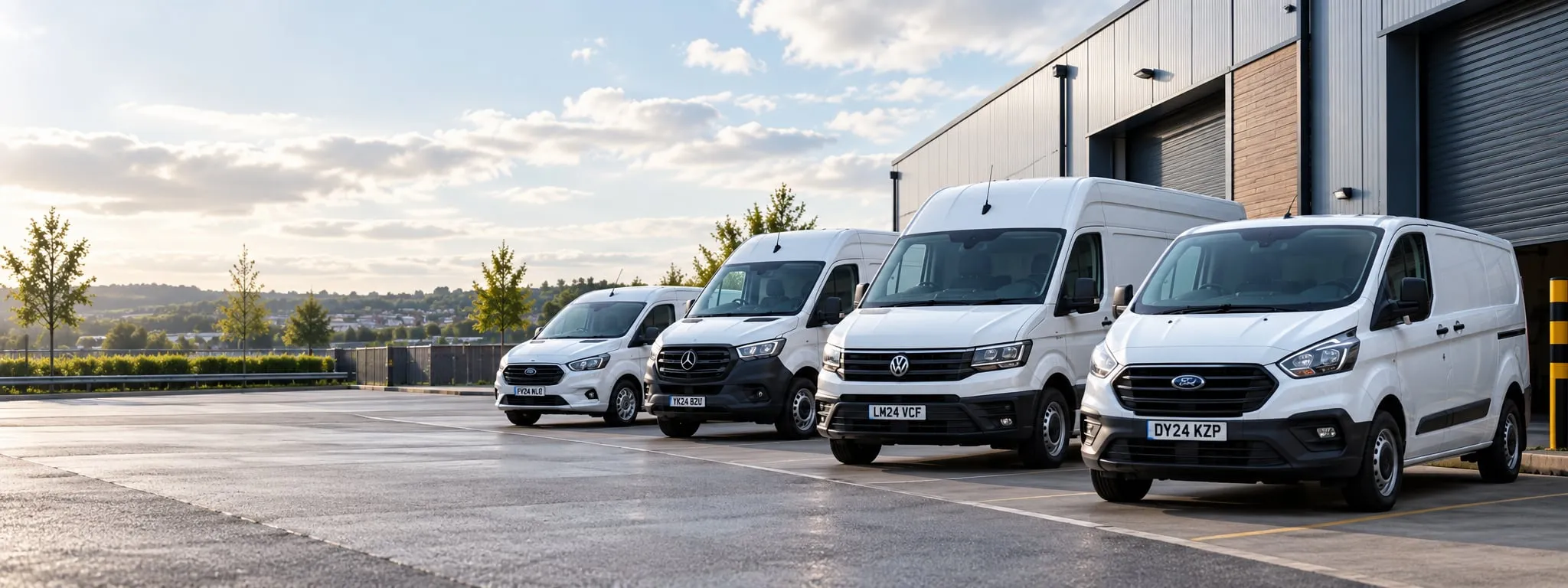
Fleet insurance quotes from the providers on our partner panel, including
















What insurers look at for van fleets
-
What the vans carry
Your own tools and materials are rated differently from other people's goods carried for payment. Class of use has to match the work.
-
Where vans sleep
A locked depot, a driveway and an on-street space in a city centre are very different theft risks, and insurers ask for each van's overnight postcode.
-
Who drives
Driver ages, licence history and any convictions or claims across the team. Younger drivers and apprentices usually need to be declared.
-
How vans are fitted out
Racking, ply lining, tail lifts, tipper bodies and signwriting can all count as modifications, so list them up front.
-
Claims experience
Several years of claims history for the fleet, ideally supported by a claims experience letter from your current insurer.
-
Telematics and cameras
Trackers and forward-facing dashcams help recover stolen vans and settle disputed claims, and some insurers take them into account.
Overview
Van fleet insurance
Van fleet insurance puts two or more business vans on a single policy, with one renewal date, one schedule of vehicles and one set of drivers. It suits trades, contractors, couriers, cleaning and facilities firms, and any business where the van is how the work gets done.
If you run just two or three vans with regular drivers, our page on multi-van insurance covers that set-up. This page is about larger van fleets and fleet-rated cover.
The price and the cover depend far more on how your vans are used than on how many you run. A plumber’s van full of copper and power tools, a multi-drop courier van and a pool van used for site visits all look similar on the road, and insurers treat them very differently.
In short
Van fleet insurance puts several business vans on one policy, with one renewal date, one vehicle schedule and one set of driver rules. It is built around vans up to 3.5 tonnes. What the vans carry, where they are parked overnight and who drives them shape the terms more than the number of vans, and tools or goods usually need extra cover.
At a glance
- Vehicle weight
- Built around vans up to 3,500kg gross vehicle weight (maximum authorised mass)
- Car licence (category B)
- Covers vans up to 3,500kg, or electric and hydrogen vans up to 4,250kg
- Operator's licence
- Not needed for vans used only in the UK. Generally needed for goods vehicles over 3.5 tonnes
- Class of use
- Carriage of own goods for most trades. Hire and reward for couriers and delivery work
- Tools and goods
- Not part of the van cover itself. Usually an add-on or a separate policy
- Motor Insurance Database
- Every van should be added when it joins the fleet and removed when it leaves
01
What Class Of Use Do Your Vans Need?
Class of use describes what the van is actually doing, and it is the detail most often got wrong on a van policy. Driving outside the class on your schedule can leave a claim uncovered.
The classes you will meet
| Class of use | What it covers | Typical business |
|---|---|---|
| Social, domestic and pleasure | Personal use, such as a driver taking the van home and using it at weekends | Usually an add-on to a business van, not the main class |
| Commuting | Home to one regular place of work | Added alongside business use |
| Business use | Driving in connection with the business, such as customer visits or travelling between sites | Sales, supervisors, facilities teams |
| Carriage of own goods | Carrying your own tools, equipment, stock and materials | Builders, electricians, plumbers, landscapers |
| Hire and reward | Carrying other people’s goods in return for payment | Parcel couriers, same-day delivery, removals |
Insurers price hire and reward differently because of the mileage, the time pressure and the number of stops.
Fleets that need more than one class
Many fleets need more than one class on the same schedule. A building firm might run tipper vans on carriage of own goods while two supervisors use their vans privately at weekends.
A wholesaler that also delivers for other businesses for a fee may need hire and reward on some vans. Say which vans do what rather than assuming one class fits the fleet, and our guide to vehicle class of use sets out each class in more detail.
Watch out: If you take on delivery work for another company, even occasionally, check the class of use before the first job. Carrying someone else’s goods for payment on a carriage of own goods policy means the van is being used outside the terms of the policy, which can put any claim from that journey in doubt.
02
Why Does 3.5 Tonnes Matter So Much?
Van fleet insurance is built around light commercial vehicles up to 3.5 tonnes gross vehicle weight. Above that line the licence, the operator licensing position and the way insurers rate the vehicle all change.
Gross vehicle weight, sometimes called maximum authorised mass, is the most the vehicle is allowed to weigh fully loaded. It is on the vehicle’s plate and on the V5C.
Licences
A standard car licence (category B) covers vehicles up to 3,500kg maximum authorised mass, under the GOV.UK driving licence categories. Category B holders can also drive electric or hydrogen vans up to 4,250kg.
Drivers who passed their car test before 1 January 1997 usually also hold C1 entitlement for vehicles up to 7,500kg, as set out in the old driving licence categories. Check the licence itself rather than relying on the test date.
Operator licensing
In Great Britain, goods vehicles over 3.5 tonnes used to carry goods for business, including your own goods, generally need an operator’s licence. Vans used only within the UK do not need one.
If you carry other people’s goods for payment in the EU, Norway, Switzerland, Iceland or Liechtenstein in vans over 2.5 tonnes, you need a standard international operator licence. GOV.UK covers the detail in its guidance on transporting goods in and out of the UK using vans.
Vans close to the limit
Once a vehicle goes over 3.5 tonnes, insurers treat it as a heavy goods vehicle and ask different questions about drivers, operator licence details and use. A large panel van with a Luton body, a tail lift or a dropside conversion can end up plated above the line.
If you run a mix of vans and heavier vehicles, a mixed fleet insurance policy can put them on one schedule.
03
Does A Van Policy Cover Tools And Goods?
No. A van policy insures the van, not what is inside it, and that catches out a lot of trades businesses after a break-in.
Tools cover
Tools cover is usually an optional extension to the fleet policy or a separate policy. The limit per van and per item is the first thing to compare against what each van really carries.
Then look at whether theft from an unattended van is covered overnight and on what conditions, whether there has to be visible sign of forced entry, whether hired-in tools and plant are included, and the excess on each claim.
Some insurers only cover tools overnight if the van is in a locked building or compound, and some exclude overnight theft altogether. Ask the broker to explain those conditions in plain terms, because they decide most tools claims.
Goods in transit
Goods in transit cover protects goods while they are carried, loaded or unloaded. For couriers and hire and reward operators it usually covers customers’ goods, often against a standard set of trading conditions.
For carriage of own goods it covers your own stock and materials. Declare the typical and maximum value on any one van and the type of goods, because high-value or easily resold goods such as electronics, tobacco and alcohol affect the terms.
04
What Do Insurers Ask About Van Security?
Where each van sleeps, how the site is secured, what is fitted to the van and how keys are handled. Vans are taken for the vehicle and for what is inside, so the overnight position drives a large part of the theft risk.
Overnight location
Expect to give the overnight postcode for every van, including the ones that go home with drivers. A secure depot, a locked yard, a private driveway and an on-street space are four different risks.
On-street parking in a city is not a reason you cannot get cover, but it is reflected in the terms. If some drivers take vans home, it is worth knowing which of them park off-road.
Depot and vehicle security
On the site itself, insurers ask about gates, fencing, lighting and CCTV, and whether keys are held securely rather than left in vans. On the vehicles, they ask about factory alarms and immobilisers, deadlocks, slam locks, lock protection plates and approved trackers.
Keyless vans can be vulnerable to relay attacks, so signal-blocking pouches and a clear key policy help. Keeping tools out of vans overnight, and saying so on a window sticker, is sensible, though it does not replace the insurer’s own conditions.
05
Which Van Modifications Should You Declare?
Anything added or changed since the van left the factory. Insurers price the vehicle and the cost of repairing it, and an undeclared modification causes trouble at claim time.
The declarable list
Most working vans are not standard. These are the changes that come up most often:
- Internal racking, shelving or drawer systems
- Ply lining and load floor
- Roof bars, roof racks and ladder racks
- Tow bars
- Tail lifts and loading ramps
- Tipper, dropside, Luton or box body conversions
- Crew cab or double cab conversions
- Refrigeration units
- Wheelchair access or passenger conversions
- Non-standard wheels, bodykits or lowered suspension
- Signwriting or full vehicle wraps
- Engine remaps
Signwriting and invoices
Signwriting divides insurers. Some treat it as neutral, some consider that it advertises tools inside, and others see a liveried van as less likely to be driven carelessly.
Declare it either way. Keep the invoices for racking and conversions, because they help establish value after a total loss.
06
Can Apprentices And Young Drivers Be Covered?
Usually yes, but it needs setting up rather than assuming an any-driver clause stretches to them.
Age and licence conditions
Many any-driver policies set a minimum age chosen by the insurer, and some also ask that drivers have held a full licence for a minimum period.
Drivers below the limit may need to be named individually, limited to specific vans, or accepted with a higher excess. Some insurers apply a separate young driver excess when an under-25 is driving at the time of a claim.
Practical steps
Name young drivers on the policy rather than hoping the any-driver clause covers them, and keep apprentices on smaller, lower-value vans where you can.
Telematics gives you something concrete to show how the vans are really driven. Check licences before anyone drives, and repeat the check periodically.
07
Do Telematics And Dashcams Help A Van Fleet?
They help most with claims and recovery, and sometimes with the terms. Some insurers take fitted systems into account, but it is not universal.
What they record
Telematics boxes record location, speed, harsh braking and acceleration. Forward-facing and dual-facing dashcams record what happened in the seconds before an incident.
For a van fleet both are useful beyond insurance. They help recover stolen vans, answer customer complaints and settle arguments about who was at fault.
What to tell the broker
Footage can defend a disputed claim or a suspected staged accident, and a record of driver behaviour gives you something to act on. If you already have telematics or cameras fitted, say so.
If you are thinking about fitting them, ask whether any insurer on offer wants particular data or a particular type of system before you buy.
08
How Do You Add Or Remove A Van Mid-Term?
Through a mid-term adjustment: the broker tells the insurer, the schedule is updated, and an additional or return premium is usually worked out pro rata. The Motor Insurance Database has to be updated too.
The adjustment itself
Van fleets change through the year as vans are replaced, hired in for a busy spell or sold. Ask how the policy deals with newly acquired or replacement vans, and whether they are covered automatically for a short period.
Ask the same about short-term hired or borrowed vans, vans taken off the road but kept on site, and whether any adjustment fees apply.
Keeping the MID right
Every van on the policy must be recorded on the Motor Insurance Database, which the police use to check whether vehicles are insured. Depending on the insurer, your broker updates the record or you add and remove vans yourself through the MIB policyholder portal.
Vans should be added as soon as they join the fleet, including short-term hires, and removed when they leave. Where you update the record yourself, on-cover and off-cover dates can only be backdated by up to 14 days, and your policy terms may set a shorter deadline.
A van missing from the database can be stopped by police even if it is covered, so treat the update as part of taking delivery. Anyone can check a vehicle at askMID.
Keeping the list straight
If your fleet grows or shrinks a lot through the year, some policies settle the changes at renewal instead of adjusting each one. Raise that with the broker.
Keep one accurate list of vans using our fleet schedule template, and review it with the fleet insurance renewal checklist.
09
When Is Van Fleet Cover The Wrong Fit?
When the fleet is very small, when the work is really courier work, when the heavier vehicles lead the fleet, or when the thing worth insuring is the contents rather than the vans.
Four situations where something else fits better
- One or two vans, each with one regular driver. Individual van policies with established no-claims discounts can compete. Our guide on how many vehicles you need for fleet insurance explains how insurers treat very small fleets.
- Mostly multi-drop parcel delivery. Courier work needs hire and reward cover and goods in transit, and some insurers handle it as a specialist risk. See courier fleet insurance.
- Several vehicles over 3.5 tonnes. Once heavier goods vehicles lead the fleet, the operator licence, driver category and haulage questions take over, and a mixed or HGV-focused policy fits better.
- Staff using their own vans. Those vans are normally insured on the owner’s own policy with the right class of use, not on your fleet policy.
When the contents are the real exposure
Tools and goods in transit cover can often be added to the fleet policy, but a standalone tools or goods policy may give higher limits or better conditions.
Construction firms running vans, tippers and plant should also look at fleet insurance for construction businesses, because plant brings its own questions.
Before you enquire
What to have to hand
What you’ll need for a quote
You can start an enquiry without all of this. The broker will ask for anything missing.
- Number and types of vehicles (rough is fine to start)
- Renewal date and current policy schedule
- Claims experience letter from your current insurer
- Driver ages and any penalty points
- Where vehicles are kept overnight
Sources
- GOV.UK: Driving licence categories
- GOV.UK: Old driving licence categories
- GOV.UK: Driving an electric or hydrogen-powered vehicle
- GOV.UK: Being a goods vehicle operator
- GOV.UK: Transport goods in and out of the UK using vans or car and trailers
- MIB: Navigate policyholder user guide
- askMID: check a vehicle is insured
Updates
- : last reviewed
- : Facts checked against official sources; added quick answer and sources
General information about UK fleet insurance, not advice. How we write and check our content
Ready to get started?
Ready to talk to a fleet insurance specialist?
Answer a few questions about your vehicles, drivers and current cover. We pass your enquiry to a specialist broker, who will discuss your options and quotes with you.
FleetQuote is an introduction service, not an insurer or broker. We pass your enquiry to Quotezone, which operates a panel of brokers and insurers. How our service works
Questions
Van fleet insurance: common questions
Do I need hire and reward cover for my vans?
You need hire and reward cover if your vans carry other people's goods in return for payment, which covers parcel couriers, multi-drop delivery and removals. If you only carry your own tools, stock and materials as part of your trade, carriage of own goods is usually the right class of use. Mixing the two across a fleet is common, so tell the broker which vans do which work.
Are tools left in the van covered by van fleet insurance?
Not automatically. A standard motor policy covers the vehicle, and tools usually need a separate tools-in-transit extension or a standalone policy. Where tools cover is offered, it often has a limit per van and conditions about overnight storage, such as the van being locked with no sign of forced entry. Check the wording and the limit against what your team really carries.
Do I need to tell the insurer about racking and signwriting?
Yes, declare them. Racking, ply lining, roof bars, tail lifts, tipper conversions and crew cab conversions change the vehicle's value and sometimes its risk, and insurers treat many of these as modifications. Signwriting is treated differently from insurer to insurer, so mention it anyway. Leaving a modification off the schedule can cause problems when you make a claim.
Can apprentices and young drivers drive vans on a fleet policy?
Often yes, but it depends on the insurer and how the policy is set up. Any-driver policies usually carry a minimum age, and drivers below it may need to be named individually or restricted to certain vans. Expect a higher premium or a larger excess for young or newly qualified drivers. Give the broker each driver's age and licence history so the restrictions are set correctly from the start.
What happens when I add or remove a van mid-term?
You tell the broker, the insurer issues a mid-term adjustment, and the premium is usually recalculated on a pro-rata basis for the rest of the policy year. The new van must also be added to the Motor Insurance Database. Some fleet policies cover newly acquired vans automatically for a short period, provided you declare them within a set time. Check how your policy handles this before a new van arrives.
Is a 3.5 tonne van covered on a van fleet policy?
Vans up to 3.5 tonnes gross vehicle weight are the core of most van fleet policies. Once a vehicle goes over 3.5 tonnes it is treated as a heavy goods vehicle, with different licence and operator licence requirements, and insurers rate it differently. It can still sit on a fleet policy alongside your vans, but it needs to be declared as what it is.
Related reading
- Cover Mixed fleet insurance Mixed fleet insurance puts cars, vans, pickups, HGVs and minibuses on one policy. How uses, drivers and specialist vehicles are handled, and what to prepare.
- Cover Fleet insurance Fleet insurance for UK businesses running vans, cars, HGVs or mixed fleets. How fleet cover works, and an easy way to reach a specialist for quotes.
- Cover Construction fleet insurance Construction fleet insurance for crew vans, pickups, tippers and site vehicles. What insurers ask about drivers, plant, tools and site security.
- Guide How many vehicles do you need for fleet insurance? There is no legal minimum fleet size. What insurers look for, how small fleets of two to four vehicles are treated, and when a fleet policy starts to make sense.
- Guide What is fleet insurance? What fleet insurance is, how a fleet policy works differently from insuring vehicles one by one, and the key terms UK businesses meet when they get cover.
- Guide Fleet insurance renewal checklist A practical fleet insurance renewal checklist covering timing, vehicle schedules, driver licence checks, claims experience and avoiding a gap in cover.
What FleetQuote does, and doesn't do
FleetQuote is a trading name of Simply Quote Comparison Ltd (company number 15008284), registered office Sentinel House, Ancells Business Park, Harvest Crescent, Fleet, Hampshire, GU51 2UZ.
Simply Quote Comparison Ltd is an Introducer Appointed Representative of Seopa Ltd (Financial Conduct Authority reference 1011184). We are not authorised in our own right: we act under Seopa Ltd, which is authorised and regulated by the Financial Conduct Authority under reference 313860.
That permission covers introducing your enquiry and nothing more. We do not provide insurance, arrange insurance, recommend a policy or give advice.
When you send an enquiry we introduce you to Quotezone, a trading style of Seopa Ltd (FCA FRN 313860), which operates a panel of brokers and insurers. Any quote, advice or policy comes from them, not from FleetQuote.
Simply Quote Comparison Ltd is paid a commission when an enquiry leads to a policy, at no cost to you. It is free to enquire and you are under no obligation to buy.