Fleet insurance by industry
Fleet Insurance for Cleaning Companies
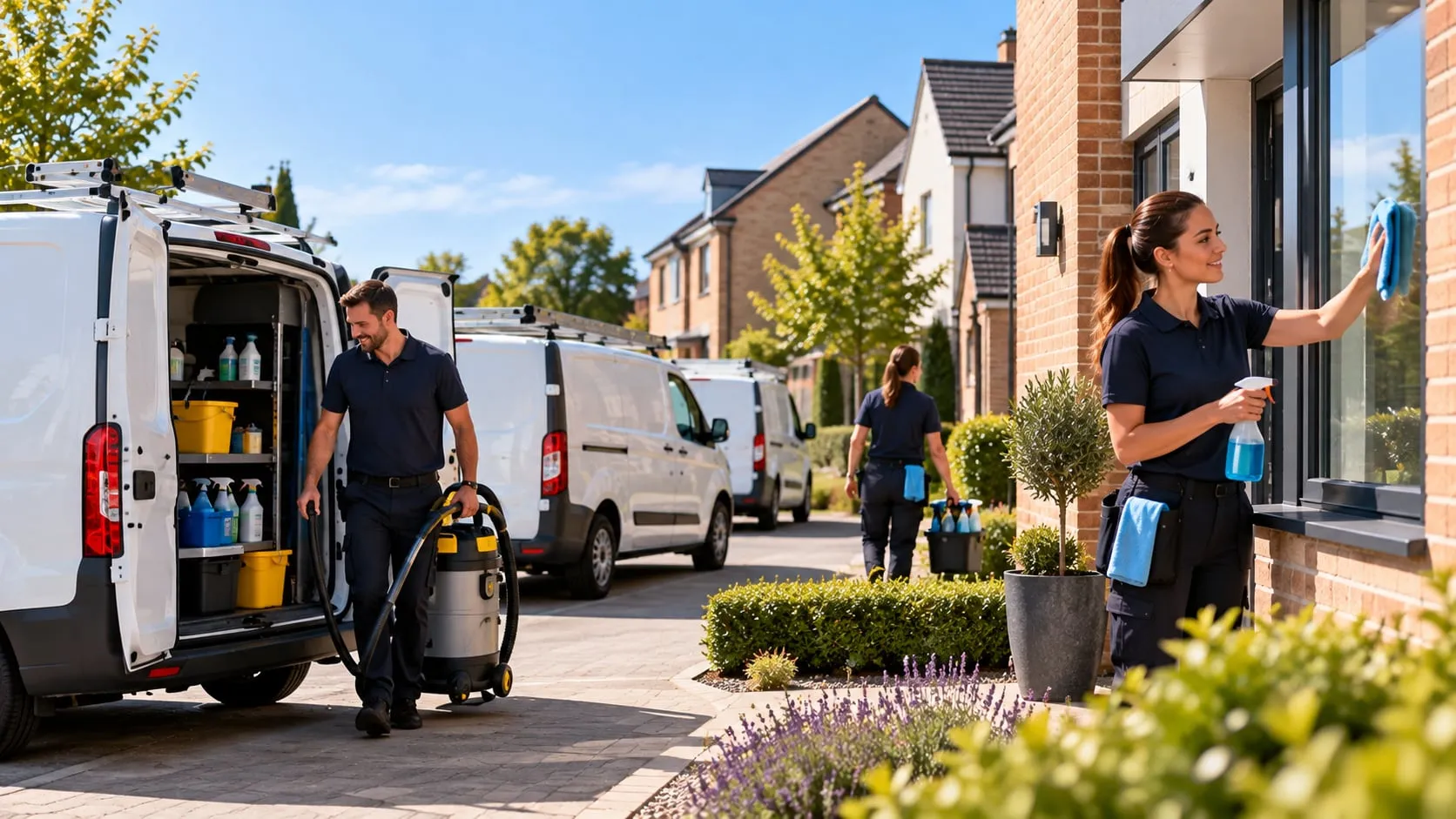
Motor cover for the small vans and cars that take cleaning teams and equipment between contracts. One enquiry reaches specialist brokers, who discuss cover and provide quotes.
- Small vans, estate cars and team vehicles
- Driver clauses for changing teams
- Equipment cover options to discuss
Partnered with Quotezone
What being partnered with Quotezone means FleetQuote is a trading name of Simply Quote Comparison Ltd. Enquiries are passed to Quotezone, a trading style of Seopa Ltd (FCA FRN: 313860), which operates the quote panel. Simply Quote Comparison Ltd is an Introducer Appointed Representative of Seopa Ltd (FCA reference: 1011184), so we may be paid a commission if your enquiry leads to a policy. We do not give advice or make recommendations. Your choice of provider is entirely your own.FleetQuote is a quotation service, not an insurer or broker.
Last reviewed 17 September 2026
Fleet insurance quotes from the providers on our partner panel, including
















What insurers want to know about a cleaning fleet
Cleaning fleets look simple on paper, but the working pattern behind them matters.
-
Hours on the road
Pre-dawn office cleans, evening contracts and weekend deep cleans all change the driving picture.
-
Driver churn
How often new staff join, how quickly they drive, and how you check them first.
-
Kit on board
Pressure washers, carpet extractors, floor machines and their value in each vehicle.
-
Products carried
Cleaning chemicals, how they are stored in transit and whether anything is flammable.
-
Contract spread
A tight local round or sites scattered across a region, and where vans are left while teams work.
Overview
Cleaning company fleet insurance
Cleaning company fleet insurance is motor cover for the vans and cars that carry cleaners, machines and supplies to offices, schools, hospitals, holiday lets and homes. One policy holds every vehicle, so winning a contract and needing another van goes through as an adjustment rather than a new policy.
The work looks low risk from the outside. Underwriters see early starts, staff who come and go, and vans full of equipment parked outside client buildings while the team is in the lift.
In short
Cleaning company fleet insurance covers the vans and cars your teams use to reach client sites under one motor policy. Insurers focus on when vehicles are driven, how quickly new staff start driving, how you check their licences, and what equipment and products are carried. Equipment cover is usually an add-on or a separate policy.
At a glance
- Typical vehicles
- Small and medium panel vans, estate cars, crew vans
- Fleet sizes
- Varies by insurer; many fleet products start at 2 or 3 vehicles
- Main underwriting themes
- Driver turnover, unsocial hours, equipment and product storage
- Licence checks
- Driver-generated DVLA check codes last 21 days and work once
- Equipment cover
- Usually an add-on or separate policy, not part of motor cover
01
Which Cleaning Businesses Put Their Vans On One Policy?
Firms where several people drive, vehicles move between those people across the week, and the number of vans rises and falls with contracts won and lost.
The firms it fits
- contract cleaners holding regular office, school or hospital work
- domestic cleaning agencies running several teams a day
- window cleaning rounds that have grown beyond one or two vans
- carpet and upholstery specialists with machines in every vehicle
- end-of-tenancy and specialist cleaning firms
A company that has built up to five small vans and a couple of supervisors’ cars will often find a single policy easier to run than seven separate renewals.
How small a cleaning fleet can be
There is no fixed market-wide threshold. Many insurers start fleet products from 2 or 3 vehicles, and mini fleet products commonly stretch to somewhere between about 12 and 20, but that is general practice and each insurer sets its own limits.
If you are at the smaller end, the multi-van insurance page may be the better starting point. The guide on how many vehicles you need for fleet insurance explains how insurers see very small fleets.
02
What Class Of Use Does A Cleaning Van Need?
Business travel between sites, not commuting. Driving from one client’s premises to the next during the working day is business use, and the class on the schedule has to say so.
Why between sites is not commuting
Commuting covers the journey to a regular place of work. A cleaning team that does an office at 6am, a surgery at 9am and two holiday lets in the afternoon is not commuting between any of them.
Get the class wrong and a journey mid-shift can fall outside the policy. The vehicle class of use guide sets out each class in more detail.
Vans taken home overnight
Plenty of cleaning vans go home with a supervisor so the 5am start does not begin at the yard. If that is how yours work, the policy needs to allow it.
Say which vans go home and which stay on site. Any personal use at weekends is a separate question again.
03
Does The Motor Policy Cover Cleaning Machines In The Back?
Usually not. The motor cover insures the vehicle and your liability to other road users, and industrial vacuums, floor scrubbers, carpet extractors and pressure washers sit outside it.
Where equipment cover sits
Machines, vacuums and hand equipment normally need a tools or equipment add-on, a goods in transit extension or a separate business contents policy. Goods in transit is also useful if you deliver consumables or carry stock belonging to a client.
Many of these extensions carry conditions about vehicles being locked and items being kept out of sight. Check the wording and the limit per vehicle before relying on either.
What the broker will want to know
| Item | Detail the broker may ask for |
|---|---|
| Machines and powered kit | Replacement value per vehicle and whether it stays in overnight |
| Cleaning products | Types, typical quantities, anything flammable or corrosive |
| Water-fed pole systems | Tank size, whether it is fixed and its effect on vehicle weight |
| Client keys and access fobs | Whether they are kept in vehicles |
Client keys deserve a thought of their own. A van broken into outside a client’s building is one problem, and a bunch of their keys going with it is another.
04
Which Cleaning Chemicals Do Insurers Ask About?
Most day-to-day products are carried without difficulty. Insurers may still ask what you carry, in what quantities, and whether anything is flammable or corrosive.
COSHH and hazardous products
Some products, such as certain descalers, solvents, strong acids or alkalis, may be classed as hazardous substances. Employers have duties under the Control of Substances Hazardous to Health rules to manage exposure to them, and the HSE says COSHH covers chemicals and products containing chemicals.
Storing products in transit
Keep products in sealed, labelled containers, secured so they cannot spill or roll into the cab. That is good practice whatever the policy says about it.
Separate them from anyone travelling in the vehicle where the layout allows. Tell the broker about anything flammable or corrosive rather than leaving it to be discovered.
05
How Do Racking And Water Tanks Affect A Cleaning Van?
They are modifications, and they change both the value of the van and the weight it is carrying before anyone climbs in.
The modifications to declare
Racking, water tanks for window cleaning systems and pump equipment fitted to a van are all modifications. Declare them, because they affect the vehicle’s value and what a claim would need to replace.
An undeclared tank or pump system is an awkward thing to explain after a total loss. Keep the invoices.
Plated weight and a full tank
A van carrying a full water tank can be close to its weight limit before the team and their kit are on board. Check the plated weight against the fitted equipment.
Tank size is one of the things the broker asks for, and whether the tank is fixed or lifted out matters too.
06
Why Do Early Starts And Split Shifts Matter To An Insurer?
Because office and school contracts are cleaned before people arrive or after they leave, which puts the driving in the dark at both ends of a split shift.
Driving in the dark on little sleep
A 5am start means driving in the dark, often after a short night. A late finish on an evening contract means the same drive home at 11pm.
Domestic teams face a different version, doing four or five houses a day with tight gaps between them. Split shifts with a long gap in the middle stretch the working day at both ends.
Fatigue and realistic rotas
These patterns carry a real fatigue risk. The HSE expects employers to manage the risks to workers who drive for work, including planning journeys and schedules that can actually be met.
Practical steps include building travel time into rotas and avoiding a long drive immediately after a night shift. Do not expect staff to answer the phone while driving between sites.
Where the van sits while the team is inside
Underwriters may ask where vehicles are left while cleaners are working. A van in a client’s car park during a three-hour office clean is a different theft risk from one on a quiet street at 11pm.
If the answer varies by contract, say so. The grey fleet guide is the place to start if the vehicle outside is a cleaner’s own car instead.
07
How Do You Keep New Cleaners Insured To Drive?
By checking every new driver before they take a vehicle out, and by choosing a driving clause that can keep pace with starters and leavers.
The check for every new driver
- Check the photocard licence in person
- Ask the driver to generate a DVLA check code and review their record online
- Confirm the licence covers the vehicle they will drive
- Record the date of the check and set a reminder for the next one
- Brief them on vehicle checks, loading and what to do after an accident
If new starters drive in their first week, the insurer needs to be comfortable that you know who they are and what their licence shows.
DVLA check codes
A driver can create a check code through the GOV.UK view or share your driving licence information service using their licence number, National Insurance number and licence postcode. The code is valid for 21 days and can be used only once.
You also need the last 8 characters of their licence number to check someone’s driving licence information. Getting someone’s driving information without their permission is a criminal offence, so build consent into onboarding.
Named driver or any driver
A named-driver policy can struggle to keep pace with frequent starters and leavers. An any-driver clause with conditions such as a minimum age and a limit on licence points may suit better.
Either way, keep a record of who drives what. The driving licence checks guide covers checking at scale.
08
What Will Underwriters Ask A Cleaning Company?
The contracts you hold, the ratio of drivers to vehicles, driver ages and licence history, where vans are parked overnight, and your claims record including low-speed car park damage.
The list to prepare
- the contracts you hold and the sectors you clean for
- the number of drivers compared with the number of vehicles
- the age range and licence history of drivers
- whether vans are taken home and where they are parked overnight
- previous claims, especially low-speed damage in car parks
- any use of vehicles for purposes other than cleaning work
Gather the answers before you ask for terms. The quote readiness checklist sets out what a broker needs in front of them.
Why car park damage keeps coming up
A fleet that spends its working life reversing into loading bays and multi-storey spaces picks up knocks. A run of them can colour how an insurer reads the record.
Report every one and look at why it keeps happening. A pattern at one site is easier to fix than a pattern across the fleet.
Making a fair presentation
Answer fully. Business policyholders have a legal duty to make a fair presentation of the risk before cover starts, and when it changes.
Our guide on what to tell your insurer covers how that works in practice.
09
Which Cover Levels And Extras Suit A Cleaning Fleet?
Each vehicle carries its own level: third party only, third party fire and theft, or comprehensive cover. The extras worth discussing are the ones that keep a contract serviced.
Choosing a level per vehicle
The motor policy protects the vehicles and your legal liability to other road users. You choose the level for each vehicle on the schedule rather than one level for the whole fleet.
Extras worth discussing
- Equipment cover. Industrial vacuums, floor scrubbers, carpet extractors and pressure washers can be worth a lot, and they are normally outside the motor cover.
- Goods in transit. Useful if you deliver consumables or carry stock belonging to a client.
- Breakdown and recovery. A van that fails at 5am can leave a contract unserviced before the client opens.
- Courtesy or replacement vehicle. Some policies provide one after a covered claim, subject to conditions.
- Legal expenses. Helps recover uninsured losses such as a hire vehicle or lost excess after a no-fault collision.
10
When Is Cleaning Fleet Cover The Wrong Fit?
When the cleaners drive their own cars, when there are only two vans, or when the real exposure is the machinery and the client’s property rather than the vehicles.
Cleaners driving their own cars
If your cleaners drive their own cars to jobs, you do not have a fleet at all but a grey fleet. The priority is making sure their personal policies include business use.
Two vans and one driver each
A two-van domestic cleaning business may find individual policies simpler to run. There is not much to gain from a schedule with two lines on it.
When the kit is the real exposure
If your biggest exposure is machinery or client property, motor cover will not help with that. Look at equipment and public liability insurance separately.
Before you enquire
What to have to hand
What you’ll need for a quote
You can start an enquiry without all of this. The broker will ask for anything missing.
- Number and types of vehicles (rough is fine to start)
- Renewal date and current policy schedule
- Claims experience letter from your current insurer
- Driver ages and any penalty points
- Where vehicles are kept overnight
Sources
Updates
- : last reviewed
- : Legal and regulatory points checked against official sources
General information about UK fleet insurance, not advice. How we write and check our content
Ready to get started?
Fleet insurance enquiries for cleaning businesses
One enquiry covering the vehicles, drivers and work involved. A specialist broker uses that detail to discuss cover that fits how your business actually runs.
FleetQuote is an introduction service, not an insurer or broker. We pass your enquiry to Quotezone, which operates a panel of brokers and insurers. How our service works
Questions
Cleaning company fleet insurance: common questions
Do cleaning staff who drive company vans between sites need special cover?
They need to be covered by the policy's driving clause, and the class of use must include business travel between sites. Journeys between client premises during the working day are business use, not commuting. If staff also take vans home, the policy needs to allow that too. Tell the broker exactly how vehicles move through a typical shift.
Is our cleaning equipment covered if a van is broken into?
Usually not by the motor cover itself. Machines, vacuums and hand equipment normally need a tools or equipment add-on, a goods in transit extension or a separate business contents policy. Many of these carry conditions about vehicles being locked and items being out of sight, so check the wording before relying on it.
We take on new cleaners every month. How do we keep drivers insured?
An any-driver clause with conditions such as a minimum age and a limit on licence points can save you adding each person individually. A named-driver clause needs updating before a new starter drives. Whichever you use, check each new driver's licence before they take a vehicle out and keep a record of who drives what.
Can we carry cleaning chemicals in our vans?
Most everyday cleaning products are carried routinely, but insurers may ask what you carry, in what quantities and how it is secured. Some products are hazardous and have their own handling and labelling requirements. Keep them in closed, labelled containers and separated from passengers where possible, and tell the broker about anything flammable or corrosive.
Is a fleet policy worth it for a cleaning company with three vans?
It can be, particularly if several people share the vans or you expect to add vehicles. Some insurers write fleet cover from two or three vehicles and others start higher, so it depends on the market at the time. The broker can explain whether a fleet, mini fleet or separate policies suit your business.
Related reading
- Cover Multi-van insurance Multi-van insurance for UK businesses with two or more work vans and several drivers. Driver options, class of use, tools in vans and adding a van mid-term.
- Cover Van fleet insurance Van fleet insurance explained for UK firms running two or more vans. Class of use, tools and goods cover, security, conversions and what insurers ask.
- Cover Any driver fleet insurance Any driver fleet insurance explained. How any-driver, named and open driving clauses differ, age bands, licence conditions, excesses and employer duties.
- Guide Driving licence checks for employers How UK employers check driving licences with DVLA check codes or bulk checking services, how often to check, getting consent, and what insurers may ask.
- Guide What is a grey fleet? What a grey fleet is, who counts as a grey fleet driver, employer duties under HSE guidance, business use insurance checks and when to switch to fleet vehicles.
- Guide How to reduce fleet insurance costs Practical ways to keep fleet insurance costs under control, from driver checks, telematics and security to excess choices, claims handling and renewal evidence.
What FleetQuote does, and doesn't do
FleetQuote is a trading name of Simply Quote Comparison Ltd (company number 15008284), registered office Sentinel House, Ancells Business Park, Harvest Crescent, Fleet, Hampshire, GU51 2UZ.
Simply Quote Comparison Ltd is an Introducer Appointed Representative of Seopa Ltd (Financial Conduct Authority reference 1011184). We are not authorised in our own right: we act under Seopa Ltd, which is authorised and regulated by the Financial Conduct Authority under reference 313860.
That permission covers introducing your enquiry and nothing more. We do not provide insurance, arrange insurance, recommend a policy or give advice.
When you send an enquiry we introduce you to Quotezone, a trading style of Seopa Ltd (FCA FRN 313860), which operates a panel of brokers and insurers. Any quote, advice or policy comes from them, not from FleetQuote.
Simply Quote Comparison Ltd is paid a commission when an enquiry leads to a policy, at no cost to you. It is free to enquire and you are under no obligation to buy.