Fleet insurance by industry
Fleet Insurance for Builders
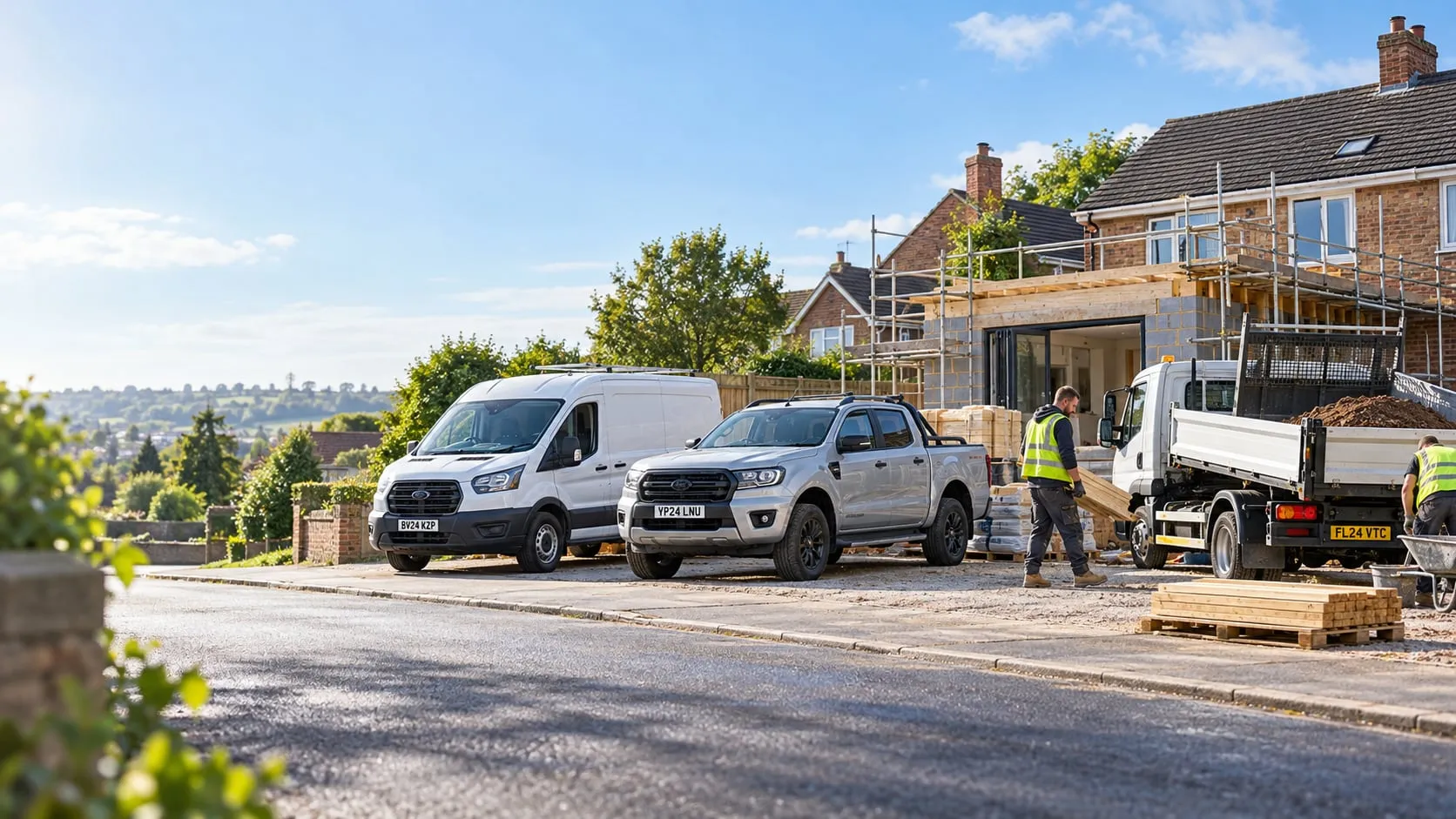
One motor policy for the tippers, double-cab pickups and vans a building firm relies on. A single enquiry about your fleet reaches specialist brokers, who discuss cover and provide quotes.
- Tippers, pickups and crew vans on one schedule
- Options for trailers and towed plant
- Tools and materials add-ons to discuss
Partnered with Quotezone
What being partnered with Quotezone means FleetQuote is a trading name of Simply Quote Comparison Ltd. Enquiries are passed to Quotezone, a trading style of Seopa Ltd (FCA FRN: 313860), which operates the quote panel. Simply Quote Comparison Ltd is an Introducer Appointed Representative of Seopa Ltd (FCA reference: 1011184), so we may be paid a commission if your enquiry leads to a policy. We do not give advice or make recommendations. Your choice of provider is entirely your own.FleetQuote is a quotation service, not an insurer or broker.
Last reviewed 17 September 2026
Fleet insurance quotes from the providers on our partner panel, including
















What underwriters ask a building firm
A builder's vehicles do very different jobs in a single week, and the questions follow that.
-
The kind of building work
Extensions, loft conversions, refurbishments, new-build plots or repairs. Each changes loads, mileage and where vehicles park.
-
Who gets behind the wheel
Directors, employed tradespeople, labourers and self-employed trades you bring in for part of a job.
-
Weights and loads
Plated weights of tippers and pickups, how close they run to the limit, and what gets towed.
-
Where vehicles sit during the day
Client driveways, residential streets, merchant yards and live plots with open access.
-
Claims record
Previous claims across every vehicle, what caused them and whether any are still open.
Overview
Builders fleet insurance
A building firm rarely runs matching vehicles. There might be a long-wheelbase van for the bricklaying gang, a double-cab pickup the site foreman takes home, a 3.5-tonne tipper for muck and aggregate, and a car the director uses to price up jobs.
Builders fleet insurance brings those onto one motor policy with one renewal date. A new tipper or a sold van becomes an adjustment to the schedule instead of a separate purchase.
This page is written for general builders, extension and renovation specialists, loft conversion firms and small developers. If you run bigger civils or groundworks contracts with plant crossing public roads, our page on construction fleet insurance goes further into that territory.
In short
Builders fleet insurance is a single motor policy covering the tippers, pickups, vans and cars a building firm uses. Insurers look at the work you do, who drives, vehicle weights, towing and where vehicles are left during the day. Materials, tools and towed plant usually need separate cover or add-ons, so list them when you make an enquiry.
At a glance
- Common vehicles
- Crew vans, double-cab pickups, 3.5-tonne and heavier tippers, trailers
- Fleet sizes
- Insurer-dependent; many fleet products start from 2 or 3 vehicles
- Legal minimum
- At least third-party cover for vehicles used on a road or other public place
- Heavier tippers
- Over 3,500kg plated weight generally needs an operator's licence for business use
- Usually separate
- Plant, tools and materials cover
- Licence to check
- Category C1 for vehicles from 3,500kg to 7,500kg
01
Which Building Firms Does Fleet Cover Suit?
Fleet cover starts to make sense once a building firm runs several vehicles and more than one or two people drive them. A mix of vans, pickups and at least one tipper is the usual trigger.
The pattern it fits
- a mix of vans, pickups and at least one tipper
- employed trades and labourers who swap between vehicles
- vehicles added and disposed of as work picks up or slows
- one set of documents instead of several renewal dates to chase
Where insurers draw the fleet line
Insurer thresholds vary. As a general pattern in the market, many fleet products start from 2 or 3 vehicles, and mini fleet products often run up to somewhere around 12 to 20.
That is common practice rather than a rule. A sole trader with one van and a trailer will usually be better served elsewhere, and the mini fleet insurance page explains the options for smaller firms.
Builders cover or construction cover
There is no fixed legal difference between a builders fleet policy and a construction fleet policy, and many insurers use the same underlying product. A domestic builder works off residential streets and client driveways, while larger contractors work from controlled sites with heavier vehicles.
02
What Cover Do Tippers, Pickups And Crew Vans Need?
Each vehicle on the schedule gets its own cover level, so a financed double-cab pickup and a tired old tipper do not have to be insured the same way. At least third-party cover is the legal minimum for any vehicle used on a road or other public place.
Cover levels across a mixed schedule
The core of any fleet policy is the cover level: third party only, third party fire and theft, or comprehensive cover. Most builders pick comprehensive cover for newer or financed vehicles, and a fleet can mix levels, for example keeping an older tipper on third party fire and theft.
Under section 143 of the Road Traffic Act 1988 a vehicle used on a road or other public place needs at least third-party insurance in force for that use.
What each vehicle does in a working week
| Vehicle | Job on a building firm | What the insurer wants recorded |
|---|---|---|
| Long-wheelbase van | Bricklaying gang, hand tools, bagged materials | Overnight location, racking, tools carried |
| Double-cab pickup | Site foreman, towing a plant trailer | Private use, towing limit, who takes it home |
| 3.5-tonne tipper | Muck away, aggregate and spoil runs | Plated weight and how close to it the tipper runs |
| Tipper over 3,500kg | Heavier muck and aggregate work | C1 entitlement and operator’s licence details |
| Plant or tipping trailer | Mini digger, dumper, whacker plate | Value, security, theft when detached |
| Director’s car | Pricing up jobs and site visits | Class of use and business mileage |
The extensions builders ask about
| Add-on | Why a builder might want it | Point to check |
|---|---|---|
| Tools in vehicle cover | Power tools, levels and saws left in vans | Overnight and unattended theft conditions |
| Goods in transit | Materials bought for a client’s job | Whether client-owned materials count |
| Trailer cover | Plant trailers, tipping trailers | Theft when detached and parked |
| Breakdown and recovery | Tippers stranded mid-delivery | Weight limits on recovery |
| Legal expenses | Recovering uninsured losses after a collision | Claim limits and exclusions |
Pickups that go home at night
Double-cab pickups deserve their own mention. They are often used privately as well as for work, so the class of use needs to include social, domestic and pleasure driving for whoever takes the vehicle home.
The vehicle class of use guide explains how those categories fit together.
03
Are Materials From The Builders’ Merchant Covered?
Not by the motor policy. Bricks, timber, plasterboard or a new boiler in the back sit outside motor cover unless you add goods in transit or a similar extension.
Who owns the load
Most builders spend part of every week at builders’ merchants. A van coming back loaded with plasterboard or a pallet of blocks has a different risk profile from one carrying only hand tools, both in weight and in theft appeal.
Work out who owns the materials at any given moment: you, the client or a main contractor. If materials often stay in vehicles overnight or belong to the client, say so, because theft conditions can apply.
Where loaded vehicles get left
Vehicles are often left loaded outside a client’s house, or at a merchant while the driver is elsewhere in the yard. Both situations come up in theft conditions, so describe the habit rather than the exception.
Overloading a tipper or a plant trailer
Watch out: Overloading is easy with a tipper collecting aggregate or a pickup towing a loaded plant trailer. A vehicle run over its plated weight creates a legal problem for the driver and can give an insurer grounds to question a claim.
Know your payloads. Weigh a loaded tipper once so the gang has a real reference for what a full body of wet muck does to the plated weight.
04
Who Insures A Mini Digger On A Trailer?
The towing vehicle and the trailer are a motor question, and the digger itself is normally plant. Damage to or theft of the digger usually needs plant cover or a contractors’ all risks policy.
The combination, piece by piece
Towing a mini digger is a common source of confusion. The towing vehicle and trailer are covered as part of the motor risk, and the machine on the back is not.
That holds whether the digger is on the trailer, parked at the yard or working on site. Ask the broker to confirm how each part of the combination is insured.
What to record before you enquire
- Which vehicles tow, what they tow and the plated weight of each trailer
- Whether a mini digger, dumper or whacker plate travels on a trailer
- The value of every trailer and the security used when it is detached
- Whether any machine is ever driven on a public road rather than carried
05
What Do Insurers Ask About Residential Streets And Client Driveways?
Where vehicles sit during the working day as well as overnight. A domestic builder’s vehicles spend the day on the street outside the job, across a client’s drive or half on a verge, which is a different risk from a fenced compound.
Daytime parking on a live job
Unlike a contractor behind hoarding, a domestic builder’s vehicles stay in public view all day. That brings its own risks: a skip lorry clipping a parked van, a pedestrian tripping over a trailer drawbar, or tools taken from a van while the gang is in the back garden.
Useful answers for the broker include whether vans are locked when unattended, whether tools are carried through to the work area, and whether trailers are chained or hitch-locked.
Access, neighbours and the claims record
Parking on a client’s driveway with their permission is a different matter from blocking a neighbour’s access. A pattern of parking disputes or minor bumps will show up in your claims record over time.
06
Which Licences Do Tippers Over 3.5 Tonnes Need?
Category C1 for a tipper plated above 3,500kg and up to 7,500kg, and a goods vehicle operator’s licence for business use above 3,500kg. This is the operational area where builders most often get something wrong.
Driver entitlement
A standard car licence (category B) covers vehicles up to 3,500kg maximum authorised mass, under the GOV.UK driving licence categories. A tipper plated above 3,500kg and up to 7,500kg needs category C1.
Drivers who passed their car test before 1 January 1997 usually hold C1 entitlement as well, as set out in the old driving licence categories. That entitlement can be lost, so check the licence record itself rather than assuming from someone’s age.
Towing entitlement
Category B also allows a trailer up to 3,500kg MAM as long as the whole combination stays within 7,000kg. Match every driver to the combinations their licence allows before a loaded plant trailer goes on the back.
The operator’s licence question
You generally need a goods vehicle operator’s licence to use goods vehicles over 3,500kg gross plated weight for business, and that includes carrying your own materials and spoil. A restricted licence covers own goods only.
If you ever move materials for another firm for payment, that is a different licence type and a different class of use, which the broker needs to know about. More detail sits on our HGV fleet insurance page.
Quick checks for heavier vehicles
- Plated weight of every tipper and pickup recorded on the fleet schedule
- Each driver’s licence categories checked against the vehicles they drive
- Operator’s licence in place where a vehicle is over 3,500kg
- Trailer weights and towing vehicles matched to driver entitlement
07
Can Self-Employed Trades Drive Your Vehicles?
Only if the driving clause allows it. An any-driver clause may cover a subcontracted plasterer or roofer who meets the age and licence conditions, and a named-driver clause will not unless they are listed.
The driving clause
Building work relies on self-employed plasterers, electricians, roofers and bricklayers who come in for part of a job. It is common for one of them to borrow a van for a merchant run or to take the tipper to the tip.
Some policies only extend to employees. Raising at the outset that subcontracted trades may drive is far easier than finding out after a collision, and the any-driver fleet insurance page sets out the trade-offs.
Where the exposure sits
Under section 143 of the Road Traffic Act 1988 it is an offence to cause or permit someone to use a vehicle without insurance in force for that use. The business carries the exposure, not only the driver.
Labourers on a new licence
Many insurers set a minimum age or licence period for drivers, and some restrict heavier or specialist vehicles further. Check a new labourer’s licence covers the tipper’s weight before he drives it, and confirm with the broker that the policy terms allow it.
08
How Do Underwriters Judge A Building Firm?
On the work you do, who drives, the weights you run and your claims record. Trading history, vehicle values, yard security and how far jobs spread all feed into the view.
The details that shape it
- how long the business has been trading and whether it has run a fleet before
- claims experience, including patterns such as repeated reversing or parking damage
- the value of the vehicles and whether any are modified with racking, crew cabs or tipping bodies
- security at the yard or at drivers’ homes
- how far jobs spread geographically
Managing driving risk
Insurers also take an interest in how you manage driving risk. The HSE expects employers to manage the risks of people driving for work in the same way as other health and safety risks, including checking licences and making sure vehicles are safe.
Showing that you do this does not guarantee a better price. It does give the broker a clearer story to present.
09
When Is A Builders Fleet Policy The Wrong Fit?
When you run only a couple of vehicles, when the real exposure is plant rather than vehicles, or when part of the business hauls other people’s materials for payment.
Four situations where something else fits better
- One van and one pickup. Individual policies or a multi-vehicle policy may be simpler and priced sensibly.
- Expensive plant on site. A fleet policy will not protect a digger working on site, and plant or contractors’ all risks cover is what you need.
- Tools and materials as the main worry. Those are usually a separate conversation, through an add-on or a standalone policy.
- Hauling for other firms. Carrying other people’s materials for payment needs hire and reward cover and the right operator’s licence, which a standard builder’s set-up may not include.
Two vans and a pickup
Some insurers will write a fleet or mini fleet policy from two or three vehicles, while others start higher. The broker can explain which structure fits your vehicles, drivers and plans for growth, and our guide on how many vehicles you need for fleet insurance sets out how insurers treat very small fleets.
10
What Can A Building Firm Do To Present Well?
Match drivers to vehicles, check licences, keep tools out of vans overnight and record every scrape. No broker can promise a price, and a tidy fleet is easier to place.
Five steps that help
- Match drivers to vehicles, keeping the least experienced off the tipper and away from towing.
- Check licences at the start of employment and periodically after that.
- Store tools out of vans overnight where you can, and fit deadlocks or tool vaults where you cannot.
- Record every scrape, however small, and look for patterns such as reversing on tight residential streets.
- Consider a higher voluntary excess on older vehicles if cash flow allows.
Keeping the schedule accurate
Record every vehicle, its plated weight and its modifications in one place using our fleet schedule template. Our guide on how to reduce fleet insurance costs goes through each lever in more depth.
Before you enquire
What to have to hand
What you’ll need for a quote
You can start an enquiry without all of this. The broker will ask for anything missing.
- Number and types of vehicles (rough is fine to start)
- Renewal date and current policy schedule
- Claims experience letter from your current insurer
- Driver ages and any penalty points
- Where vehicles are kept overnight
Sources
Updates
- : last reviewed
General information about UK fleet insurance, not advice. How we write and check our content
Ready to get started?
Fleet insurance enquiries for builders and general trades businesses
One enquiry covering the vehicles, drivers and work involved. A specialist broker uses that detail to discuss cover that fits how your business actually runs.
FleetQuote is an introduction service, not an insurer or broker. We pass your enquiry to Quotezone, which operates a panel of brokers and insurers. How our service works
Questions
Builders fleet insurance: common questions
Is a builders fleet policy different from a construction fleet policy?
There is no fixed legal difference, and many insurers use the same underlying product. The practical difference is the risk. A domestic builder's vehicles spend the day on residential streets and client driveways, collect materials from merchants and tow small plant, while larger contractors tend to work from controlled sites with heavier vehicles. Describe your actual work to the broker so the cover reflects it.
Can I insure a tipper and a double-cab pickup on the same policy as my vans?
Usually, yes. Fleet policies are designed to hold different vehicle types on one schedule. The insurer will want the plated weight, value and use of each one, and whether the tipper carries only your own spoil and materials. If any vehicle is heavy enough to need an operator's licence, have those details ready.
Does my fleet policy cover a mini digger on a trailer?
The trailer and towing vehicle are a motor question, but the digger itself is normally plant. Damage to or theft of the digger, whether on the trailer, at the yard or working on site, usually needs plant cover or a contractors' all risks policy. Ask the broker to confirm how each part of the combination is insured.
Are materials collected from a builders' merchant covered?
Motor cover protects the vehicle and your liability to other people. Bricks, timber, plasterboard or a new boiler sitting in the back are usually outside it unless you add goods in transit or a similar extension. If materials often stay in vehicles overnight or belong to the client, say so, because theft conditions can apply.
My labourer has a new licence. Can he drive the tipper?
That depends on the policy's driver conditions and on his licence entitlement. Many insurers set a minimum age or licence period for drivers, and some restrict heavier or specialist vehicles further. Check his licence covers the tipper's weight before he drives it, and confirm with the broker that the policy terms allow it.
Do I need a fleet policy if I only have two vans and a pickup?
Not necessarily. Some insurers will write a fleet or mini fleet policy from two or three vehicles, while others start higher, and individual or multi-vehicle policies can still suit very small firms. The broker can explain which structure fits your vehicles, drivers and plans for growth.
Related reading
- Cover Construction fleet insurance Construction fleet insurance for crew vans, pickups, tippers and site vehicles. What insurers ask about drivers, plant, tools and site security.
- Cover Van fleet insurance Van fleet insurance explained for UK firms running two or more vans. Class of use, tools and goods cover, security, conversions and what insurers ask.
- Cover HGV fleet insurance HGV fleet insurance for hauliers and own-account operators. O-licences, C1 and C entitlement, goods in transit, trailers and what insurers ask about.
- Cover Any driver fleet insurance Any driver fleet insurance explained. How any-driver, named and open driving clauses differ, age bands, licence conditions, excesses and employer duties.
- Guide Vehicle class of use explained What class of use means on business vehicle insurance, from commuting and business use to own goods, haulage, courier and hire work, with a table by business type.
- Guide How to reduce fleet insurance costs Practical ways to keep fleet insurance costs under control, from driver checks, telematics and security to excess choices, claims handling and renewal evidence.
- Guide How many vehicles do you need for fleet insurance? There is no legal minimum fleet size. What insurers look for, how small fleets of two to four vehicles are treated, and when a fleet policy starts to make sense.
What FleetQuote does, and doesn't do
FleetQuote is a trading name of Simply Quote Comparison Ltd (company number 15008284), registered office Sentinel House, Ancells Business Park, Harvest Crescent, Fleet, Hampshire, GU51 2UZ.
Simply Quote Comparison Ltd is an Introducer Appointed Representative of Seopa Ltd (Financial Conduct Authority reference 1011184). We are not authorised in our own right: we act under Seopa Ltd, which is authorised and regulated by the Financial Conduct Authority under reference 313860.
That permission covers introducing your enquiry and nothing more. We do not provide insurance, arrange insurance, recommend a policy or give advice.
When you send an enquiry we introduce you to Quotezone, a trading style of Seopa Ltd (FCA FRN 313860), which operates a panel of brokers and insurers. Any quote, advice or policy comes from them, not from FleetQuote.
Simply Quote Comparison Ltd is paid a commission when an enquiry leads to a policy, at no cost to you. It is free to enquire and you are under no obligation to buy.