Fleet insurance
Minibus Fleet Insurance
One policy for the minibuses and coaches your organisation runs, whether volunteers drive them or paid staff. One enquiry covers every vehicle and driver.
- Schools, charities, care providers and clubs
- Permit, PSV and private use arrangements
- Passenger and accessibility equipment cover
Partnered with Quotezone
What being partnered with Quotezone means FleetQuote is a trading name of Simply Quote Comparison Ltd. Enquiries are passed to Quotezone, a trading style of Seopa Ltd (FCA FRN: 313860), which operates the quote panel. Simply Quote Comparison Ltd is an Introducer Appointed Representative of Seopa Ltd (FCA reference: 1011184), so we may be paid a commission if your enquiry leads to a policy. We do not give advice or make recommendations. Your choice of provider is entirely your own.FleetQuote is a quotation service, not an insurer or broker.
Last reviewed 17 September 2026
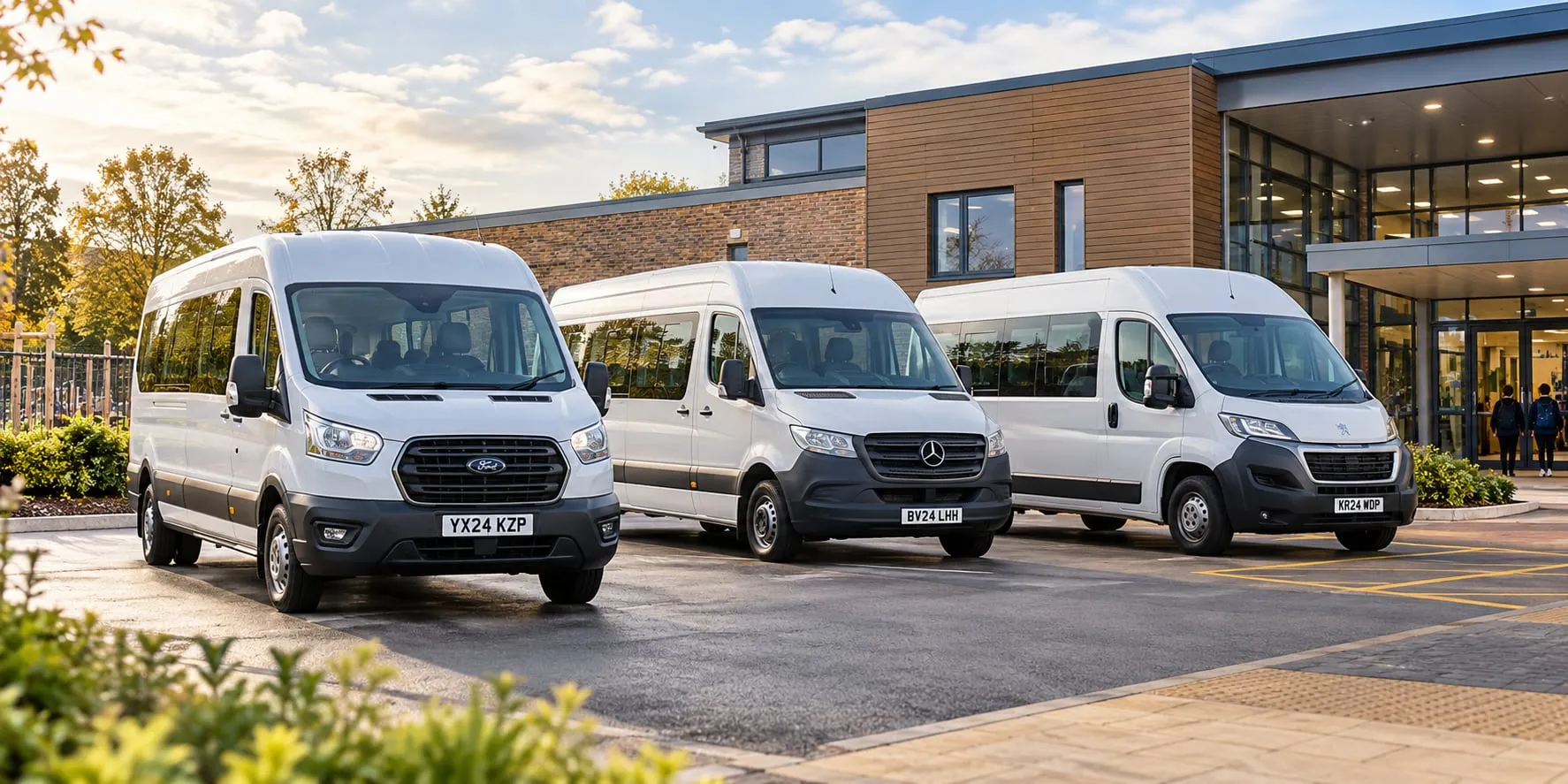
Fleet insurance quotes from the providers on our partner panel, including
















What insurers look at for minibus fleets
-
Who is on board
Pupils, care home residents, club members and fare-paying passengers each bring different duties and a different claims profile.
-
Driver entitlement
Whether each driver holds D1, relies on pre-1997 rights or drives under the category B conditions affects what they can legally drive.
-
Whether anyone pays
Charging for transport, even to cover costs, can bring in permits or a PSV operator licence, and the policy has to reflect it.
-
Seats and weight
Passenger seat count and maximum authorised mass decide the licence needed and how the vehicle is rated.
-
Trips and routes
Daily school runs, weekend fixtures and trips abroad are very different exposures. Insurers ask what a typical month looks like.
Overview
Minibus fleet insurance
Minibus fleet insurance places the minibuses an organisation runs onto one motor policy, with a single schedule, renewal date and set of driver conditions. It is used by schools and academy trusts, charities and community transport groups, care homes, sports clubs, and commercial passenger operators, some of which also run coaches.
Minibuses sit in an awkward legal middle ground. They are too big for the simple rules that cover cars, but many are driven by teachers, volunteers or care staff rather than by professional drivers.
The insurance has to fit that reality: who drives, whether they are paid, whether passengers contribute to the cost, and what licences or permits the organisation holds. For how fleet policies work more broadly, see our fleet insurance overview.
In short
Minibus fleet insurance covers several minibuses, and sometimes coaches, run by one organisation under a single motor policy. It is used by schools, charities, community transport groups, care providers, sports clubs and commercial operators. The policy has to reflect who drives, whether they are paid, whether passengers are charged, and whether the organisation works under a permit or a PSV operator licence.
At a glance
- D1 licence category
- Minibuses with no more than 16 passenger seats and a maximum length of 8 metres
- Category B limit
- Up to 8 passenger seats and 3,500kg MAM
- Section 19 and 22 permits
- Let not-for-profit organisations charge for transport without a PSV operator licence
- Permit driver minimum age
- 21 or over
- PSV operator licence
- Needed to run a vehicle for 9 or more passengers for hire or reward
- Scope
- Licensing rules above apply in Great Britain
01
Which Organisations Need Minibus Fleet Insurance?
Organisations that own or lease several minibuses and run them regularly, from schools and academy trusts to charities, care homes, sports clubs and commercial passenger operators. The licensing rules on this page apply in Great Britain.
Typical operators
- Schools, colleges and academy trusts running minibuses for trips, fixtures and transport between sites
- Charities and community transport groups carrying members, older people or people with disabilities
- Care homes and day centres taking residents to appointments and outings
- Sports clubs and youth organisations travelling to matches and events
- Commercial operators providing private hire minibus work, airport transfers or contract transport
- Coach operators whose fleet mixes minibuses with larger coaches
Fleet sizes
There is no fixed number that makes a fleet. As general market practice, many fleet products start from 2 or 3 vehicles, and mini-fleet products often go up to somewhere around 12 to 20.
A school with two minibuses and a charity with fifteen may be offered quite different products, so ask the broker which one fits. Our guide to how many vehicles you need for fleet insurance explains how insurers treat small groups of vehicles.
02
Who Is Allowed To Drive A Minibus?
Anyone with D1 entitlement on their licence, plus some car licence holders under strict conditions. Driver entitlement is the first thing to get right, because an unlicensed driver can leave a journey uninsured.
The licence positions compared
| Licence position | What it allows | Main conditions |
|---|---|---|
| D1 entitlement (test taken) | Minibuses with up to 16 passenger seats, max length 8 metres | Trailer up to 750kg |
| Car test passed before 1 January 1997 | Usually D1 for minibuses up to 16 passenger seats | Often restriction code 101, not for hire or reward |
| Category B only, outside a permit | Minibus with up to 16 passenger seats in limited cases | Age 21+, licence held 2 years, voluntary, non-commercial body, social purposes, no charge, no trailer, weight limits |
| Category D | Buses with more than 8 passenger seats | Full PCV entitlement |
The category B route
The category B route is narrower than many organisations assume. To drive a minibus on a car licence outside a permit, all of these must apply:
- you are 21 or over and have held your licence for at least 2 years
- you are driving voluntarily, for a non-commercial body, for social purposes
- passengers are not charged
- the maximum authorised mass is no more than 3,500kg, or 4,250kg for electric or hydrogen vehicles, with up to 750kg extra allowed for equipment for disabled passengers
- you are not towing a trailer
GOV.UK sets the conditions out in its guidance on driving a minibus. Different rules apply to drivers aged 70 or over and to driving abroad.
Checking the licence itself
Pre-1997 entitlement can be lost, for example when a licence is renewed on medical grounds, so check each driver’s actual licence or DVLA record rather than relying on the year they passed. Restriction codes matter as much as the categories, and GOV.UK explains them under driving licence codes.
What D1 and category D allow is set out in the GOV.UK driving licence categories. Our guide to driving licence checks explains how to run a check with the driver’s consent.
Watch out: A teacher paid by the school is not a volunteer. Whether a paid employee can drive a school minibus on category B entitlement depends on the permit position and the exact conditions, so confirm it before the timetable relies on them.
03
When Do Permits Or A PSV Operator Licence Apply?
The moment passengers pay anything towards a journey, the rules change. A PSV operator licence is needed to run a vehicle for hire or reward carrying 9 or more passengers, unless a not-for-profit organisation holds a section 19 or section 22 permit.
The four operating bases
| Operating basis | What it allows | Who can use it | Vehicle size |
|---|---|---|---|
| Private use, no charge | Journeys where passengers are not charged | Any organisation | No permit or PSV licence needed |
| Section 19 permit | Charging specific groups of passengers, not the general public | Not-for-profit organisations | Standard permits up to 16 passengers, large bus permits 17 or more |
| Section 22 community bus permit | Charging on services open to the general public | Not-for-profit organisations | Vehicles for 9 or more passengers |
| PSV operator licence | Running a vehicle for hire or reward | Commercial minibus and coach operators | 9 or more passengers, or smaller where separate fares are charged |
Who issues what
Designated bodies or traffic commissioners issue standard section 19 permits, and only traffic commissioners issue section 22 permits and large bus permits. The Department for Transport updated its guidance on section 19 and 22 permits significantly in December 2020, after a High Court ruling on what counts as non-commercial.
Check your eligibility against the current guidance before relying on a permit. PSV operator licence types include standard national, standard international and restricted.
Permit driver conditions
Permit drivers must be 21 or over. For vehicles carrying 8 or fewer passengers they need a category B licence held for at least 2 years.
For minibuses carrying 9 to 16 passengers, drivers who passed their car test before 1 January 1997 generally have D1 entitlement. Later drivers can drive a permit minibus on a category B licence only if they have held it for at least 2 years, are unpaid apart from out-of-pocket expenses, and the vehicle weighs no more than 3.5 tonnes.
Matching the policy to the arrangement
Your motor policy has to reflect the arrangement, so give the broker your permit or licence numbers along with the basis you operate on: privately with no charge, under a section 19 or 22 permit, or under a PSV operator licence. The road traffic law requirement for third-party cover applies to the use the vehicle is really put to, so cover written for free social trips will not necessarily extend to charged services.
04
What Does A Minibus Fleet Policy Cover?
The vehicles and your liability to passengers and other road users, at third party only, third party fire and theft or comprehensive cover. Injury to passengers arising from use of the vehicle falls under the third-party section, which the law requires.
Add-ons that matter for minibuses
- Personal accident. Benefits for the driver and passengers after an accident, regardless of fault, on some policies.
- Accessibility equipment. Wheelchair lifts, ramps, floor tracking and restraints, included in the vehicle value.
- Breakdown and recovery. Recovering a vehicle full of pupils or residents needs a response that handles passengers too, not just the vehicle. Check whether onward travel is included.
- European use. School and club trips abroad need cover that extends to the countries visited, plus the right driver entitlement for driving there.
- Replacement vehicle. A car-sized courtesy vehicle does not help a school with a fixture to reach, so ask whether a like-for-like replacement is available.
- Legal expenses. Help recovering uninsured losses when someone else caused the accident.
Where the motor policy stops
Liability for passengers away from the vehicle, such as during an activity on a trip, is normally a matter for public liability or the organisation’s own insurance. The motor policy answers for injury arising from use of the minibus itself.
Adaptations and the sum insured
Lifts, ramps, tracking and wheelchair restraints add value to the vehicle and should be included in the sum insured. Give the broker the vehicle value including adaptations, and keep the conversion paperwork with the policy documents.
05
What Do Insurers Ask About A Minibus Fleet?
The vehicles and their seat counts, every driver’s entitlement and whether they are paid, who travels, how the vehicles are used, the operating basis, where vehicles are kept and the claims record.
The questions to expect
- Vehicles. Make, model, year, passenger seat count, maximum authorised mass, adaptations and value.
- Drivers. Ages, licence categories, whether each is paid or voluntary, and any convictions or claims. Insurers set their own minimum ages and licence-held periods, which can be stricter than the legal minimums.
- Passengers. Children, older people, people with disabilities or members of the public, and whether escorts travel with them.
- Use. Typical journeys, annual mileage, school runs, weekend fixtures, overnight trips and travel abroad.
- Operating basis. Private use, section 19 or 22 permit, or PSV operator licence.
- Storage. Where each vehicle is kept overnight and during school holidays.
- Claims experience. Several years of history for the organisation’s vehicles.
Driver training
Insurers commonly ask whether drivers complete a minibus driver assessment or training course before driving.
An assessment is worth having for volunteers who drive only a few times a year, because they get least practice in the vehicle. Our guide to a driving for work policy covers how to write the rules down.
Why seats and weight come first
Passenger seat count and maximum authorised mass decide the licence needed and how the vehicle is rated. That is why the seat figure on the schedule matters as much as the registration does.
Daily school runs, weekend fixtures and trips abroad are also very different exposures, so insurers ask what a typical month looks like. Pupils, care home residents, club members and fare-paying passengers each bring different duties and a different claims profile.
06
Does Minibus Fleet Insurance Cover Coaches Too?
Sometimes. Some insurers write minibuses and coaches together for passenger transport operators, while others handle coaches through a separate passenger transport product.
What coaches add
Coaches bring bigger vehicles, more passengers, category D licences and usually a PSV operator licence. If your fleet includes coaches, say so at the start, along with seat numbers and the type of work they do.
What a coach operator is asked
For coach operators, insurers also ask about the PSV operator licence, the number of PCV drivers, maintenance arrangements and the type of work, such as school contracts, tours or private hire. Seat counts and the mix of work decide which product a broker can put in front of you.
07
When Is Minibus Fleet Cover The Wrong Fit?
When there is one minibus used occasionally, when the vehicle is hired with insurance included, when you lend vehicles to other groups, when the vehicles seat 8 or fewer passengers, or when the operation is really a coach business.
Five alternatives
- One minibus used occasionally. A single vehicle may sit more simply on an individual minibus policy, or be added to an existing mixed fleet insurance policy if you already run cars or vans.
- Hiring a minibus for a trip. If you hire a minibus with insurance included, the hire company’s policy normally covers it, so check the driver conditions before you book.
- Hiring your minibuses out to other groups. Lending or hiring vehicles to people outside your organisation is self-drive hire, which many standard fleet policies exclude, and our page on self-drive hire fleet insurance explains the differences.
- Cars and people carriers with 8 or fewer passenger seats. These do not need minibus cover. A taxi fleet policy suits them if fares are charged, or a standard car fleet policy if not.
- Large coach operations. Established coach operators with many PCV drivers often use specialist passenger transport insurance rather than a general fleet product.
Where cars take over from minibuses
A vehicle with 8 passenger seats or fewer and a maximum authorised mass up to 3,500kg sits inside category B, so it falls outside the minibus licence rules above. A people carrier doing the same school runs is a car fleet insurance question rather than a minibus one.
08
How Do You Keep A Minibus Fleet Easy To Insure?
By keeping a driver register that shows entitlement, restriction codes, check dates and training, and by reviewing the permit position every year. Nobody can promise a particular premium, but an organisation that manages its minibuses well gives the broker a stronger case to present.
Checklist for minibus operators
- Keep a driver register showing each driver’s licence categories, restriction codes, check dates and training
- Check licence entitlement before every new driver takes a vehicle out, not just at renewal
- Write down who is allowed to drive, on which vehicles, and for which journeys
- Keep vehicle checks, defect reports and maintenance records for every minibus
- Store vehicles in a locked compound or secure site during holidays
- Record every incident, however minor, and report claims promptly
- Review the permit or licence position each year, especially if you start charging
- Remove vehicles and drivers from the schedule when they leave
Why the register carries weight
A clear driver register and a written minibus policy show insurers that someone is responsible for the fleet, which is what they want to see. It also makes the renewal conversation a great deal shorter.
Before you enquire
What to have to hand
What you’ll need for a quote
You can start an enquiry without all of this. The broker will ask for anything missing.
- Number and types of vehicles (rough is fine to start)
- Renewal date and current policy schedule
- Claims experience letter from your current insurer
- Driver ages and any penalty points
- Where vehicles are kept overnight
Sources
Updates
- : last reviewed
General information about UK fleet insurance, not advice. How we write and check our content
Ready to get started?
Ready to talk to a fleet insurance specialist?
Answer a few questions about your vehicles, drivers and current cover. We pass your enquiry to a specialist broker, who will discuss your options and quotes with you.
FleetQuote is an introduction service, not an insurer or broker. We pass your enquiry to Quotezone, which operates a panel of brokers and insurers. How our service works
Questions
Minibus fleet insurance: common questions
Can a teacher drive a school minibus on a car licence?
Sometimes. Drivers who passed their car test before 1 January 1997 usually have D1 entitlement, often restricted to not for hire or reward. Later drivers can drive a minibus on a category B licence only under strict conditions, including being 21 or over, holding the licence for 2 years, and the vehicle weighing no more than 3.5 tonnes. Whether a paid teacher meets the conditions depends on the arrangement, so check the rules and the licence itself.
What is the difference between a section 19 and a section 22 permit?
Both let not-for-profit organisations charge for passenger transport without a PSV operator licence. Section 19 permits are for specific groups of passengers, such as members of a club or clients of a charity, not the general public. Section 22 community bus permits allow services open to the general public in vehicles for 9 or more passengers. The guidance changed significantly in December 2020, so check eligibility before relying on a permit.
Does minibus insurance cover passengers who are injured?
Yes, injury to passengers caused by the use of the vehicle is covered under the third-party section of a motor policy, which is a legal requirement. Some policies also offer personal accident benefits for the driver and passengers regardless of fault. Injuries that happen away from the vehicle, such as on an organised trip, usually fall under public liability or the organisation's own liability insurance instead.
Can volunteers drive our charity minibuses on the fleet policy?
Usually, if they meet the policy's driver conditions and hold the right licence entitlement. Insurers commonly set a minimum age and a licence-held period, and some ask for a driver assessment or training. Volunteers driving under a category B licence must also meet the legal conditions for minibus driving. Keep a register of approved volunteer drivers, with licence check dates, and share the criteria with the broker.
Are wheelchair lifts and passenger restraints covered?
They can be, provided they are declared. Lifts, ramps, tracking and wheelchair restraints add value to the vehicle and should be included in the sum insured. Adapted minibuses can carry extra weight for this equipment, and the licence rules allow for it in some cases. Tell the broker the vehicle value including adaptations and keep the conversion paperwork.
Is coach fleet insurance the same as minibus fleet insurance?
They overlap, but coaches bring bigger vehicles, more passengers, category D licences and usually a PSV operator licence. Some insurers write minibuses and coaches together for passenger transport operators, while others handle coaches through a separate passenger transport product. If your fleet includes coaches, say so at the start, along with seat numbers and the type of work they do.
Related reading
- Cover Fleet insurance Fleet insurance for UK businesses running vans, cars, HGVs or mixed fleets. How fleet cover works, and an easy way to reach a specialist for quotes.
- Cover Mixed fleet insurance Mixed fleet insurance puts cars, vans, pickups, HGVs and minibuses on one policy. How uses, drivers and specialist vehicles are handled, and what to prepare.
- Cover Taxi fleet insurance Taxi fleet insurance for UK hackney carriage, private hire and chauffeur operators. Licensing, driver models, passenger liability and what insurers ask.
- Guide Driving licence checks for employers How UK employers check driving licences with DVLA check codes or bulk checking services, how often to check, getting consent, and what insurers may ask.
- Guide How to write a driving for work policy What a driving for work policy covers, a section-by-section outline based on HSE's safe driver, vehicle and journey approach, and how it helps with fleet insurers.
- Guide How many vehicles do you need for fleet insurance? There is no legal minimum fleet size. What insurers look for, how small fleets of two to four vehicles are treated, and when a fleet policy starts to make sense.
What FleetQuote does, and doesn't do
FleetQuote is a trading name of Simply Quote Comparison Ltd (company number 15008284), registered office Sentinel House, Ancells Business Park, Harvest Crescent, Fleet, Hampshire, GU51 2UZ.
Simply Quote Comparison Ltd is an Introducer Appointed Representative of Seopa Ltd (Financial Conduct Authority reference 1011184). We are not authorised in our own right: we act under Seopa Ltd, which is authorised and regulated by the Financial Conduct Authority under reference 313860.
That permission covers introducing your enquiry and nothing more. We do not provide insurance, arrange insurance, recommend a policy or give advice.
When you send an enquiry we introduce you to Quotezone, a trading style of Seopa Ltd (FCA FRN 313860), which operates a panel of brokers and insurers. Any quote, advice or policy comes from them, not from FleetQuote.
Simply Quote Comparison Ltd is paid a commission when an enquiry leads to a policy, at no cost to you. It is free to enquire and you are under no obligation to buy.