Fleet insurance by industry
Fleet Insurance for Security Companies
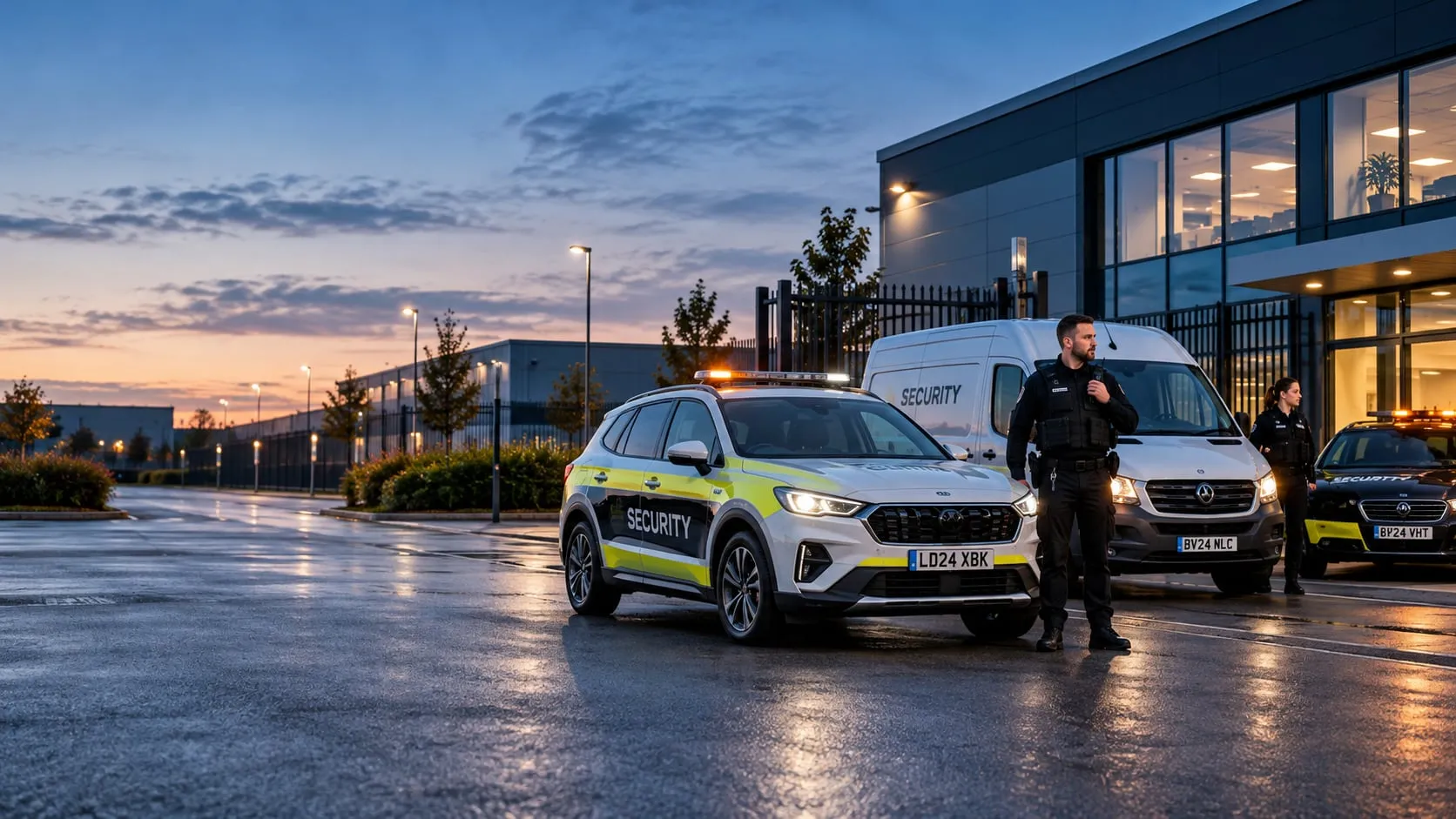
Motor cover for patrol cars, response vans and supervisors' vehicles that work through the night. One enquiry reaches specialist brokers, who discuss cover and provide quotes.
- Patrol and alarm response vehicles
- Vehicles shared across day and night shifts
- Marked and unmarked cars and vans
Partnered with Quotezone
What being partnered with Quotezone means FleetQuote is a trading name of Simply Quote Comparison Ltd. Enquiries are passed to Quotezone, a trading style of Seopa Ltd (FCA FRN: 313860), which operates the quote panel. Simply Quote Comparison Ltd is an Introducer Appointed Representative of Seopa Ltd (FCA reference: 1011184), so we may be paid a commission if your enquiry leads to a policy. We do not give advice or make recommendations. Your choice of provider is entirely your own.FleetQuote is a quotation service, not an insurer or broker.
Last reviewed 17 September 2026
Fleet insurance quotes from the providers on our partner panel, including
















How underwriters see a security fleet
Patrol vehicles work harder and at stranger hours than most business cars, and insurers price in what that means.
-
Near-constant use
Cars handed from one officer to the next at shift change, sometimes running 24 hours a day.
-
Call-outs
How alarm activations are responded to, and what instructions officers are given about driving.
-
Client keys
Whether keys, fobs and alarm codes for client premises are carried in vehicles.
-
Livery and equipment
Marked vehicles, roof lights, dog cages, cameras and radios fitted to each vehicle.
-
Tracking already in place
GPS proof-of-patrol systems that can also show speed and driving behaviour.
Overview
Security company fleet insurance
Security company fleet insurance covers the vehicles a manned guarding or mobile patrol business puts on the road. That means marked patrol cars visiting sites through the night, vans carrying dog units, response vehicles attending alarm activations, and cars for supervisors and account managers.
Instead of insuring each vehicle separately, the whole fleet sits on one motor policy that can change as contracts are won and lost. Few business fleets work the hours a security fleet does.
A patrol car might start at 6pm with one officer, change hands at 6am and be back out by the evening. Insurers know the sector, but they want detail on how those vehicles are driven, parked and handed over.
In short
Security company fleet insurance covers the patrol cars, response vans and supervisors' vehicles a security firm runs, on one motor policy. Insurers focus on round-the-clock use by several officers, how alarm call-outs are driven, lone working at night, client keys carried in vehicles and whether you can show who drove each vehicle and when.
At a glance
- Typical vehicles
- Small marked cars, patrol vans, dog unit vans, supervisors' cars
- Usage pattern
- Night-heavy, often multiple drivers per vehicle per day
- Driver identification
- Keepers must say who was driving when police ask; written requests usually within 28 days
- Keys and alarm codes
- Not part of motor cover; usually a separate insurance question
- Fleet sizes
- Varies by insurer; many products start at 2 or 3 vehicles
- Employer duty
- Manage the health and safety risks of staff who drive for work
01
Which Security Vehicles Sit On One Fleet Policy?
Patrol cars, alarm response vehicles, dog unit vans and supervisors’ cars, all on one schedule. Each type brings its own fitted equipment and its own questions.
The vehicles and what they do
| Vehicle | What it does on a contract | What insurers ask about it |
|---|---|---|
| Marked patrol car | Regular site checks for several clients through the night | Livery, roof lights and who drove it on each shift |
| Alarm response vehicle | Attends activations at short notice | How response times are set and driven |
| Dog unit van | Carries a handler and a working dog | The cage as a modification and the handler’s workload |
| Supervisor’s car | Moves between manned sites and the office | Private use and whether it goes home |
The operations it fits
- mobile patrol companies running regular site checks for multiple clients
- alarm response and keyholding services
- manned guarding firms with supervisors who drive between sites
- event security businesses moving teams and equipment
- dog handling units with specially fitted vans
How small a patrol fleet can be
Fleet size thresholds are set by each insurer, and there is no single market cut-off. As a broad pattern, many fleet products begin at 2 or 3 vehicles, and mini fleet products often cap out somewhere around 12 to 20 vehicles.
A new patrol business with one car is likely to need an individual commercial policy first. The how many vehicles for fleet insurance guide explains why.
02
What Does Round-The-Clock Patrol Use Do To The Risk?
It puts more drivers behind each wheel and most of the mileage into the night. One car can pass through three officers in 24 hours, and no single person owns the damage on it.
Why patrol work rates differently
| Feature of patrol work | Why an insurer cares |
|---|---|
| Vehicles used across two or three shifts | More drivers per vehicle, less individual ownership of damage |
| Frequent stops on industrial estates | Low-speed manoeuvring damage and exposure to theft |
| Night driving | Fatigue and visibility |
| High annual mileage | More time on the road means more exposure |
| Officers working alone | No second person to share driving or witness incidents |
Officers drive short hops between sites, get out, check doors and fences, and drive on, often dozens of times a shift. Each of those stops is a chance to reverse into a bollard on an unlit estate.
A driving clause that covers the rota
A driving clause that reaches every officer on the rota is essential. Named-driver cover can be difficult with a large or changing rota.
Many security firms look at any-driver terms with minimum age and licence conditions instead. The any-driver fleet insurance page explains the trade-offs.
03
Can A Patrol Driver Break Speed Limits To Reach An Alarm?
No. Private security vehicles are not emergency vehicles, and their drivers should work on the basis that speed limits, red lights and other traffic rules apply to them in full.
Who the exemption actually covers
The legal exemption from speed limits is set out in section 87 of the Road Traffic Regulation Act 1984. It covers fire and rescue, ambulance, police and certain National Crime Agency use, not private security.
Beacons and livery change nothing
Fitting amber beacons or putting livery on a car does not give the driver any exemption. There are rules on which lights may be fitted and used at all.
Make sure officers understand this. Insurers will look closely at any collision during a call-out.
Response times set within the law
When an alarm activates there is pressure to get there quickly, and that pressure is where firms pick up both claims and prosecutions. Set written response times that are achievable within the law.
Make it clear that no officer will be criticised for arriving later because they drove safely. The driving for work policy guide covers putting that in writing.
Notices of intended prosecution
For many offences, including speeding, a notice of intended prosecution must usually be served within 14 days under section 1 of the Road Traffic Offenders Act 1988. It normally goes to the registered keeper.
For a security company that means the notice lands at the office, often about a car three different officers drove that week. Which leads to the next question.
04
How Do You Prove Who Drove A Patrol Car At 3am?
With a shift handover log or a telematics record. When police ask, the keeper of the vehicle must say who was driving at the time of an alleged offence.
What the law asks of the keeper
A written request under section 172 of the Road Traffic Act 1988 usually has to be answered within 28 days. A company has a defence if it can show it was reasonable not to keep records of who drove, but relying on that is risky.
With several officers sharing one car in 24 hours, a log is the only reliable way to answer. Guessing is worse than not knowing.
The handover routine
- Officer name, vehicle registration and mileage recorded at the start and end of each shift
- Walk-round check with new damage photographed before driving off
- Fuel level, lights and tyres noted on the log
- Any incident during the shift reported before handing over the keys
- Logs kept for a set period in a place the office can search quickly
The same log protects the business on the insurance side. Damage photographed at 6am is damage nobody can argue about at 6pm.
Proof-of-patrol data
Many patrol companies already run GPS systems to prove site visits to clients. That data can often show speed and harsh braking too, and it can support the broker’s presentation of your fleet.
The telematics and fleet insurance guide covers how insurers may view it. Keep the driver accident card in every vehicle so officers record the right details at the scene.
05
What Happens To Client Keys If A Patrol Car Is Stolen?
The motor policy will not deal with that side of it. Loss of client keys, the cost of changing locks and any resulting liability usually sit under a separate keyholding, liability or professional indemnity arrangement.
Coding and storing keys
A stolen patrol car containing a bunch of labelled client keys and a list of alarm codes is a serious problem for the clients. Code keys instead of labelling them with addresses, and keep them in a locked safe or key box within the vehicle.
Never leave alarm codes written down in a vehicle. Ask the broker how your motor cover and your other business insurances fit together.
SIA licensing is a separate matter
Contract key holding is a licensable activity, so staff doing it may need a Security Industry Authority key holding licence. Response work can need a front line guarding licence too, which GOV.UK explains in its guidance on whether you need an SIA licence.
That is a licensing question rather than an insurance one. It still tends to come up when a broker asks what work you actually do.
06
Which Patrol Vehicle Fittings Count As Modifications?
Livery, roof lights, radios, cameras and dog cages all do. Each one adds to what a claim would need to put right, so each one goes on the schedule.
Livery and roof lights
Marked vehicles attract attention, which deters some crime and invites other kinds. Tell the broker about livery and any roof lights fitted.
A wrapped or signwritten panel costs more to replace than a plain one. That shows up in a repair bill rather than in the vehicle’s book value.
Dog cages and the handler’s van
Carrying a working dog in a properly fitted cage is common, but tell the insurer. The cage is a modification, and the dog adds to the handler’s workload during a call-out.
There may also be questions about damage to the vehicle interior. Any liability for what the dog does outside the vehicle is a separate insurance matter.
Radios and cameras
Radios, in-vehicle cameras and tracking units are all fitted equipment. Some policies offer cover for them, and some treat them as part of the vehicle.
Ask how the policy treats personal belongings and uniforms left in vehicles as well. Those are rarely covered in full.
07
Why Do Insurers Ask About Engines Left Running?
Because many motor policies exclude or restrict theft where keys are left in or on an unattended vehicle, or where the engine is left running.
The exclusion
Patrol work makes leaving the engine running a real temptation on a cold night. A warm car and a two-minute door check feel like a fair trade until the car is gone.
Check your policy wording on unattended vehicles and keys. It is one of the few exclusions that bites on an ordinary night shift.
The site-check rule
Set a clear rule that vehicles are locked with keys removed whenever the officer is out of sight. Make it part of the site-check routine rather than a reminder in a handbook.
Supervisors should spot-check it. An officer who leaves the engine running at one site will do it at all of them.
08
How Do You Protect A Lone Officer Driving At Night?
By treating the journey, the driver and the vehicle as one risk. The HSE expects employers to manage the risks faced by people who drive for work, and most patrol officers drive alone.
What the employer duty covers
The HSE’s guidance on driving and riding safely for work covers the journey, the driver and the vehicle. Its page on driving for work and the law sets out where the duty comes from.
For a security firm that means thinking about fatigue on long night shifts, and about what happens if an officer breaks down on an isolated estate at 3am.
Control room measures
Practical measures include welfare check-ins from the control room and rest breaks built into patrol routes. Breakdown cover that responds at night matters more here than on a nine-to-five fleet.
Give a clear instruction not to use phones while driving. The control room should know where every officer is expected to be.
09
Which Cover Levels And Extras Suit Patrol Vehicles?
Each vehicle on the schedule carries its own level. Patrol cars clock up miles quickly and are often replaced on a short cycle, so newer or leased vehicles usually sit on comprehensive cover.
Levels across the schedule
Third party only, third party fire and theft and comprehensive cover are all available per vehicle. An older supervisor’s car might sit on a lower level than a leased patrol car on its first year.
Extras that keep patrols running
- Replacement vehicle after a covered claim, so a contract round is not left unserviced
- Breakdown cover that responds at night, including to remote industrial sites
- Windscreen cover, useful for vehicles on the road through winter nights
- Legal expenses to recover uninsured losses after a collision that was not your officer’s fault
- Cover for fitted equipment such as light bars, cameras, radios and dog cages
10
When Is A Security Fleet Policy The Wrong Fit?
When officers use their own cars, when there is a single patrol vehicle, or when the work is cash in transit.
Officers using their own cars
If your officers use their own cars, you are managing grey fleet rather than a fleet policy. Their personal insurance needs business use suitable for patrol work, and many personal policies will not stretch to it.
A patrol round is very different from occasional business driving. The grey fleet guide covers the arrangement, and talk to the broker before relying on it.
One patrol vehicle
A firm with a single patrol vehicle may be better served by an individual commercial policy. Fleet terms have little to work with on one line.
Cash in transit
Cash-in-transit work is a different proposition. It usually needs specialist cover for the cash and for armoured vehicles, well beyond a general security fleet policy.
Before you enquire
What to have to hand
What you’ll need for a quote
You can start an enquiry without all of this. The broker will ask for anything missing.
- Number and types of vehicles (rough is fine to start)
- Renewal date and current policy schedule
- Claims experience letter from your current insurer
- Driver ages and any penalty points
- Where vehicles are kept overnight
Sources
Updates
- : last reviewed
- : Legal and regulatory points checked against official sources
General information about UK fleet insurance, not advice. How we write and check our content
Ready to get started?
Fleet insurance enquiries for security businesses
One enquiry covering the vehicles, drivers and work involved. A specialist broker uses that detail to discuss cover that fits how your business actually runs.
FleetQuote is an introduction service, not an insurer or broker. We pass your enquiry to Quotezone, which operates a panel of brokers and insurers. How our service works
Questions
Security company fleet insurance: common questions
Can security patrol vehicles speed or use lights when responding to an alarm?
Private security firms are not emergency services, and their drivers should expect to follow speed limits and traffic signals like any other road user. Fitting warning lights does not change that, and there are rules on which lights may be fitted and used. Make sure officers understand this, because insurers will look closely at any collision during a call-out.
Are client keys covered if a patrol car is stolen?
Not by the motor policy. Loss of client keys, the cost of changing locks and any resulting liability usually sit under a separate keyholding, liability or professional indemnity arrangement. Ask the broker how your motor cover and business insurances fit together, and review how keys are coded and stored inside vehicles.
Our officers leave the engine running while checking a site. Is that a problem?
It can be. Many motor policies exclude or restrict theft where keys are left in or on an unattended vehicle, or where the engine is left running. Patrol work makes this a real temptation on cold nights. Check your wording and set a clear rule that vehicles are locked with keys removed whenever the officer is out of sight.
Do we need to know who drove a patrol car at a particular time?
Yes, in practice. If police ask who was driving when an offence took place, the keeper must give that information, and a company relying on not keeping records has only a limited defence. With several officers sharing one car in 24 hours, a shift log or telematics record is the reliable way to answer.
Can a guard's personal car be used for mobile patrols?
It is possible, but the officer's own policy would need to include business use suitable for patrol work, and many personal policies will not. A patrol round is very different from occasional business driving. If staff use their own cars, talk to the broker about the risks before relying on that arrangement.
Is our dog handler's van insured for carrying a security dog?
Carrying a working dog in a properly fitted cage is common, but tell the insurer. The cage is a modification, the dog adds to the handler's workload during a call-out, and there may be questions about damage to the vehicle. Any liability for what the dog does outside the vehicle is a separate insurance matter.
Related reading
- Cover Car fleet insurance Fleet car insurance for UK businesses running company, pool, sales and salary sacrifice cars. Personal use, grey fleet, leased cars and driver checks.
- Cover Any driver fleet insurance Any driver fleet insurance explained. How any-driver, named and open driving clauses differ, age bands, licence conditions, excesses and employer duties.
- Cover Mixed fleet insurance Mixed fleet insurance puts cars, vans, pickups, HGVs and minibuses on one policy. How uses, drivers and specialist vehicles are handled, and what to prepare.
- Guide Telematics and fleet insurance How fleet telematics and dashcams work, how insurers may use the data, what UK data protection guidance expects of employers, and how to use it for driver training.
- Guide What is a grey fleet? What a grey fleet is, who counts as a grey fleet driver, employer duties under HSE guidance, business use insurance checks and when to switch to fleet vehicles.
- Guide How to write a driving for work policy What a driving for work policy covers, a section-by-section outline based on HSE's safe driver, vehicle and journey approach, and how it helps with fleet insurers.
What FleetQuote does, and doesn't do
FleetQuote is a trading name of Simply Quote Comparison Ltd (company number 15008284), registered office Sentinel House, Ancells Business Park, Harvest Crescent, Fleet, Hampshire, GU51 2UZ.
Simply Quote Comparison Ltd is an Introducer Appointed Representative of Seopa Ltd (Financial Conduct Authority reference 1011184). We are not authorised in our own right: we act under Seopa Ltd, which is authorised and regulated by the Financial Conduct Authority under reference 313860.
That permission covers introducing your enquiry and nothing more. We do not provide insurance, arrange insurance, recommend a policy or give advice.
When you send an enquiry we introduce you to Quotezone, a trading style of Seopa Ltd (FCA FRN 313860), which operates a panel of brokers and insurers. Any quote, advice or policy comes from them, not from FleetQuote.
Simply Quote Comparison Ltd is paid a commission when an enquiry leads to a policy, at no cost to you. It is free to enquire and you are under no obligation to buy.