Fleet insurance
Mixed Fleet Insurance
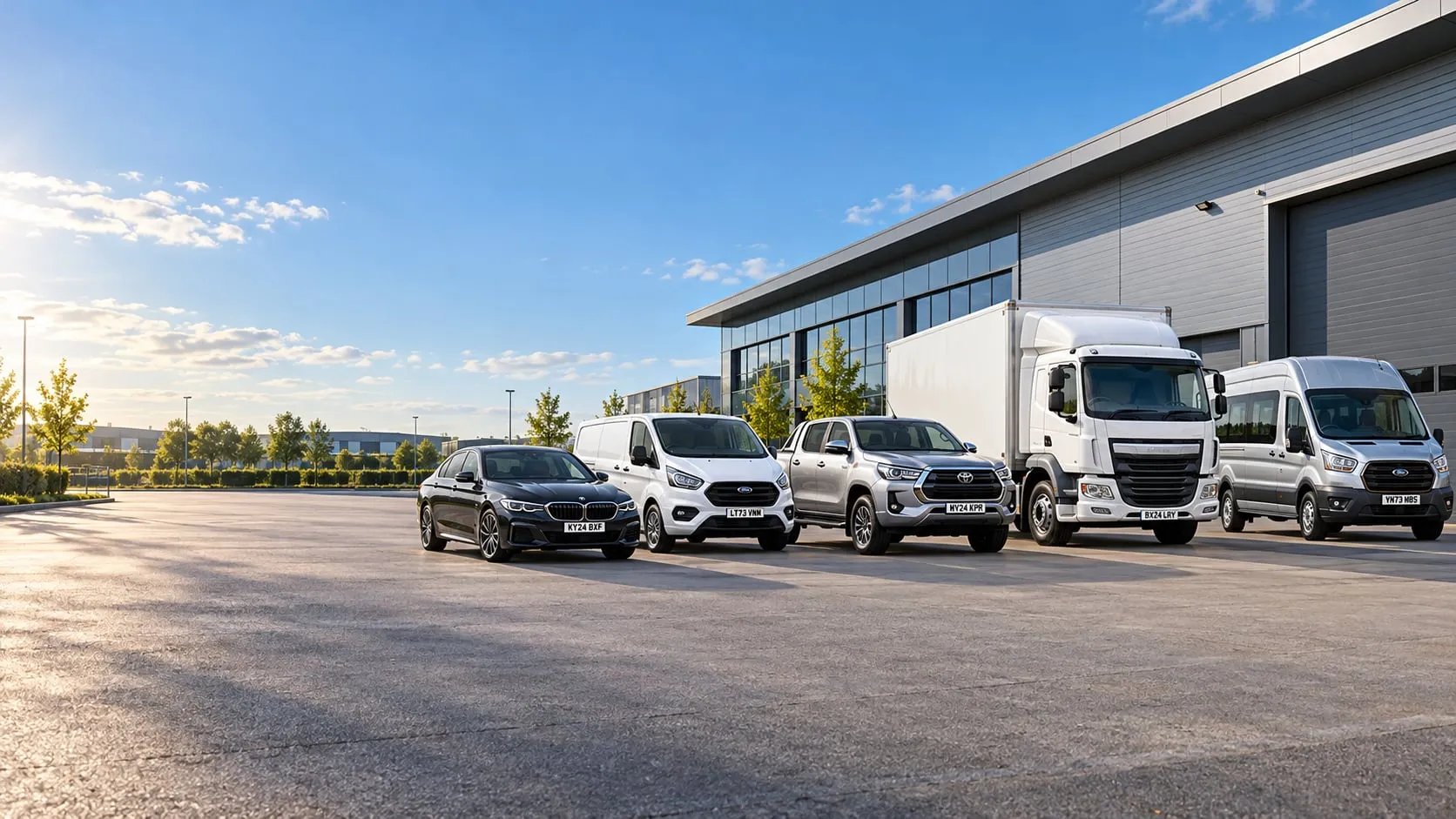
One policy for different vehicle types, from company cars and work vans to pickups, minibuses and HGVs. One enquiry covers the whole schedule, and brokers quote from there.
- Cars, vans, pickups, HGVs and minibuses
- Different drivers and uses per vehicle group
- One renewal date and one schedule
Partnered with Quotezone
What being partnered with Quotezone means FleetQuote is a trading name of Simply Quote Comparison Ltd. Enquiries are passed to Quotezone, a trading style of Seopa Ltd (FCA FRN: 313860), which operates the quote panel. Simply Quote Comparison Ltd is an Introducer Appointed Representative of Seopa Ltd (FCA reference: 1011184), so we may be paid a commission if your enquiry leads to a policy. We do not give advice or make recommendations. Your choice of provider is entirely your own.FleetQuote is a quotation service, not an insurer or broker.
Last reviewed 17 September 2026
Fleet insurance quotes from the providers on our partner panel, including
















What insurers look at for mixed fleets
-
The shape of the fleet
How many of each vehicle type you run. A schedule weighted towards cars is rated differently from one led by vans or HGVs.
-
Use by vehicle group
Private use on company cars, carriage of own goods on vans, and haulage or passenger work on heavier vehicles all need to be declared separately.
-
Driver groups
Who drives which vehicles, their ages and licence entitlements, and whether any-driver cover is needed across the whole fleet or only part of it.
-
Heavy and specialist vehicles
HGVs, tippers, recovery trucks and minibuses bring O-licence, licence category and working-risk questions of their own.
-
Claims experience
Claims history for the whole fleet, and ideally a breakdown showing which vehicle types the claims came from.
Overview
Mixed fleet insurance
Mixed fleet insurance covers different types of vehicle on one policy: company cars, vans, pickups, minibuses, HGVs and some specialist vehicles. Instead of separate car, van and truck policies with different renewal dates, you have one schedule, one renewal and one claims record.
It suits businesses whose vehicles do different jobs. A facilities firm with sales cars and engineers’ vans, a builder with pickups, tippers and a 7.5 tonne lorry, or a care provider with pool cars and a minibus.
Each vehicle type brings its own questions about use, drivers and licensing, and the policy has to answer all of them. For an overview of fleet cover in general, see our main fleet insurance page.
In short
Mixed fleet insurance covers different vehicle types, such as company cars, vans, pickups, minibuses and HGVs, on one policy with one renewal date. Each vehicle keeps its own cover level and class of use, and insurers can often set different driver rules for each vehicle group. Some specialist vehicles and plant may still need separate cover.
At a glance
- Vehicle types
- Cars, vans, pickups, HGVs, minibuses and some specialist vehicles, depending on the insurer
- How it is set up
- Cover level, class of use and driver rules can often differ by vehicle group
- Car licence (category B)
- Vehicles up to 3,500kg with no more than 8 passenger seats
- HGVs
- Goods vehicles over 3.5 tonnes used for business generally need an operator's licence
- Minibuses
- Not-for-profit groups charging for transport may operate under a section 19 or 22 permit
- Driver records
- The keeper must tell police who was driving when asked (Road Traffic Act 1988, s.172)
01
How Does One Policy Handle Different Vehicles?
By listing every vehicle separately and applying cover, use and driver rules to vehicle groups rather than to the fleet as a whole. A mixed fleet policy is not one blanket rule stretched over cars, vans and lorries.
The groups a schedule is built from
- Cars. Company cars allocated to staff, pool cars and directors’ cars.
- Light commercial vehicles. Vans and pickups up to 3.5 tonnes gross vehicle weight.
- Heavy goods vehicles. Rigid lorries and tractor units over 3.5 tonnes.
- Passenger vehicles. Minibuses and people carriers.
- Specialist vehicles. Tippers, recovery vehicles, road sweepers, gritters, mobile plant and anything with a working function.
Different cover levels by group
Each group can carry a different cover level. Some businesses keep comprehensive cover on newer cars and vans and choose third party, fire and theft on older vehicles that would not justify the cost of accidental damage cover.
Excesses can differ by group as well, which is useful when the heavier vehicles cost far more to repair. The shape of the fleet also matters, because a schedule weighted towards cars is rated differently from one led by vans or HGVs.
02
Which Class Of Use Applies To Each Vehicle Type?
Every vehicle needs the class of use that matches what it actually does, so on a mixed fleet one class across the board rarely works. Declare the highest-risk use a vehicle is ever put to, even if it happens rarely.
Class of use by vehicle group
| Vehicle group | Typical use | Questions to expect |
|---|---|---|
| Company cars | SD&P, commuting, business use | Who drives privately, including family members |
| Pool cars | Business use | Where they are kept, how use is recorded |
| Vans and pickups | Carriage of own goods, business use | Tools and goods carried, overnight parking |
| Courier vans | Hire and reward | Goods carried, drops per day, trading conditions |
| HGVs | Own goods or haulage | O-licence, operating centre, driver category |
| Minibuses | Carrying staff, clients or the public | Who travels, whether passengers pay, permits |
Uses that only happen occasionally
A pickup that normally carries your own materials but occasionally tows a customer’s trailer for a fee has to be set up for that use. The same goes for a minibus that sometimes carries fare-paying passengers.
Our guide to vehicle class of use explains each class in turn. Where vans dominate the schedule, our van fleet insurance page goes further into carriage of own goods and hire and reward.
03
How Are Company Cars And Work Vans Treated Differently?
Company cars usually need social, domestic and pleasure use and commuting on top of business use. Work vans are often restricted to business use, commuting and carriage of own goods, and that split is the most common difference on a mixed fleet.
Company cars
The insurer will want to know whether partners or other family members drive them, because that widens the group of drivers beyond your employees. Some businesses allow it on named terms only, and others do not allow it at all.
Private use is a separate question from benefit-in-kind tax, which belongs with your accountant rather than with the broker.
Work vans
Allowing private use on vans is possible, but it adds exposure, so decide whether you really want it. If a few van drivers do use their vans at weekends, name those vans instead of widening the whole group.
Employees’ own cars
Employees who drive their own cars on company business are a separate issue again. Those cars are normally insured on the employee’s personal policy, which needs business use included.
Some insurers offer contingent liability cover to protect the business if that personal cover turns out to be invalid. Check your employees’ cover as part of your driver checks, and our guide to the grey fleet sets out what to ask for.
04
How Are Pool Vehicles Covered On A Mixed Fleet?
Pool vehicles are shared between staff rather than allocated to one person, so they are usually covered on any-driver terms, sometimes restricted to employees above a set age. Expect questions about keys, parking and how you record who drove what.
Keeping a usable log
Expect questions about key control, where pool vehicles are parked, and how you log which employee used which vehicle. A simple booking log helps with insurance and with penalty charge notices and speeding tickets.
The deadlines the log has to beat
For many offences, including speeding, a notice of intended prosecution must usually be served within 14 days under section 1 of the Road Traffic Offenders Act 1988, normally on the registered keeper. When police ask, the keeper must say who was driving under section 172 of the Road Traffic Act 1988, and a written request usually has to be answered within 28 days.
Keep the log for at least as long as it might take a notice to arrive. On a mixed fleet that matters most for the pool cars and pool vans several people drive in a single week.
05
Can Driver Rules Differ By Vehicle Group?
Often yes. Insurers can apply age, experience and named-driver restrictions to groups of vehicles rather than to the whole fleet, which lets younger staff drive the lower-risk vehicles without changing the terms on the HGVs.
Common approaches
- any driver above a minimum age on cars and vans
- named drivers only on HGVs, minibuses or high-value vehicles
- a separate age or experience limit on heavier vehicles
- a young or inexperienced driver excess that applies to certain groups
The minimum age for any-driver cover varies between insurers.
Licence entitlement against each vehicle
A standard car licence (category B) covers vehicles up to 3,500kg with no more than 8 passenger seats under the GOV.UK driving licence categories, so it does not automatically cover a minibus or anything over 3.5 tonnes. Drivers who passed their car test before 1 January 1997 usually also hold C1 entitlement for vehicles from 3,500kg to 7,500kg and D1 entitlement for minibuses with up to 16 passenger seats, usually not for hire or reward, as set out in the old driving licence categories.
Check each driver’s actual entitlement against the vehicles they will drive, and repeat the check periodically. A mixed fleet usually has sales staff in cars, apprentices in vans and experienced drivers in HGVs, so one set of restrictions across everything ends up either too loose or too tight.
06
What Changes When You Add An HGV, Minibus Or Specialist Vehicle?
The insurer starts asking operator licence, licence category and working-risk questions that a car and van fleet never raises. Adding one heavier or specialist vehicle is common, and it is usually the vehicle the underwriter concentrates on.
HGVs
In Great Britain, goods vehicles over 3.5 tonnes used to carry goods for business, including your own goods, generally need an operator’s licence, although some vehicles are exempt. Expect to provide your O-licence number and type, the operating centre address, maintenance arrangements, and the driver’s licence category and Driver CPC status.
Say whether the vehicle carries your own goods or does haulage for others, and give the typical loads and distances. Where heavy vehicles begin to lead the fleet, our HGV fleet insurance page covers them in their own right.
Minibuses
Minibuses bring passenger liability into the picture, so the insurer will want to know who travels, whether any passenger pays, and who drives. Not-for-profit organisations that charge for passenger transport can do so without a PSV operator licence if they hold a section 19 or section 22 permit, issued by a designated body or a traffic commissioner.
Drivers need the right entitlement: D1 on their licence, or, for later car licence holders, the conditions GOV.UK sets out for driving a minibus, such as being 21 or over, having held the licence for at least 2 years and driving unpaid. Care providers and schools should also mention passengers with mobility needs and whether the vehicle has wheelchair access.
Specialist vehicles and plant
Tippers, recovery trucks, vehicles with cranes or tail lifts, and plant driven on public roads all need road risks cover like any other vehicle. The working part of the vehicle is a different question.
Damage or injury caused while a crane arm, tipper body or other equipment is in use may fall outside a standard motor policy and need a tool-of-trade or working-risks extension, or separate liability or plant cover.
Ask the broker to explain where the motor policy stops, especially if you run construction vehicles and plant.
07
How Is Claims Experience Read On A Mixed Fleet?
Insurers look at the record for the whole fleet, but on a mixed fleet the detail behind the totals decides how it reads. Three small car claims in a year tell a different story from one serious HGV collision.
What the letter should show
Ask your current insurer or broker for a claims experience letter, and make sure it shows for each claim:
- the date, the vehicle and its type
- the driver involved
- whether it was fault, non-fault or theft
- amounts paid and any amount still reserved on open claims
A run of van thefts from one postcode points to a security problem rather than a driving one, and only a breakdown by vehicle type makes that visible. Our guide to the claims experience letter covers what to ask your current insurer for.
Explaining what you changed
If you have made changes since a claim, such as moving vans into a locked yard, fitting cameras to HGVs or removing a driver from the policy, write that down. A broker can put that context to underwriters, and it carries more weight with dates attached.
08
When Is A Mixed Fleet Policy The Wrong Fit?
When only two or three vehicles are involved, when most of the cars belong to staff, when passenger transport is the main activity, when plant spends more time working than driving, or when one heavy vehicle does haulage for other businesses.
Five alternatives worth checking
- You run a car and a van or two, each with one regular driver. A multi-vehicle insurance policy or separate policies may be simpler and keep existing no-claims discounts working for you.
- Most of the “cars” are employees’ own. Staff cars used for work are a grey fleet, insured on each employee’s own policy with business use included.
- Passenger transport is the main activity. A minibus operation carrying the public or fare-paying passengers raises permit, PSV licensing and passenger liability questions, and a minibus fleet insurance policy may be a better fit.
- Plant works on site more than it drives on roads. Damage to or theft of working machinery usually belongs on a plant or contractors’ all risks policy, with the motor policy covering road use only.
- One heavy vehicle does haulage for others. Hire and reward haulage is rated very differently from own-goods work, and some insurers prefer to place it separately.
Growing into a mixed fleet
A mixed fleet policy works best when several vehicle types are genuinely shared across one business. Businesses still at two or three vehicles can read how many vehicles you need for fleet insurance before changing anything.
10
What Should Your Fleet Schedule Contain?
One row per vehicle, carrying the registration, type, weight, value, modifications, class of use, overnight postcode, driver group, mileage and cover level. A clear schedule does more than anything else to speed up a mixed fleet enquiry.
One row per vehicle
| Field | Example | Why it matters |
|---|---|---|
| Registration | AB12 CDE | Identifies the vehicle and checks the MID |
| Vehicle type | Car, van, pickup, HGV, minibus | Sets the vehicle group |
| Make and model | Ford Transit Custom | Repair cost and theft risk |
| Year of manufacture | 2022 | Value and parts cost |
| Gross vehicle weight | 3,200kg | Separates vans from HGVs |
| Value | £24,000 | Settles total loss claims |
| Modifications | Racking, tow bar, tail lift | Declared changes to the vehicle |
| Class of use | Carriage of own goods | Must match the work done |
| Overnight postcode | Postcode and parking type | Theft and damage risk |
| Main driver or driver group | Named, or any driver over a set age | Driver restrictions |
| Annual mileage | Estimate per vehicle | Exposure on the road |
| Cover level | Comprehensive cover or TPFT | What is insured |
A matching driver list
On a mixed fleet, a driver list showing each person’s licence categories is just as useful, because it shows at a glance who is entitled to drive the HGVs and minibuses. Our fleet schedule template gives you the columns ready to fill in.
Our fleet insurance renewal checklist covers the rest of the documents a broker will ask for. Build the schedule once and keep it current, rather than rebuilding it every renewal.
Before you enquire
What to have to hand
What you’ll need for a quote
You can start an enquiry without all of this. The broker will ask for anything missing.
- Number and types of vehicles (rough is fine to start)
- Renewal date and current policy schedule
- Claims experience letter from your current insurer
- Driver ages and any penalty points
- Where vehicles are kept overnight
Sources
Updates
- : last reviewed
- : Facts checked against official sources; added quick answer and sources
General information about UK fleet insurance, not advice. How we write and check our content
Ready to get started?
Ready to talk to a fleet insurance specialist?
Answer a few questions about your vehicles, drivers and current cover. We pass your enquiry to a specialist broker, who will discuss your options and quotes with you.
FleetQuote is an introduction service, not an insurer or broker. We pass your enquiry to Quotezone, which operates a panel of brokers and insurers. How our service works
Questions
Mixed fleet insurance: common questions
Can cars, vans and HGVs really go on one fleet policy?
Yes. Many fleet insurers will write cars, light commercial vehicles, pickups and heavier goods vehicles on a single policy, with each vehicle listed on the schedule with its own use and cover level. Some specialist vehicles, such as large passenger vehicles or plant, may need a different insurer or a separate policy. The broker will tell you which parts of your fleet can sit together.
Can employees use company cars privately on a mixed fleet policy?
They can, if social, domestic and pleasure use is included for those vehicles. It is common for company cars to carry private use while work vans are restricted to business use, commuting and carriage of own goods. You may also be asked whether spouses or partners will drive. Private use is a separate question from benefit-in-kind tax, which you should check with your accountant.
Can I have different driver age limits for different vehicles?
Often, yes. Insurers can apply restrictions to groups of vehicles rather than to the whole fleet. For example, any driver above a set age on cars and vans, and named drivers only on HGVs or minibuses. This lets younger staff drive the lower-risk vehicles without pushing up the terms on the whole policy. Give the broker a clear picture of who drives what.
Are employees' own cars covered by a mixed fleet policy?
Usually not. Cars owned by employees and used for work, often called the grey fleet, are normally insured on the employee's own policy, which needs to include business use. Some insurers offer contingent liability cover to protect the business if the employee's own insurance fails. Ask the broker about this if staff regularly drive their own cars on company business.
Does a fleet with one HGV need a different kind of policy?
Not necessarily. A single HGV can often sit on a mixed fleet policy with your cars and vans. The insurer will ask HGV-specific questions, including operator licence details, what the vehicle carries, who drives it and their licence category. If the heavy vehicle is used for haulage for other businesses, the terms may differ from one carrying your own goods.
What is a pool vehicle and how is it insured?
A pool vehicle is shared by several employees instead of being allocated to one person. On a mixed fleet it is usually covered on any-driver or open-driving terms, often restricted to business use. Insurers may ask where pool vehicles are kept, how keys are controlled and how you record who drove it and when, which also matters if you receive a penalty notice.
Related reading
- Cover Van fleet insurance Van fleet insurance explained for UK firms running two or more vans. Class of use, tools and goods cover, security, conversions and what insurers ask.
- Cover Fleet insurance Fleet insurance for UK businesses running vans, cars, HGVs or mixed fleets. How fleet cover works, and an easy way to reach a specialist for quotes.
- Cover Construction fleet insurance Construction fleet insurance for crew vans, pickups, tippers and site vehicles. What insurers ask about drivers, plant, tools and site security.
- Guide How many vehicles do you need for fleet insurance? There is no legal minimum fleet size. What insurers look for, how small fleets of two to four vehicles are treated, and when a fleet policy starts to make sense.
- Guide What is fleet insurance? What fleet insurance is, how a fleet policy works differently from insuring vehicles one by one, and the key terms UK businesses meet when they get cover.
- Guide Fleet insurance renewal checklist A practical fleet insurance renewal checklist covering timing, vehicle schedules, driver licence checks, claims experience and avoiding a gap in cover.
What FleetQuote does, and doesn't do
FleetQuote is a trading name of Simply Quote Comparison Ltd (company number 15008284), registered office Sentinel House, Ancells Business Park, Harvest Crescent, Fleet, Hampshire, GU51 2UZ.
Simply Quote Comparison Ltd is an Introducer Appointed Representative of Seopa Ltd (Financial Conduct Authority reference 1011184). We are not authorised in our own right: we act under Seopa Ltd, which is authorised and regulated by the Financial Conduct Authority under reference 313860.
That permission covers introducing your enquiry and nothing more. We do not provide insurance, arrange insurance, recommend a policy or give advice.
When you send an enquiry we introduce you to Quotezone, a trading style of Seopa Ltd (FCA FRN 313860), which operates a panel of brokers and insurers. Any quote, advice or policy comes from them, not from FleetQuote.
Simply Quote Comparison Ltd is paid a commission when an enquiry leads to a policy, at no cost to you. It is free to enquire and you are under no obligation to buy.