Fleet insurance
Courier Fleet Insurance
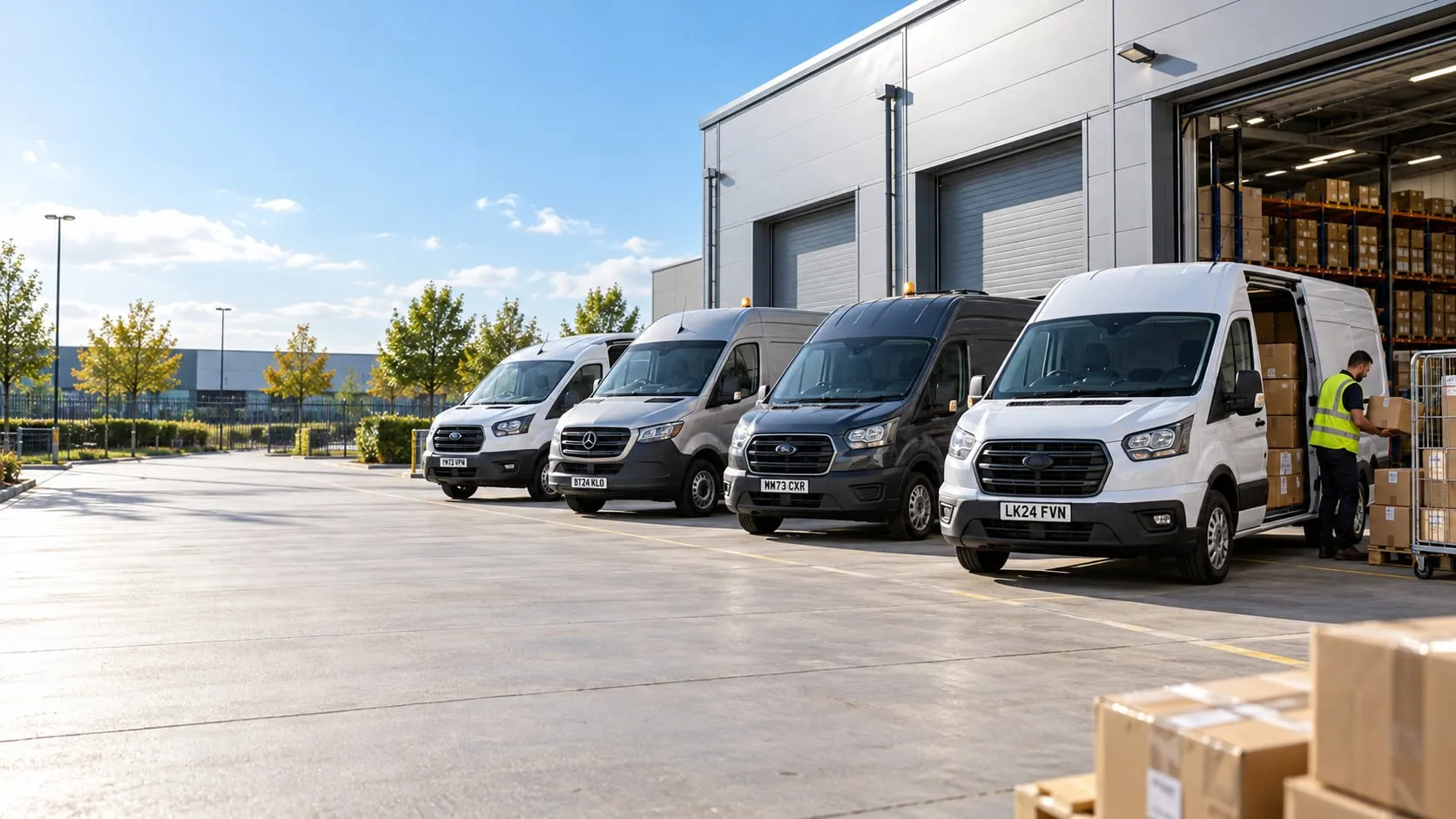
One policy for delivery vans carrying other people's goods, from a few same-day vans to a multi-drop operation. One enquiry reaches brokers who quote on courier fleets.
- Hire and reward cover for delivery vans
- Multi-drop, same-day and long-distance work
- Goods in transit options for parcels
Partnered with Quotezone
What being partnered with Quotezone means FleetQuote is a trading name of Simply Quote Comparison Ltd. Enquiries are passed to Quotezone, a trading style of Seopa Ltd (FCA FRN: 313860), which operates the quote panel. Simply Quote Comparison Ltd is an Introducer Appointed Representative of Seopa Ltd (FCA reference: 1011184), so we may be paid a commission if your enquiry leads to a policy. We do not give advice or make recommendations. Your choice of provider is entirely your own.FleetQuote is a quotation service, not an insurer or broker.
Last reviewed 17 September 2026
Fleet insurance quotes from the providers on our partner panel, including
















What insurers look at for courier fleets
-
Type of delivery work
Multi-drop parcels, dedicated same-day runs and overnight long-distance work carry different patterns of risk.
-
Mileage and stops
High annual mileage and dozens of stops a day mean more time in traffic and more low-speed manoeuvres.
-
Who drives
Employed drivers, self-employed drivers on your vans and seasonal staff are treated differently.
-
Vehicle turnover
Vans hired in for peaks and swapped between drivers need to be on the schedule and the MID from day one.
-
Security at the kerb
Locking vans at every drop and keeping keys on the driver both come up when a van or its load is stolen.
Overview
Courier fleet insurance
Courier fleet insurance covers a group of delivery vehicles that carry other people’s goods for payment, all on one policy. It is used by parcel and multi-drop operators, same-day and dedicated courier firms, and businesses running long-distance or overnight delivery.
Most courier fleets are vans, although some add cars for documents and small parcels, or heavier vehicles for pallets. Delivery work puts vehicles through more than almost any other trade: long days, high mileage, tight time slots and constant stopping and starting.
Insurers price that pattern of work rather than the vehicles on their own. For light commercial vehicles in general, see our page on van fleet insurance.
In short
Courier fleet insurance covers several delivery vehicles carrying other people's goods for payment, which needs hire and reward class of use. Insurers focus on the type of delivery work, mileage, number of stops, who drives the vans and how quickly vehicles change. Parcels themselves are usually insured under goods in transit cover, not the motor policy.
At a glance
- Class of use
- Hire and reward (courier) for carrying other people's goods for payment
- Legal minimum cover
- Third party, under Road Traffic Act 1988 section 143
- Operator licence for vans
- Not needed for vans up to 3,500kg used only within the UK
- EU hire and reward in vans over 2,500kg
- Standard international operator licence needed since 21 May 2022
- MID backdating (self-update)
- On-cover and off-cover dates can be backdated by up to 14 days
- Identifying the driver
- Written police requests usually need answering within 28 days
- Fleet sizes
- Insurer-dependent; many fleet products start from 2 or 3 vehicles
01
Who Needs Courier Fleet Insurance?
A business that owns, leases or hires the delivery vehicles and puts drivers in them to carry customers’ goods for payment. Vehicles your sub-contractors own stay on their own policies, not on your schedule.
The operators it fits
- Multi-drop operators delivering parcels on set routes, often for larger networks
- Same-day and dedicated couriers collecting and delivering single consignments to order
- Long-distance and overnight couriers running urgent consignments across the country
- Specialist couriers carrying medical samples, legal documents, spare parts or catering supplies
- Wholesalers and retailers that also deliver for other businesses for a fee
Where the fleet threshold sits
Insurer thresholds vary. As general market practice, many fleet products start from 2 or 3 vehicles, and mini-fleet products often run up to roughly 12 to 20 vehicles.
A courier business that has grown from one owner-driver to two or three vans is usually at the point where a fleet schedule becomes worth discussing. Not every insurer writes courier risks at all, so the choice at smaller fleet sizes can be narrower than it is for trades vans.
What stays off the schedule
Your policy covers the vehicles the business owns, leases or hires in. A driver using their own van needs their own motor insurance with hire and reward use, however closely they work with you.
02
What Counts As Hire And Reward For A Courier?
Carrying other people’s goods in return for payment is hire and reward, and every vehicle doing paid delivery work needs it. Carriage of own goods will not stretch to a delivery made for someone else for a fee.
Courier work against haulage work
Class of use describes what the vehicle is used for, and it has to match the work. Our guide to vehicle class of use sets out each class in more detail.
Insurers sometimes separate courier work, meaning many small consignments and lots of stops, from haulage, meaning larger loads, fewer drops and longer distances. Some will ask you for the split between the two.
Describe the work plainly rather than reaching for a label. The floor underneath every class is section 143 of the Road Traffic Act 1988, which requires at least third-party cover for the use the vehicle is put to.
Watch out: A business insured for carriage of own goods that starts doing paid deliveries for someone else is using its vans outside the policy. That can put any claim from those journeys in doubt, so change the class of use before the first paid job.
Operator licensing behind the class
Vans up to 3,500kg used only within the UK do not need a goods vehicle operator’s licence, whatever they carry. Vehicles over 3,500kg used for business generally do need an operator’s licence in Great Britain, and insurers rate them as heavy goods vehicles rather than vans.
European deliveries need another look. Carrying other people’s goods for payment in the EU, Iceland, Liechtenstein, Norway or Switzerland in vans over 2,500kg and up to 3,500kg needs a standard international operator licence, which has applied since 21 May 2022.
GOV.UK sets out the detail in its guidance on transporting goods in and out of the UK using vans. If the fleet is moving towards 7.5 tonne vehicles for pallet work, read our page on HGV fleet insurance.
03
How Does Multi-Drop Work Differ From Same-Day Delivery?
Multi-drop produces frequent low-value damage in tight streets, while same-day work adds time pressure on unfamiliar roads and long-distance work trades frequency for severity. The mix across your fleet is what the broker presents to insurers.
The four delivery patterns compared
| Type of work | Typical pattern | What insurers focus on | Cover points to raise |
|---|---|---|---|
| Multi-drop | Many stops, urban routes, set rounds | Low-speed damage, theft at the kerb, parking | Keys and locking conditions, windscreen, excess |
| Same-day | Unplanned jobs, time pressure, variable routes | Speed, unfamiliar roads, driver fatigue | Goods in transit limits for high-value items |
| Long-distance | Motorway mileage, overnight runs, nights away | High mileage, tiredness, overnight parking | Breakdown and recovery, European use if needed |
| Contract or dedicated | Regular runs for one customer | Customer’s contract terms, load values | Liability terms the customer requires |
Courier businesses rarely do only one of these. It helps to give the broker a rough percentage split rather than a single description of the business.
What your claims pattern shows
Multi-drop fleets tend to produce frequent small claims: clipped mirrors, reversing into bollards and scrapes in narrow streets. Long-distance fleets see fewer incidents but more severe ones.
Knowing which pattern your own history shows helps the broker explain it before an underwriter draws their own conclusion. Our guide to fleet accident claims covers how incidents are recorded and reported.
04
Which Driver Arrangements Does The Policy Have To Allow?
Employed drivers on company vans are the simplest case. Self-employed drivers on your vans depend entirely on the policy’s driving clause, and sub-contractors in their own vans sit outside your motor policy.
The four arrangements, and what each turns on
Employed drivers on company vans. The policy covers the vans, and you control recruitment, checks and training.
Self-employed drivers on your vans. The question is whether the driving clause includes them: some policies cover employees only, some any authorised driver, and some require each driver to be named. Insurers also set their own minimum ages and licence-held periods, which vary.
Sub-contractors in their own vans. They need their own insurance with hire and reward use. You may still carry responsibility for the goods under your contracts, so your goods in transit cover and trading terms matter.
Drivers renting vans from you. Insurers may treat that as a hire business rather than a courier fleet, and our page on self-drive hire fleet insurance explains how rental vehicles are underwritten.
Checking licences before a first shift
Whatever the model, check the licence. A driver can create a check code through the GOV.UK View or share your driving licence information service, and the code is valid for 21 days and can be used only once.
Our guide to driving licence checks explains how to build the check into onboarding rather than treating it as a one-off.
Onboarding a new courier driver
- Licence checked, with the date recorded
- Confirmed the driver fits the policy’s age and driving clause
- Right to work and identity confirmed
- Walkaround check and van familiarisation done
- Rules on locking, keys and phone use explained and signed
- For sub-contractors: certificate seen and vehicle checked on askMID
05
What Does A Courier Fleet Policy Actually Cover?
The vans and your liability to other road users, at third party only, third party fire and theft or comprehensive cover. The parcels inside are insured under goods in transit, which is an extension or a separate policy.
Choosing the cover level
Third-party cover is the legal minimum for any vehicle on a road or other public place. Given how many hours a delivery van spends moving, most operators look at comprehensive cover for anything with value left in it.
The add-ons that earn their place on delivery work
- Goods in transit. Covers parcels while they are carried, loaded and unloaded. Check the per-vehicle limit and the excluded items such as cash or jewellery.
- Windscreen cover. Motorway and trunk-road mileage brings stone chips and cracks.
- Replacement vehicle. A van off the road is a route not delivered, so ask what the policy offers, if anything.
- Breakdown and recovery. Usually bought separately or as an add-on.
- Legal expenses. Helps recover uninsured losses, such as lost income, after a non-fault accident.
- Public liability. Motor policies cover road risks, while a trip over a parcel at a delivery address may fall under public liability instead.
Limits, excesses and exclusions differ between insurers, so ask the broker to read the wording of any add-on back to you before you rely on it.
06
How Is Parcel And Van Theft Treated At The Kerb?
Most theft disputes turn on the policy’s conditions about keys and locking rather than on whether theft is covered at all. On multi-drop work, where a driver is in and out of the cab dozens of times a day, those conditions decide the claim.
The two ways it happens
Either the van is taken while the driver is at a door, or parcels are taken from a van that was unlocked or broken into. Both are a daily concern on urban rounds.
The conditions that decide the claim
Many motor policies exclude or restrict theft when the keys are left in or on the vehicle, or when it is left unlocked or with the engine running. Goods in transit policies often carry similar conditions for unattended vehicles, and some only cover theft following forced entry.
Set out one simple rule for drivers, and check that it is still being followed on the hundredth drop of the day as well as the first.
Controls that hold up on a long round
- keyless or auto-locking systems and slam locks on load doors
- a rule that drivers carry keys on them at every stop
- deadlocks and lock protection on side and rear doors
- keeping high-value parcels out of sight, and delivering them first where routes allow
Disputed deliveries and missing parcels
A customer disputing a parcel left in a safe place, or claiming goods never arrived, is usually a matter for your trading terms rather than your insurance. Ask the broker how the goods in transit policy treats those cases before one arises.
07
What Do Insurers Ask About Mileage And Driver Behaviour?
How many hours and miles each van covers, how drops are planned, and what you do with what cameras and telematics show you. Courier drivers spend most of the working day on the road, and underwriters price that time.
Driving for work as a safety duty
In 2025, 445 people were killed in reported road collisions in Great Britain involving someone driving for work, 29% of all road deaths, according to the Department for Transport. The DfT notes that the figures are likely to be underestimates.
Employers must manage the risks to people who drive for work under general health and safety law. The HSE’s employer guidance on driving for work covers safe journeys, safe drivers and safe vehicles, and our driving for work policy guide turns it into something you can hand a new starter.
Drivers’ hours in a delivery van
Van drivers doing goods delivery can be subject to drivers’ hours rules. In Great Britain the GB domestic rules generally apply to goods vehicles under 3.5 tonnes, including a limit of 10 hours’ driving a day.
Route plans that only work at illegal speeds, or drop counts nobody can finish inside the day, show up in the claims record before they show up anywhere else.
Cameras and telematics on delivery work
Dashcams are particularly useful here. Low-speed incidents in car parks and narrow streets often become arguments about who hit whom, and footage settles them.
Cameras also help identify suspected staged accidents, while telematics shows speeding, harsh braking and idle time. Some insurers take cameras and telematics into account, but not all do, and our guide to telematics and fleet insurance explains what the data is used for.
Naming the driver when police ask
Keep a record of which driver had which van and when. The keeper must identify the driver under section 172 of the Road Traffic Act 1988, and a written request usually has to be answered within 28 days.
A notice of intended prosecution for speeding usually has to be sent to the registered keeper within 14 days, so a slow internal process causes problems quickly on a fleet where vans change hands daily.
08
How Do You Keep The Schedule And The MID Right?
Through a mid-term adjustment each time a van joins or leaves, with the Motor Insurance Database updated to match. Courier fleets change more than most, so the admin has to be routine rather than occasional.
What belongs on the database
The MID should include permanent vehicles and temporary ones, such as short-term hired vans. Vehicles should be added as soon as they join the fleet and removed when they leave.
Some insurers let fleet policyholders update records themselves through MIB’s policyholder portal, and in that case on-cover and off-cover dates can only be backdated by up to 14 days. Your own policy may set a shorter deadline.
Anyone can check whether a vehicle shows as insured at askMID. Our guide to the Motor Insurance Database for fleets explains the process in full.
Peak-season vans
Vans hired in for a busy spell can often be added for the period you have them, as a mid-term adjustment. Ask the broker in advance how quickly a van can be added and whether the hire company’s own cover applies instead.
Checklist for a van joining the fleet
- Tell the broker the registration, van details and start date.
- Confirm the class of use and which drivers will use it.
- Check it shows on askMID before it goes out.
- Fit or transfer the dashcam and telematics unit.
- Log the date it leaves the fleet and tell the broker the same day.
Keeping one accurate list makes renewal far quicker, and our fleet schedule template gives you somewhere to keep it.
09
When Is A Courier Fleet Policy The Wrong Fit?
When you are still a single owner-driver, when the vehicles belong to the drivers, when the work has moved to pallets and heavy loads, or when you are renting vans out rather than delivering with them.
Five situations where something else fits better
- You are a single owner-driver. An individual courier van policy is normally the right route until you add vehicles.
- All your drivers use their own vans. You do not need a motor fleet policy for vehicles the business neither owns nor runs. Look at goods in transit and liability cover instead, and check each driver’s own insurance.
- Your work is mainly pallets and heavy loads. Once the fleet is moving towards vehicles over 3.5 tonnes, an HGV or haulage policy may fit better.
- You only deliver your own products. A retailer delivering its own stock needs carriage of own goods, not hire and reward, and may be better placed on a standard van fleet policy.
- You rent vans to delivery drivers. Renting vehicles out is a hire risk, which insurers underwrite differently from a courier fleet.
Working out whether a fleet policy is realistic yet
If you are somewhere between one van and a proper fleet, our guide on how many vehicles you need for fleet insurance explains how insurers treat very small schedules.
Two or three vans with one regular driver each can sometimes be priced competitively as individual policies, because established no-claims discounts count for something.
10
How Can A Delivery Fleet Show The Risk Is Managed?
By attacking the claims it actually has rather than the ones it might have. Low-speed damage, locking discipline and driver turnover are where a courier fleet’s record is won or lost.
Cut the damage you keep paying for
- Tackle low-speed damage. Reversing sensors, cameras and a rule against unnecessary reversing address the most common courier claims.
- Make locking automatic. Auto-locking kits reduce the reliance on memory during a long round.
- Hold on to good drivers. High turnover means more new drivers on unfamiliar routes, so induction and mentoring pay for themselves.
- Report claims quickly. Fast reporting, with footage, gives the insurer a better chance of controlling third-party costs.
Keep the paperwork tight
- Keep the schedule tidy. Remove returned hire vans promptly so you are not paying for vehicles you no longer have.
- Review excess levels. Frequent small claims can make a higher excess worth discussing, if the business can absorb the cost.
- Record the driver on every shift. It answers police requests inside the deadline and matches claims to the right person.
None of this promises a lower premium, and no broker can promise one either. It does mean the fleet is presented as something an underwriter can understand, and our guide on reducing fleet insurance costs goes through the same levers in more depth.
For the wider picture on how fleet cover works, see our fleet insurance overview.
Before you enquire
What to have to hand
What you’ll need for a quote
You can start an enquiry without all of this. The broker will ask for anything missing.
- Number and types of vehicles (rough is fine to start)
- Renewal date and current policy schedule
- Claims experience letter from your current insurer
- Driver ages and any penalty points
- Where vehicles are kept overnight
Sources
- Road Traffic Act 1988, section 143
- Road Traffic Act 1988, section 172
- Road Traffic Offenders Act 1988, section 1
- GOV.UK: Transport goods in and out of the UK using vans or car and trailers
- GOV.UK: Being a goods vehicle operator
- MIB: Navigate policyholder user guide
- askMID
- GOV.UK: View or share your driving licence information
- HSE: Driving and riding safely for work (employers)
- DfT: Reported road casualties involving driving for work
- GOV.UK: Drivers' hours, GB domestic rules
Updates
- : last reviewed
- : Legal and regulatory points checked against official sources
General information about UK fleet insurance, not advice. How we write and check our content
Ready to get started?
Ready to talk to a fleet insurance specialist?
Answer a few questions about your vehicles, drivers and current cover. We pass your enquiry to a specialist broker, who will discuss your options and quotes with you.
FleetQuote is an introduction service, not an insurer or broker. We pass your enquiry to Quotezone, which operates a panel of brokers and insurers. How our service works
Questions
Courier fleet insurance: common questions
What class of use does a courier fleet need?
Vans carrying other people's goods in return for payment need hire and reward cover, often described as courier use. Carriage of own goods cover is for businesses moving their own tools, stock and materials, and it won't normally extend to paid delivery work. If some vans deliver for customers and others only carry your own goods, tell the broker which is which.
Does courier fleet insurance cover the parcels in the van?
Usually not. The motor policy covers the vans and your liability to third parties. Parcels are insured under goods in transit cover, which may be an extension or a separate policy. Check the limit per vehicle, excluded goods such as cash or jewellery, and conditions about unattended vans, because most parcel theft claims turn on those conditions.
Can self-employed drivers use our vans on the fleet policy?
Often, but they must be allowed for in how the policy is set up. Some policies cover employees only, some cover any authorised driver, and some need each driver named. Self-employed drivers may also bring different age and licence profiles. Tell the broker how drivers are engaged, and check each driver's licence before they take a van out.
Our sub-contractors use their own vans. Do they need their own insurance?
Yes. A driver using their own vehicle needs their own motor insurance with the right class of use for courier work. Your fleet policy covers the vehicles on your schedule, not theirs. Many delivery firms ask sub-contractors for a copy of their certificate and check the vehicle on askMID before work starts, then repeat the check when the policy renews.
Are vans stolen with the keys in covered?
Many motor policies exclude or restrict theft when keys are left in or on an unattended vehicle, or when the vehicle is left unlocked or running. On multi-drop work, where drivers are in and out of the cab constantly, this is a real exposure. Read the exact wording with the broker and set a clear rule for drivers about locking vans and keeping keys on them.
How do we insure vans we hire in for the peak season?
Short-term vans can often be added to a fleet policy for the period you have them, as a mid-term adjustment. They also need to be recorded on the Motor Insurance Database, which should include temporary as well as permanent vehicles. Ask the broker in advance how quickly vans can be added and whether the hire company's own cover applies instead.
Related reading
- Cover Van fleet insurance Van fleet insurance explained for UK firms running two or more vans. Class of use, tools and goods cover, security, conversions and what insurers ask.
- Cover HGV fleet insurance HGV fleet insurance for hauliers and own-account operators. O-licences, C1 and C entitlement, goods in transit, trailers and what insurers ask about.
- Cover Multi-van insurance Multi-van insurance for UK businesses with two or more work vans and several drivers. Driver options, class of use, tools in vans and adding a van mid-term.
- Cover Fleet insurance Fleet insurance for UK businesses running vans, cars, HGVs or mixed fleets. How fleet cover works, and an easy way to reach a specialist for quotes.
- Guide Driving licence checks for employers How UK employers check driving licences with DVLA check codes or bulk checking services, how often to check, getting consent, and what insurers may ask.
- Guide The Motor Insurance Database and your fleet How the Motor Insurance Database works for fleet policies, who updates vehicle records, what the 14-day backdating limit means and how to check askMID.
- Guide Telematics and fleet insurance How fleet telematics and dashcams work, how insurers may use the data, what UK data protection guidance expects of employers, and how to use it for driver training.
What FleetQuote does, and doesn't do
FleetQuote is a trading name of Simply Quote Comparison Ltd (company number 15008284), registered office Sentinel House, Ancells Business Park, Harvest Crescent, Fleet, Hampshire, GU51 2UZ.
Simply Quote Comparison Ltd is an Introducer Appointed Representative of Seopa Ltd (Financial Conduct Authority reference 1011184). We are not authorised in our own right: we act under Seopa Ltd, which is authorised and regulated by the Financial Conduct Authority under reference 313860.
That permission covers introducing your enquiry and nothing more. We do not provide insurance, arrange insurance, recommend a policy or give advice.
When you send an enquiry we introduce you to Quotezone, a trading style of Seopa Ltd (FCA FRN 313860), which operates a panel of brokers and insurers. Any quote, advice or policy comes from them, not from FleetQuote.
Simply Quote Comparison Ltd is paid a commission when an enquiry leads to a policy, at no cost to you. It is free to enquire and you are under no obligation to buy.