Fleet insurance
Mini Fleet Insurance
Cover for the business running a few vans or cars, from a two-vehicle partnership to a growing team of ten. One enquiry reaches specialist brokers, who discuss cover and quote.
- Written for businesses with a handful of vehicles
- Cars and vans on the same schedule
- First-time fleets without fleet claims history
Partnered with Quotezone
What being partnered with Quotezone means FleetQuote is a trading name of Simply Quote Comparison Ltd. Enquiries are passed to Quotezone, a trading style of Seopa Ltd (FCA FRN: 313860), which operates the quote panel. Simply Quote Comparison Ltd is an Introducer Appointed Representative of Seopa Ltd (FCA reference: 1011184), so we may be paid a commission if your enquiry leads to a policy. We do not give advice or make recommendations. Your choice of provider is entirely your own.FleetQuote is a quotation service, not an insurer or broker.
Last reviewed 17 September 2026
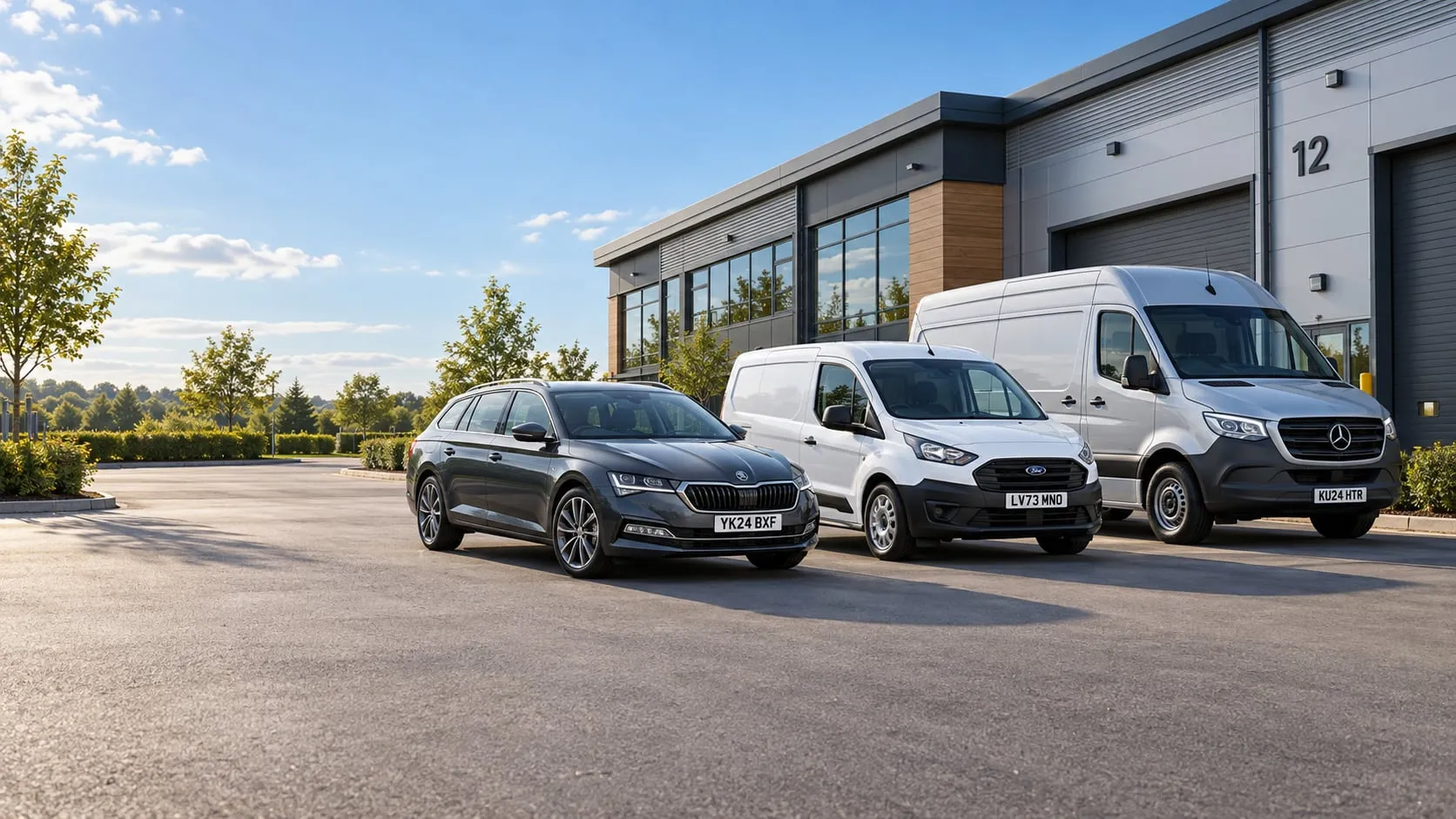
Fleet insurance quotes from the providers on our partner panel, including
















What changes when a small business moves to a mini fleet
The day-to-day differences a business owner tends to notice first.
-
Renewals stop overlapping
Vehicles bought at different times no longer mean a string of renewal notices arriving through the year.
-
Driver rules agreed once
Who may drive is set at policy level, which helps when a small team swaps vehicles to cover holidays and sickness.
-
Your history counts differently
Each vehicle's no claims record matters less, and the combined claims record of the business matters more as years pass.
-
Changes go through one policy
A replacement van or an extra car becomes an adjustment to the existing schedule rather than a fresh policy.
Overview
Mini fleet insurance
Mini fleet insurance is business motor cover for a small group of vehicles on one policy. It is the product aimed at the firm with somewhere between two and ten vehicles: a heating engineer with three vans, a lettings agency with a pair of cars and a van, a cleaning firm that has just bought its fourth vehicle.
Businesses of this size are often an awkward fit. They have outgrown juggling separate renewal dates, yet many fleet specialists concentrate on operators with dozens of vehicles.
This page sets out how a small fleet policy is put together, how it compares with the alternatives, and what underwriters want to know about a business that has never held fleet cover before.
In short
Mini fleet insurance is a single business motor policy for a small group of vehicles, usually cars, vans or a mix of both. Where an insurer draws the line varies, but these products are generally aimed at businesses with a few vehicles up to roughly a dozen or so. It suits owners who want one renewal date and shared driver rules without the set-up of a large fleet account.
At a glance
- Typical size
- Insurer-dependent; often from 2 or 3 vehicles up to roughly 12 to 20
- Vehicle types
- Cars, vans and pickups most often; heavier vehicles depend on the insurer
- Driver options
- Named drivers, or any authorised driver subject to age and licence conditions
- Legal minimum cover
- Third party, for every vehicle used on a road or other public place
- Insurance Premium Tax
- 12% standard rate on most motor insurance
- Who provides quotes
- A specialist broker, not FleetQuote
01
How Many Vehicles Make A Mini Fleet?
There is no legal definition of a mini fleet. As a general market pattern, small fleet products start at two or three vehicles and run up to roughly 12 to 20, above which a standard fleet policy usually takes over.
Where the market draws the line
Each insurer sets its own floor and ceiling, and those limits move from product to product. Below the floor, a business is usually offered individual or multi-vehicle cover instead.
Our guide on how many vehicles you need for fleet insurance looks at those thresholds in more depth. Give the broker your current count and the number you expect in a year, because the second figure can change which product is quoted.
The businesses that fit the size
A small fleet policy works best when a few people share a few vehicles and the owner wants one rulebook for all of them. These are the patterns that come up most often:
- trades firms where the owner and two or three employees each have a van
- small service businesses mixing a company car with one or two vans
- family businesses where relatives and staff drive the same vehicles
- start-ups that bought vehicles one at a time and now want them in one place
02
Is A Mini Fleet Better Than Separate Policies?
Not always. A small business usually has three routes open to it, and the right one depends on how often drivers change vehicles and whether the vehicle count is about to grow.
The three routes side by side
The labels are used loosely across the market, so read the table as a general guide rather than a fixed rule.
| Separate policies | Business multi-vehicle | Mini fleet | |
|---|---|---|---|
| How cover is organised | One policy per vehicle | Several policies or vehicles under one account | One policy and one vehicle schedule |
| Drivers | Set on each policy | Usually named, often per vehicle | Named drivers or any authorised driver |
| What drives the price | Each vehicle and its drivers | Mostly each vehicle, sometimes with account terms | The whole business, weighted more to its record over time |
| Adding a vehicle | Buy a new policy | Add it to the account | Mid-term adjustment |
Which way to lean
If you mainly want a car and a van looked after together, our page on multi-vehicle insurance for business explains that route. The fleet approach earns its keep once several drivers share vehicles or you expect to add more.
Separate policies can still win where each vehicle has one settled driver and a long no claims record. The trade-off is a string of renewal notices and a fresh conversation every time something changes.
03
What Does A Mini Fleet Policy Cover?
The same three levels of motor cover as any other policy, applied across one schedule, plus the add-ons a small business would struggle to absorb on its own.
The three levels of cover
The core choice is third party only, third party fire and theft, or comprehensive cover. Most working businesses with newer vehicles look at comprehensive cover, though the decision turns on vehicle values and how much risk the business can carry itself.
Add-ons that matter at this size
- Breakdown and recovery. One vehicle off the road can cost a day’s work from a quarter of your capacity.
- Courtesy or hire vehicle. Check whether a replacement follows an accident or a theft, and what size it is.
- Motor legal expenses. Helps recover uninsured losses such as an excess or lost income after a non-fault accident.
- Windscreen cover. Useful where vans cover high mileage on motorways and rural roads.
- Tools and goods in transit. Normally outside the motor cover, so raise them explicitly.
- Personal use. Social, domestic and pleasure use for owners or staff who take vehicles home.
What sits in the standard policy and what costs extra varies between insurers. Ask the broker to show which items are included on each option rather than comparing headline figures.
04
Can You Put Cars And Vans On One Small Policy?
Usually yes. Many small fleet policies accept cars and vans on the same schedule, provided each vehicle carries the class of use that matches the work it does.
Class of use for each vehicle
Plenty of small firms run a car for the director or sales work and vans for the operational side. A car used for client visits and weekend family trips needs business use plus social, domestic and pleasure.
A van carrying the firm’s own materials needs carriage of own goods. Getting one vehicle wrong on a shared schedule is enough to put a claim from that vehicle in doubt.
When the mix gets heavier
Where the mix includes something heavier, such as a tipper over 3.5 tonnes, a minibus or a tractor unit, fewer small fleet products will take it. A mixed fleet insurance policy is built for those wider combinations.
05
Who Can Drive On A Mini Fleet Policy?
Either a named list of drivers or any authorised driver who meets the insurer’s conditions on age, licence and convictions. Driver arrangements are where a small fleet differs most from a set of individual policies.
Named drivers or any authorised driver
Naming drivers keeps control tight and suits a stable team. Covering any authorised driver suits a business where people swap vehicles or where casual staff drive now and then.
Any-driver options usually carry a minimum age and sometimes a minimum period of holding a full licence, both set by the insurer.
Our page on any-driver fleet insurance goes through the trade-offs in more detail.
Relatives and part-timers
In a small business the drivers are often relatives, part-timers or the owner’s partner. Declare every one of them, because an insurer can only price the drivers it has been given.
Checking a licence before the first journey
Drivers can create a check code through GOV.UK’s view or share your driving licence information service. The code lasts 21 days and works once, so ask for a fresh one at each check.
Our guide to driving licence checks covers how to run the check with the driver’s consent and how often to repeat it.
06
Can You Get Cover With No Fleet Claims History?
Often yes. Most firms buying their first small fleet policy have no fleet record at all, so insurers look at the individual history of each vehicle and each driver instead.
Evidence worth gathering first
- renewal notices for each current policy showing no claims discount earned
- details of any claims in recent years, including date, cost and fault
- a claims experience letter if any vehicles are already insured together
- each driver’s date of birth, licence details and any convictions
- how long the business has been trading and running vehicles
Our guide to claims experience letters explains what the document shows and how to ask for one.
How the first year can look
Some insurers take existing no claims discount into account, and how that discount transfers onto a fleet policy depends on the insurer.
Where none of your individual history is recognised, the first year on a fleet policy can look different on price. Ask the broker how each insurer on offer treats discount you have already earned.
07
What Do Insurers Look At On A Small Fleet?
Every driver and every vehicle individually, because with only a few vehicles one driver or one claim carries far more weight than it would across a large fleet.
Drivers and vehicles
- Every driver individually. Age, licence type and history, points and claims.
- What each vehicle does. Class of use, typical mileage, and whether any vehicle does paid delivery work.
- Where vehicles stay overnight. Postcode and parking type for each one, including those kept at employees’ homes.
- Vehicle values and modifications. Racking, conversions and signwriting should all be listed.
The business behind them
- Business background. Trade, years trading and how the vehicles are managed day to day.
- Security and technology. Trackers, dashcams and telematics where they are already fitted.
A single accurate schedule answers most of this at once. Keep one with our fleet schedule template.
08
What Are Your Legal Duties With A Few Business Vehicles?
The same duties as a large operator, without a fleet manager to carry them. They cover insurance for every use, keeping parked vehicles insured, naming the driver when police ask, and keeping the Motor Insurance Database accurate.
Insurance for every use
Under section 143 of the Road Traffic Act 1988, it is an offence to use a vehicle on a road or other public place without at least third-party insurance for that use. The offence also catches causing or permitting someone else to do it.
A business that hands a van key to an uninsured driver is therefore exposed in its own right. Written rules on who may take which vehicle are worth having for that reason alone.
Keeping parked vehicles insured
In Great Britain the registered keeper must keep a vehicle insured unless it has a SORN, even where it sits unused on the yard. GOV.UK sets out the penalties for uninsured vehicles: a £100 fine, and the vehicle can be clamped, impounded or destroyed.
Saying who was driving
Under section 172 of the Road Traffic Act 1988, the keeper must identify the driver when police ask, and a written request normally has to be answered within 28 days. A simple vehicle booking log makes that easy where staff share vehicles.
Motor Insurance Database records
Vehicles should go on the MID as soon as they join the policy and come off when they leave. Where the policyholder updates records directly through MIB’s own policyholder portal, on-cover and off-cover dates can be backdated by no more than 14 days, and your own policy may allow less.
Our guide to the Motor Insurance Database for fleets sets out who updates the record on a small policy. Agree with the broker which of you makes the change, before the first vehicle swap rather than during it.
Business policyholders also owe a duty to make a fair presentation of the risk under the Insurance Act 2015, including at each change to the policy.
09
What Happens When You Outgrow A Mini Fleet?
The product changes, not only the price. Once the vehicle count passes the insurer’s ceiling the policy usually moves onto a standard fleet product, normally at renewal.
What changes on the move up
At that point the claims experience of the business as a whole tends to carry more weight than the record of any single vehicle. Features built for scale, such as structured mid-term adjustments, become more relevant.
Our overview of fleet insurance sets out how larger policies are rated, and our guide to what fleet insurance is covers the basics from the beginning.
Records that travel with you
Moving up is easier with good records behind you. Keep a running vehicle schedule, a driver list with licence check dates, and a note of every incident even where no claim follows.
Flag planned growth at the first enquiry rather than at renewal. A broker can then look for a product you will not outgrow inside the year.
11
When Is A Mini Fleet Policy The Wrong Choice?
When the vehicles are really private cars, when staff drive their own, when the vans do paid delivery work, or when the exposure sits in plant and tools rather than in the vehicles.
Six situations that point somewhere else
- One or two vehicles, each with a single regular driver and a strong individual no claims record, where separate policies or a multi-vehicle arrangement may be simpler.
- Private household cars, which belong on personal motor policies rather than business cover.
- Staff driving their own cars for work, where each owner needs business use on a personal policy instead of a place on your schedule.
- Vans carrying other people’s goods for payment, which needs hire and reward cover and may call for a courier-focused policy.
- Vehicles hired out to customers, which needs self-drive hire cover.
- Plant or tools as the main exposure, where a plant policy or a tools policy can matter more than the motor cover.
Getting a second opinion
A broker can say whether a small fleet policy, individual policies or something else suits your vehicles, drivers and record. FleetQuote passes the enquiry on and does not produce prices itself.
Before you enquire
What to have to hand
What you’ll need for a quote
You can start an enquiry without all of this. The broker will ask for anything missing.
- Number and types of vehicles (rough is fine to start)
- Renewal date and current policy schedule
- Claims experience letter from your current insurer
- Driver ages and any penalty points
- Where vehicles are kept overnight
Sources
Updates
- : last reviewed
General information about UK fleet insurance, not advice. How we write and check our content
Ready to get started?
Ready to talk to a fleet insurance specialist?
Answer a few questions about your vehicles, drivers and current cover. We pass your enquiry to a specialist broker, who will discuss your options and quotes with you.
FleetQuote is an introduction service, not an insurer or broker. We pass your enquiry to Quotezone, which operates a panel of brokers and insurers. How our service works
Questions
Mini fleet insurance: common questions
How many vehicles make a mini fleet?
There is no fixed definition. Each insurer sets its own lower and upper limits, and those limits change from product to product. As a general pattern, many small fleet products start at two or three vehicles and stop somewhere around twelve to twenty, after which a standard fleet policy usually takes over. Tell the broker your current vehicle count and what you expect it to be in a year.
Can I get mini fleet insurance with just two vehicles?
Sometimes. Some insurers will write a fleet-style policy for two vehicles, while others want three or more before they will consider it. With only two vehicles, separate policies or a business multi-vehicle arrangement may also be worth discussing. A broker can explain which of those routes is realistic for your vehicles, drivers and claims record.
Can I include my own car on the business mini fleet?
Often, if the car is owned or leased by the business or used for the business. Many small fleet policies allow social, domestic and pleasure use alongside business use for named people, but purely private household cars are not normally accepted. Tell the broker who uses the car outside work and for what, so the class of use on the schedule matches reality.
We have never had a fleet policy. Will insurers still consider us?
Many will, but they will look for other evidence of how your vehicles have been driven. That usually means proof of no claims discount on existing individual policies, claims history for each vehicle and details of every driver. A newly formed business with no motor history at all may find fewer options, so give the broker as much documented history as you can.
Can I start an enquiry online for mini fleet insurance?
Yes. You can tell FleetQuote about your vehicles and drivers online, and we pass the enquiry to the quote panel, which puts it to specialist brokers. One of them then contacts you to talk through cover and provide any quotes. FleetQuote does not produce prices itself, and a small fleet usually needs a short conversation so the broker can check drivers, use and history.
What happens when my mini fleet outgrows the policy?
If your vehicle count goes past the insurer's limit, the policy may need to move to a standard fleet product, usually at renewal. That can change how the premium is worked out, with more weight on the claims record of the business as a whole. Mention planned growth when you first enquire so the broker can factor it in from the start.
Related reading
- Cover Fleet insurance Fleet insurance for UK businesses running vans, cars, HGVs or mixed fleets. How fleet cover works, and an easy way to reach a specialist for quotes.
- Cover Mixed fleet insurance Mixed fleet insurance puts cars, vans, pickups, HGVs and minibuses on one policy. How uses, drivers and specialist vehicles are handled, and what to prepare.
- Cover Van fleet insurance Van fleet insurance explained for UK firms running two or more vans. Class of use, tools and goods cover, security, conversions and what insurers ask.
- Guide How many vehicles do you need for fleet insurance? There is no legal minimum fleet size. What insurers look for, how small fleets of two to four vehicles are treated, and when a fleet policy starts to make sense.
- Guide What is fleet insurance? What fleet insurance is, how a fleet policy works differently from insuring vehicles one by one, and the key terms UK businesses meet when they get cover.
- Guide Fleet insurance renewal checklist A practical fleet insurance renewal checklist covering timing, vehicle schedules, driver licence checks, claims experience and avoiding a gap in cover.
What FleetQuote does, and doesn't do
FleetQuote is a trading name of Simply Quote Comparison Ltd (company number 15008284), registered office Sentinel House, Ancells Business Park, Harvest Crescent, Fleet, Hampshire, GU51 2UZ.
Simply Quote Comparison Ltd is an Introducer Appointed Representative of Seopa Ltd (Financial Conduct Authority reference 1011184). We are not authorised in our own right: we act under Seopa Ltd, which is authorised and regulated by the Financial Conduct Authority under reference 313860.
That permission covers introducing your enquiry and nothing more. We do not provide insurance, arrange insurance, recommend a policy or give advice.
When you send an enquiry we introduce you to Quotezone, a trading style of Seopa Ltd (FCA FRN 313860), which operates a panel of brokers and insurers. Any quote, advice or policy comes from them, not from FleetQuote.
Simply Quote Comparison Ltd is paid a commission when an enquiry leads to a policy, at no cost to you. It is free to enquire and you are under no obligation to buy.