Fleet insurance
Taxi Fleet Insurance
One policy for licensed taxis, minicabs and executive cars run by the same business. A single enquiry covering your vehicles and drivers reaches specialist brokers who can quote.
- Public hire, private hire and chauffeur use
- Employed, owner-driver and rental driver models
- Passenger liability and loss of use options
Partnered with Quotezone
What being partnered with Quotezone means FleetQuote is a trading name of Simply Quote Comparison Ltd. Enquiries are passed to Quotezone, a trading style of Seopa Ltd (FCA FRN: 313860), which operates the quote panel. Simply Quote Comparison Ltd is an Introducer Appointed Representative of Seopa Ltd (FCA reference: 1011184), so we may be paid a commission if your enquiry leads to a policy. We do not give advice or make recommendations. Your choice of provider is entirely your own.FleetQuote is a quotation service, not an insurer or broker.
Last reviewed 17 September 2026
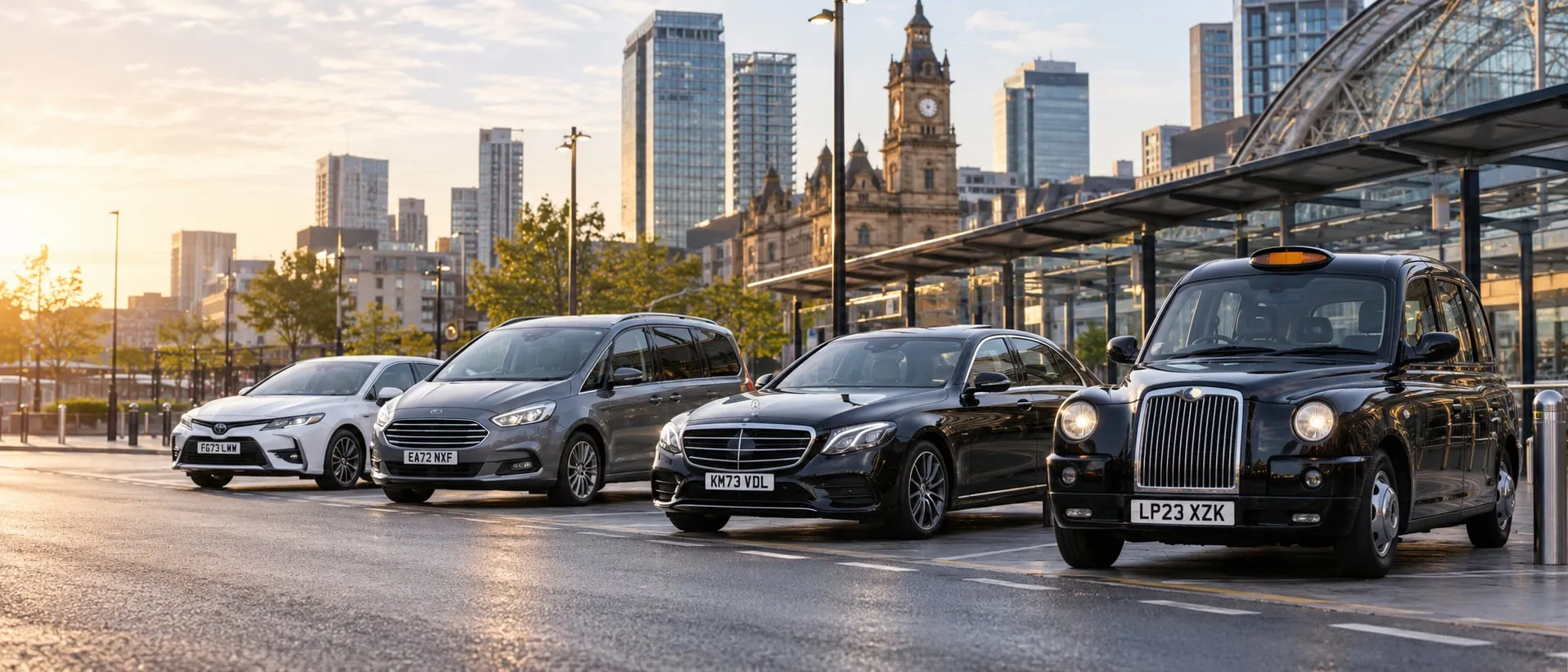
Fleet insurance quotes from the providers on our partner panel, including
















What insurers look at for taxi fleets
-
How fares are picked up
Rank and street hails, pre-booked app or phone jobs, and contract or executive work carry different risks. The class of use has to match each vehicle.
-
Who holds the keys
Employed drivers, owner-drivers under your banner and self-employed drivers renting your cars are underwritten differently, so be clear about the arrangement.
-
Hours on the road
Night shifts, weekend peaks and double-shifted cars mean more exposure than a car used eight hours a day.
-
Where the work is
City centres, airports, stations and rural school contracts produce very different claims patterns, and insurers ask where the vehicles operate and sleep.
-
Badges and plates
Drivers need the right driver licence from the council or TfL, and vehicles need their own licence plate. Expect to be asked for both.
-
Cameras on board
Forward and cabin-facing cameras help with disputed collisions and passenger complaints. Some insurers take them into account.
Overview
Taxi fleet insurance
Taxi fleet insurance puts the licensed vehicles run by one business onto a single motor policy. That might be a handful of hackney carriages, a private hire firm with a few dozen saloons and MPVs, or an executive car company working on corporate accounts.
Each vehicle is listed on one schedule, with one renewal date and one claims history for the whole operation. What sets this cover apart is the passenger: every job carries members of the public who are paying to be driven, often late at night and often in busy town centres.
Insurers price that exposure carefully, and they want to understand how your vehicles get their fares and who is behind the wheel. For how fleet policies work in general, see our fleet insurance overview.
In short
Taxi fleet insurance covers several licensed taxis, private hire cars or chauffeur vehicles run by one business under a single motor policy. The policy has to match how each vehicle takes fares, whether that is street hails, pre-booked work or executive contracts. Insurers also look closely at who drives, how drivers are engaged, the hours worked and the claims history.
At a glance
- Who licenses drivers
- Local council outside London; Transport for London in London (England and Wales rules)
- Taxis (hackney carriages)
- Can use ranks and be hailed in the street
- Private hire vehicles
- Must be pre-booked
- Legal minimum cover
- Third party, for the use the vehicle is put to
- Typical fleet sizes
- Insurer-dependent; many fleet products start from 2 or 3 vehicles
- Scotland and Northern Ireland
- Licensing works differently; check with your own authority
01
Who Needs Taxi Fleet Insurance?
A business that owns, leases or rents out licensed passenger vehicles and wants them on one schedule. Where drivers own and insure their own cars, the motor risk usually stays with them rather than moving to your policy.
The operators it fits
- private hire operators whose company owns part or all of the fleet
- hackney carriage proprietors running several plated cabs with employed or rented drivers
- executive and chauffeur firms carrying corporate clients
- operators holding school, hospital or local authority transport contracts
- businesses running a mix of saloons, MPVs and wheelchair accessible vehicles
Where the fleet threshold sits
There is no single threshold. As general market practice, many fleet products start from 2 or 3 vehicles, and mini-fleet products often run up to somewhere around 12 to 20 before a larger fleet product takes over.
Where the cut-off sits depends on the insurer. If you run two or three cars, our page on mini fleet insurance explains how smaller schedules are usually handled.
02
How Does Public Hire Differ From Private Hire?
A hackney carriage can wait at a rank and be hailed in the street, while a private hire vehicle must be pre-booked. Your motor cover has to match which of the two each vehicle is licensed and used for.
Who licenses the drivers
In England and Wales, the local council licenses taxi and private hire drivers outside London, and Transport for London licenses them in London. GOV.UK sets out what the taxi and private hire driver licence involves.
Scotland and Northern Ireland run their own licensing systems, so check with your own authority if you operate there.
The four kinds of work on one schedule
| Type of work | How the job starts | Insurance point to check |
|---|---|---|
| Public hire (hackney carriage) | Rank, street hail or booking | Cover must include public hire use |
| Private hire (minicab) | Pre-booked by phone, app or office | Cover is normally limited to pre-booked journeys |
| Chauffeur or executive hire | Pre-booked, often on account or contract | Higher vehicle values; some insurers class it separately |
| Contract work (schools, hospitals, councils) | Fixed routes under a contract | Contract terms may set insurance or vetting requirements |
Give the broker a list showing which licence each vehicle holds, so the class of use is set vehicle by vehicle rather than fleet-wide.
Why the wrong class leaves a gap
Section 143 of the Road Traffic Act 1988 requires at least third-party cover for the use a vehicle is put to, so a policy written for the wrong kind of hire leaves a hole. In practice, insurers usually write public hire and private hire as separate classes of use.
A private hire policy will not normally cover a driver who picks up someone flagging them down, so check the class with the broker and with your licensing authority.
Our guide to vehicle class of use sets out how the classes differ across all vehicle types.
Executive and contract work
Chauffeur work is often treated as a separate class again, especially with prestige saloons and long corporate journeys. If some vehicles do executive work and others do standard private hire, list them separately.
Airport runs mean long motorway journeys, luggage and waiting in busy drop-off zones. School and social care contracts can involve vulnerable passengers and fixed routes, and sometimes driver checks the contract itself requires.
03
How Does Your Driver Model Change The Policy?
Two firms with identical cars can present very different risks depending on whether drivers are employees, owner-drivers taking your bookings, or self-employed drivers renting your vehicles. Only vehicles the business owns, leases or rents out belong on your schedule.
The three models compared
| Driver model | Who owns the car | Where the motor risk usually sits | What the insurer asks about |
|---|---|---|---|
| Employed drivers | The business | Your fleet policy | Recruitment, training, shifts, vehicle allocation |
| Owner-drivers taking your bookings | The driver | The driver’s own policy | Which vehicles are company-owned, if any |
| Self-employed drivers renting your cars | The business | Your fleet policy, if the insurer allows rental | Vetting, badges, rental agreement, drivers per vehicle |
Employed drivers
Where drivers are employees using company vehicles, the picture is closest to an ordinary business fleet. You control recruitment, training, shift patterns and which car goes to whom.
Insurers will want driver details and may set restrictions on age or experience. Where drivers are not named individually, the policy works on driving conditions instead, and our page on any driver fleet insurance explains the trade-offs.
Owner-drivers working under your banner
Many private hire operators dispatch jobs to drivers who own and insure their own cars. In that set-up your business may not need a motor fleet policy at all, although it may still need covers linked to running a booking office.
Say so if your fleet is partly company-owned and partly owner-driver, because only the company vehicles belong on your schedule.
Renting vehicles to self-employed drivers
Some businesses own licensed cars and rent them weekly to self-employed drivers, sometimes with insurance included in the rental. This is where terms vary most, and some insurers decline driver rental entirely.
Others accept it with conditions, which can include:
- minimum driver ages and licence-held periods set by the insurer
- evidence of your vetting, including licence checks and council badges
- a written rental agreement covering damage, excess and fines
- limits on the number of drivers per vehicle
Double-shifted cars, where two or more drivers share a vehicle across the day, also need declaring. More drivers and more hours on the same vehicle mean more exposure.
Watch out: If your rental agreement says drivers arrange their own insurance, but the car also sits on your fleet policy, or the other way round, you can end up with a vehicle nobody has insured properly. Get the agreement and the policy to say the same thing.
04
What Does A Taxi Fleet Policy Cover?
The vehicles and your liability to third parties, which includes injury to the passengers you are carrying. Cover is available at third party only, third party fire and theft or comprehensive cover, and the taxi-specific value sits in the add-ons.
Passengers are third parties
Injury to a fare-paying passenger falls under the motor policy’s third-party section, because passengers are third parties. That is the part of the cover the law will not let you go without.
Most operators with newer or financed vehicles choose comprehensive cover, although the level is yours to discuss with the broker.
The add-ons that matter on licensed work
- Replacement vehicle. A courtesy car is of little use if it is not licensed to carry fares, so look for a licensed replacement or the cost of hiring one.
- Public liability. Injuries at the office, at a waiting area or while helping a passenger away from the vehicle may need separate cover.
- Windscreen and glass. Useful on high-mileage cars, and a cracked screen can affect whether a vehicle passes its licensing inspection.
- Motor legal expenses. Helps recover uninsured losses, such as your excess and lost income, from a third party who caused an accident.
- Wheelchair accessible equipment. Ramps, lifts and restraints should be declared and included in the vehicle value.
- Breakdown. Often bought separately, and a stranded car with passengers on board needs a quick response.
Cover levels, limits and exclusions differ between insurers, so ask the broker to explain the wording on any add-on before relying on it.
Public liability and the licensing authority
The Department for Transport’s best practice guidance for licensing authorities in England says it is appropriate for authorities to check that private hire operators hold suitable public liability insurance.
Treat that as a licensing expectation as well as a commercial one, because it can come up at renewal of the operator licence rather than the motor policy.
05
What Happens To Your Income When A Taxi Is Off The Road?
A standard motor policy pays to repair or replace the vehicle, not for the fares you lose while it is away. Some taxi policies offer a replacement vehicle or a loss of earnings benefit as an option.
Loss of earnings benefits
Where offered, a loss of earnings benefit usually pays a daily amount while a vehicle is off the road after an insured incident. Expect limits on how long it lasts and conditions on fault.
Ask the broker what is available and exactly what triggers the payment, because a benefit that only applies to non-fault incidents behaves very differently from one that does not.
Getting a replacement on the road
A replacement vehicle may also need to be licensed and plated before it can work, which takes longer than collecting a courtesy car. Factor that delay in when you decide how much cover for downtime you want.
Wheelchair accessible vehicles are the hardest to replace quickly, because the ramp, lift and restraints have to be there too. Keep the conversion invoices and give the broker the vehicle value including the adaptation.
06
What Do Insurers Ask About A Taxi Fleet?
Who drives, how many hours each car works, where it operates and sleeps, and what the claims record looks like. Underwriters are building a picture of how risky each hour on the road is.
The questions to expect
- Drivers. Ages, how long each has held a full licence, how long they have held a taxi or private hire badge, and any convictions or claims.
- Hours and shifts. Whether cars run nights, weekends or around the clock, and whether they are double-shifted.
- Area. Your licensing authority, the main towns you cover, and whether you do airport, station or long-distance work.
- Vehicles. Make, model, value, seat numbers, plate numbers and any adaptations.
- Overnight location. A secure yard, drivers’ home addresses or on-street parking.
- Claims experience. Several years of history for the business, ideally with claims experience letters from previous insurers.
- Complaints and incidents. Some insurers ask how you handle passenger complaints and driver conduct issues.
New operators and first schedules
A new operator with no claims history, or a firm moving from individual policies to its first fleet schedule, can still get cover. Expect the broker to lean more heavily on individual driver records and on your vetting process.
Describing the mix of work across the fleet, with rough percentages where you can, gives the broker something concrete to present. Our guide to the claims experience letter explains what to ask previous insurers for.
07
Which Licences And Badges Do Insurers Expect To See?
A valid DVLA licence and a current badge from your council or Transport for London for every driver, plus the vehicle licence plate for every car. Larger passenger vehicles and separate-fare work bring in operator licensing as well.
Driving licence categories
A standard car licence (category B) covers vehicles up to 3,500kg maximum authorised mass with no more than 8 passenger seats, under the GOV.UK driving licence categories. Most taxis and private hire cars sit comfortably inside that.
Vehicles with more passenger seats need a different licence category and, where fares are charged, bring in passenger vehicle licensing. If you are thinking about adding larger people carriers, read our page on minibus fleet insurance.
Operator licensing for larger vehicles
A PSV operator licence is needed to run a vehicle for hire or reward that can carry 9 or more passengers, or a smaller vehicle if you charge separate fares. There is a special restricted licence for licensed taxi operators who run local services.
If you run shared-ride or separate-fare services, check where you stand before the first journey rather than afterwards.
Checking drivers
Keep a record that every driver holds a valid DVLA licence, a current badge from your licensing authority and any right-to-work documents you need. A driver can create a check code through the GOV.UK View or share your driving licence information service.
The code is valid for 21 days, can be used only once, and you need it alongside the last 8 characters of the driver’s licence number. Our guide to driving licence checks covers how often to repeat them and how to record the result.
08
How Do You Keep Licensed Vehicles On The MID?
Every vehicle on the policy should appear on the Motor Insurance Database as soon as it joins the fleet, and come off when it leaves. Taxi fleets turn over often, so the updates have to keep pace.
Why taxi fleets drift out of date
Cars come off plate, replacements arrive and hire cars cover repairs, sometimes in the same week. Each of those changes has to reach the insurer and the database.
On some fleet policies you can update records yourself through MIB’s Navigate portal. Where you do, on-cover and off-cover dates can only be backdated by up to 14 days, and your policy terms may set a shorter deadline.
Anyone can check whether a plated car shows as insured at askMID. It is worth doing on any replacement vehicle before it takes its first fare.
Keeping one list
Letting changes build up is how a plated car ends up working without showing as insured. Our guide to the Motor Insurance Database for fleets sets out the process, and the fleet schedule template gives you one place to record every plate and policy date.
09
Do Cabin Cameras Help Or Create Problems?
Forward-facing cameras help most with disputed collisions, and cabin cameras help with passenger complaints and vehicle damage. Both bring rules about signage, audio and storage that you have to meet.
Disputed collisions
Taxi drivers spend long hours in heavy traffic, and some claims are contested. A camera recording the road ahead gives a clear account of who pulled out or braked suddenly.
Telematics data shows speed, harsh braking and time on the road. It gives you evidence for coaching drivers and settling disputes, and some insurers take it into account when setting terms.
Rules before you fit cabin cameras
Check whether your licensing authority has rules about in-vehicle CCTV, including signage and how recordings are stored. The Information Commissioner’s Office also expects clear signage in the vehicle, and says audio recording should be switched off by default.
Tell the broker what you have fitted and what data you keep, because a system nobody knows about is worth nothing at claim time. Our guide to telematics and fleet insurance explains how the data is used.
10
When Is A Taxi Fleet Policy The Wrong Fit?
When the drivers own the cars, when there is only one cab, when the vehicles carry 9 or more passengers, or when no fare is being charged at all.
Five alternatives worth checking first
- Owner-driver networks. If drivers own and insure their own cars, a fleet motor policy may add nothing, and your needs may lie in liability cover for the booking operation.
- One or two cars. A sole proprietor with a single cab and a relief driver may find an individual taxi policy simpler, because fleet products are built around several vehicles.
- Vehicles with 9 or more passenger seats. Larger vehicles carrying fare-paying passengers bring in different licences and are often better placed on a minibus or passenger transport policy.
- Occasional passenger carrying. A business that sometimes gives clients a lift in a company car does not need hire cover, as long as no fare is charged, and a car fleet policy is usually the better fit.
- Mixed operations. If you also run vans for parcel work or vehicles for other trades, a mixed fleet insurance schedule may suit better than a taxi-only product.
Moving between the two
Firms often start with individual taxi policies and move to a schedule as the fleet grows. Our guide on moving to a fleet policy covers the timing and what to gather first.
11
How Can A Taxi Operator Show The Fleet Is Well Run?
By documenting who drove which car, on what badge, under what agreement. No broker can promise a lower price, but a licensed operation that can produce its own records gives an underwriter far less to guess at.
Before the first shift
- Check every driver’s DVLA licence and council or TfL badge, then repeat at regular intervals
- Keep a signed rental or employment agreement for every driver on a company vehicle
- Record which driver had which car on every shift, so claims and penalty notices can be matched quickly
Through the policy year
- Report incidents to the insurer or broker promptly, with photos, witness details and footage
- Fit forward-facing cameras and keep footage long enough to defend a late claim
- Park vehicles in a secure yard where you can, and declare where the rest are kept
- Review which drivers are really needed on the schedule, and remove those who have left
- Choose an excess level that suits your cash flow, and make sure rental agreements say who pays it
A clean, well-documented operation gives the broker more to work with when presenting your fleet to insurers, and our guide on reducing fleet insurance costs covers the same ground for fleets generally.
Before you enquire
What to have to hand
What you’ll need for a quote
You can start an enquiry without all of this. The broker will ask for anything missing.
- Number and types of vehicles (rough is fine to start)
- Renewal date and current policy schedule
- Claims experience letter from your current insurer
- Driver ages and any penalty points
- Where vehicles are kept overnight
Sources
- GOV.UK: Taxi and private hire driver licence
- DfT: Taxi and private hire vehicle licensing best practice guidance (England)
- Road Traffic Act 1988, section 143
- GOV.UK: Driving licence categories
- GOV.UK: PSV operator licences
- MIB: Navigate policyholder user guide
- GOV.UK: View or share your driving licence information
- ICO: Surveillance in vehicles
Updates
- : last reviewed
- : Legal and regulatory points checked against official sources
General information about UK fleet insurance, not advice. How we write and check our content
Ready to get started?
Ready to talk to a fleet insurance specialist?
Answer a few questions about your vehicles, drivers and current cover. We pass your enquiry to a specialist broker, who will discuss your options and quotes with you.
FleetQuote is an introduction service, not an insurer or broker. We pass your enquiry to Quotezone, which operates a panel of brokers and insurers. How our service works
Questions
Taxi fleet insurance: common questions
Can one fleet policy cover both hackney carriages and private hire cars?
Often yes, as long as each vehicle is declared with the right use. A hackney carriage needs cover for public hire, including street hails and rank work, while a private hire car needs cover for pre-booked journeys only. Many operators run both, and some insurers will put them on one schedule. Give the broker a list showing which licence each vehicle holds so the class of use is set vehicle by vehicle.
Do I need a fleet policy if my drivers own their own cars?
Not necessarily. Where each driver owns and insures their own car and simply takes jobs from your booking office, the motor insurance usually sits with the driver. Your business may still need other covers, such as public liability for the operator side. A fleet policy fits better when the business owns, leases or rents out the vehicles. Explain the arrangement to the broker before assuming either way.
Is a car I rent to a self-employed driver covered on my fleet policy?
Only if the policy is set up for it. Renting licensed vehicles to self-employed drivers is a different risk from lending cars to employees, and some insurers will not cover it at all. Others will, with conditions on driver age, licence history, vetting and who is responsible for claims. Tell the broker exactly how rentals work, including the agreement you use and whether drivers pay the excess.
What happens to my income when a taxi is off the road after an accident?
A standard motor policy pays to repair or replace the vehicle, not for lost fares. Some taxi policies offer a replacement vehicle or a loss of earnings benefit as an option, usually with limits on how long it lasts and conditions on fault. A replacement may also need to be licensed before it can work. Ask the broker what is available and how the benefit is triggered.
Do I need to tell the insurer about airport or school contract work?
Yes. Airport runs usually mean long motorway journeys, luggage and waiting in busy drop-off zones, while school and social care contracts can involve vulnerable passengers and fixed routes. Both change the risk profile and sometimes the driver checks a contract requires. Describe the mix of work across the fleet, including rough percentages if you can, so the broker can present it accurately.
Are wheelchair accessible taxis insured differently?
They are declared as what they are. Wheelchair accessible vehicles have ramps, lifts, restraints and higher values, and those adaptations need listing so they are covered after a claim. Some policies also ask how drivers are trained to load and secure passengers, because injuries during boarding can lead to liability claims. Keep the conversion invoices and give the broker the vehicle value including the adaptation.
Related reading
- Cover Fleet insurance Fleet insurance for UK businesses running vans, cars, HGVs or mixed fleets. How fleet cover works, and an easy way to reach a specialist for quotes.
- Cover Any driver fleet insurance Any driver fleet insurance explained. How any-driver, named and open driving clauses differ, age bands, licence conditions, excesses and employer duties.
- Cover Mini fleet insurance Mini fleet insurance for UK firms running a small number of vans and cars. How small fleet policies work, what insurers ask and when separate policies fit better.
- Cover Mixed fleet insurance Mixed fleet insurance puts cars, vans, pickups, HGVs and minibuses on one policy. How uses, drivers and specialist vehicles are handled, and what to prepare.
- Guide Driving licence checks for employers How UK employers check driving licences with DVLA check codes or bulk checking services, how often to check, getting consent, and what insurers may ask.
- Guide The Motor Insurance Database and your fleet How the Motor Insurance Database works for fleet policies, who updates vehicle records, what the 14-day backdating limit means and how to check askMID.
- Guide Fleet accidents and claims What your drivers should do at the scene of an accident, the legal duty to stop and report, what to record and how to notify your insurer or broker about a claim.
What FleetQuote does, and doesn't do
FleetQuote is a trading name of Simply Quote Comparison Ltd (company number 15008284), registered office Sentinel House, Ancells Business Park, Harvest Crescent, Fleet, Hampshire, GU51 2UZ.
Simply Quote Comparison Ltd is an Introducer Appointed Representative of Seopa Ltd (Financial Conduct Authority reference 1011184). We are not authorised in our own right: we act under Seopa Ltd, which is authorised and regulated by the Financial Conduct Authority under reference 313860.
That permission covers introducing your enquiry and nothing more. We do not provide insurance, arrange insurance, recommend a policy or give advice.
When you send an enquiry we introduce you to Quotezone, a trading style of Seopa Ltd (FCA FRN 313860), which operates a panel of brokers and insurers. Any quote, advice or policy comes from them, not from FleetQuote.
Simply Quote Comparison Ltd is paid a commission when an enquiry leads to a policy, at no cost to you. It is free to enquire and you are under no obligation to buy.