Fleet insurance by industry
Construction Fleet Insurance
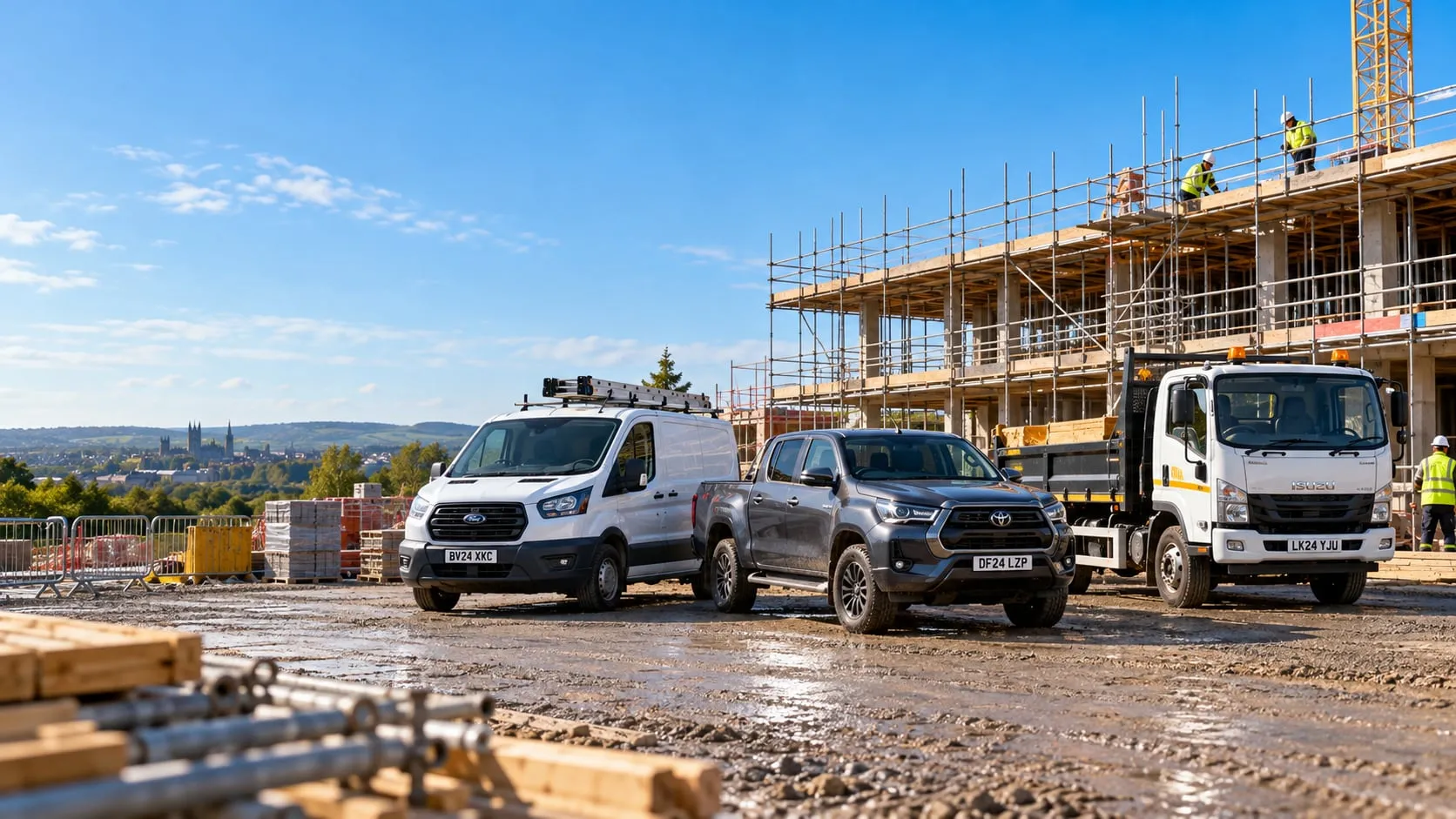
One policy for the crew vans, pickups, tippers and site cars your construction business runs. Describe the fleet once and the enquiry goes to specialist brokers who can quote.
- Crew vans, pickups, tippers and site cars
- Named or any-driver options
- Tools and goods in transit add-ons
Partnered with Quotezone
What being partnered with Quotezone means FleetQuote is a trading name of Simply Quote Comparison Ltd. Enquiries are passed to Quotezone, a trading style of Seopa Ltd (FCA FRN: 313860), which operates the quote panel. Simply Quote Comparison Ltd is an Introducer Appointed Representative of Seopa Ltd (FCA reference: 1011184), so we may be paid a commission if your enquiry leads to a policy. We do not give advice or make recommendations. Your choice of provider is entirely your own.FleetQuote is a quotation service, not an insurer or broker.
Last reviewed 17 September 2026
Fleet insurance quotes from the providers on our partner panel, including
















What insurers look at for construction fleets
Underwriters build a picture of how your vehicles are used between the yard, the site and the road.
-
Who drives
Employees, apprentices, subcontractors and agency staff. Ages, licence history and how drivers are checked.
-
Type of work
Groundworks, fit-out, civils or general building. The trade affects mileage, loads and time spent on site.
-
Overnight security
Where vehicles are kept at night, whether the yard is secured and what is left inside them.
-
Plant and specialist vehicles
Tippers, flatbeds with cranes and any self-propelled plant that goes on public roads.
-
Claims experience
Several years of claims history across the whole fleet, including open claims and what caused them.
-
Where you work
Regional or national contracts, long daily journeys and any work that takes vehicles abroad.
Overview
Construction fleet insurance
Construction fleet insurance puts the vehicles your business runs onto a single motor policy: the crew vans that take teams to site, the pickups the supervisors drive, the tippers and flatbeds moving spoil and materials, and the cars your estimators and managers use between jobs. Rather than renewing a separate policy for each vehicle, you insure the fleet as a whole and adjust it as contracts start and finish.
It suits groundworkers, civils contractors, builders, roofers, fit-out firms and any construction business with a handful of vehicles or more. Construction fleets carry exposures a standard van fleet insurance policy may not be set up for: expensive tools left in vehicles, heavy loads, plant that crosses between site and road, and drivers who are not always your own employees.
In short
Construction fleet insurance puts a contractor's crew vans, pickups, tippers and site cars on one motor policy. It covers the vehicles on the road, not plant working on site or the tools inside vans, which usually need separate cover. Insurers look closely at who drives, what the vehicles carry, overnight security and any plant that uses public roads.
At a glance
- Typical vehicles
- Crew vans, pickups, tippers, flatbeds, site cars and some HGVs
- Minimum motor cover
- Third-party insurance for any vehicle used on a road or other public place
- Plant on public roads
- Must be registered, taxed and insured. Some plant can use DVLA's special vehicles tax class
- Plant working on site
- Usually covered by a separate plant or contractors' all risks policy
- Tippers and HGVs over 3.5 tonnes
- Generally need an operator's licence when used to carry goods for business
- Employer duty
- Manage work-related road risk under health and safety law (HSE guidance)
01
What Vehicles Go On A Construction Fleet Policy?
Anything the business runs on the road, from crew vans and pickups to tippers, flatbeds, welfare vans and pool cars. Few contractors run one type of vehicle, which is why the schedule matters more here than on most fleets.
The usual mix
A small groundworks business might have three crew vans, a pickup and a 3.5-tonne tipper. A larger contractor adds flatbeds with lorry-mounted cranes, 7.5-tonne or heavier tippers, welfare vans and cars for site managers.
| Vehicle | Typical use | What insurers usually ask |
|---|---|---|
| Crew vans and double-cab vans | Taking teams and tools to site | Tools carried, overnight parking, who drives |
| Pickups | Supervisors, towing, light materials | Towing, off-road use, private use by the driver |
| Tippers | Spoil, aggregate, muck-away | Gross vehicle weight, loads, O-licence if heavier |
| Flatbeds and crane lorries | Materials, plant movements | Crane or HIAB operation, loading and unloading |
| Site and pool cars | Managers, estimators, surveyors | Business mileage, commuting, social use |
| HGVs | Plant transport, bulk materials | O-licence, driver CPC, tachograph compliance |
Because the mix runs so wide, many construction businesses end up on a mixed fleet insurance policy. Keeping every vehicle in one fleet schedule, with gross weights and values, makes the mix quick for a broker to read.
Class of use across the mix
Each vehicle needs the class of use that matches its own job. Carrying your own tools and materials is generally treated as carriage of own goods.
Hauling other people’s materials for payment, for example taking spoil away for another contractor, can count as hire and reward. Raise it with the broker before the first load rather than after it.
02
Does A Construction Fleet Policy Cover Plant And Machinery?
Not automatically. A motor fleet policy is built for vehicles used on the road, while damage to plant and theft of plant usually sit under a separate plant or contractors’ all risks policy.
Where the motor line stops
Plant insurance, often written as part of a contractors’ all risks policy, covers machinery against damage and theft while it is working, stored or in transit. Neither cover is automatically a substitute for the other.
This is where construction fleets most often get caught out. The gap is rarely obvious from the schedule alone, so list every machine for the broker and ask which policy answers for each one.
Self-propelled plant on public roads
The grey area is plant driven on a public road: a telehandler moving between two parts of a site, a dumper crossing to a compound, or a tractor and trailer on a highways job. In Great Britain, any vehicle used on a road or other public place needs at least third-party motor insurance under section 143 of the Road Traffic Act 1988.
Whether that road risk is picked up by the fleet policy, by a road risks extension on the plant cover, or by neither, depends on the machine and on the wording of each policy. Some policies name the machines they will take and exclude the rest.
Watch out: Ask your broker to confirm, in writing, which policy responds if a piece of plant causes an accident on a public road, and which responds if it is damaged or stolen on site. Gaps usually show up when a claim is made, not before.
Loading and unloading
Loading and unloading is another boundary worth testing. If a crane lorry drops a load of blocks onto a car, or a tipper body strikes an overhead cable, the question of which policy pays can turn on whether the vehicle was being driven or being used as a tool at that moment.
Some motor policies include cover for this and some limit it. The wording is the only reliable answer.
03
How Is Plant Taxed And Registered For Road Use?
A vehicle used on a public road must be registered, taxed and insured. Some machines fall under DVLA’s special vehicles description, which changes the tax class rather than removing the requirement.
The special vehicles description
Mobile cranes, digging machines, works trucks and road rollers can fall under DVLA’s special vehicles description when they meet its conditions. Examples include a digging machine that only uses the road to get to or from its work, and a works truck used only near its premises or roadworks.
GOV.UK’s note on engineering plant vehicles covers how these machines are treated on the road. The definitions are detailed, so check each machine individually.
Rates and conditions
Special vehicles up to 3,500kg revenue weight are taxed at the private and light goods rate, and heavier ones at the basic HGV rate. Used outside those conditions, the normal HGV rate applies instead.
DVLA’s V355/1 notes about tax classes set out the classes in full, and DVLA will confirm the position for a particular machine. Get that straight before a machine first uses a public road, because the tax class and the insurance position are often queried together.
04
Are Tools Left In Vans Overnight Covered?
Not by the motor cover itself. A crew van can hold more in tools than the van is worth, and tools are normally covered by an add-on, a goods in transit extension or a separate tools policy.
What the broker will ask
- The typical value of tools in each vehicle, and the highest value in any one vehicle
- Whether tools stay in vans overnight or are taken out
- Whether vans carry materials belonging to the client or the main contractor
- Whether any vehicles carry fuel, gas bottles or other hazardous materials
- Whether vans have tool vaults, deadlocks or other added security
Motor fleet cover protects the vehicle and your liability to others, not the contents. Answering the list above before you enquire shortens the conversation considerably.
The conditions that decide a claim
Many insurers attach conditions to theft of tools from an unattended vehicle. A common one requires the vehicle to be locked with all windows closed, and another excludes theft between set hours unless the vehicle is in a locked building or secure compound.
Read the exact wording before assuming the tools are protected. Those conditions, rather than the headline limit, settle most tools claims.
05
What Does Site Security Mean For A Construction Fleet?
Where vehicles spend the night, and who controls that place. Vans might be kept at your yard, on a live site, or at the driver’s home, sometimes all three in the same week.
Yard, site and home
Underwriters generally look more favourably on vehicles kept in a locked yard with fencing, lighting or CCTV than on vans left on the street. Where vehicles regularly stay on site, describe the security that site has and who is responsible for it.
Where drivers take vans home, a list of home postcodes may be requested. On-street parking does not stop cover being offered, but it does show up in the terms.
Tip: Keep a simple record of where each vehicle is normally kept overnight. It makes the enquiry quicker and gives the broker something concrete to present to insurers.
Why it moves more than on other fleets
A live site changes its security arrangements as the job progresses. Hoarding, gates and lighting that exist in month three may not have existed in month one.
That makes a construction fleet harder to describe in one line than a depot-based one. Say what varies rather than averaging it.
06
Can Subcontractors And Agency Workers Drive Your Vans?
Only if the driving clause allows it. A labourer supplied by an agency, or a self-employed bricklayer on a CIS arrangement, may end up driving one of your vans back from site.
The three driving clauses
- Any driver policies usually cover anyone driving with your permission, often subject to a minimum age and a clean or near-clean licence.
- Named driver policies only cover the people listed, so a new subcontractor needs adding before they drive.
- Some policies cover employees only, which can leave self-employed or agency drivers uninsured.
Construction workforces change from job to job. If self-employed subcontractors or agency workers drive your vehicles, say so at the start so the wording matches how the business actually runs.
Controlling who takes a vehicle
Whichever clause you hold, it pays to control who takes vehicles out. Check licences before anyone drives, and keep a record of who had which vehicle and when.
Agree one clear rule on whether subcontractors may use company vehicles at all. Our guide to driving licence checks covers how to run those checks properly.
07
Do Tippers And HGVs Need Different Cover?
A tipper is still a motor vehicle, so it goes on the fleet schedule like anything else. What changes is the licensing behind it and the questions the insurer asks about the load.
Operator licensing
Heavier tippers and HGVs used to carry goods for business generally need an operator’s licence, including where the goods are your own. GOV.UK’s guidance on being a goods vehicle operator sets out who needs one.
The insurer may ask for your O-licence details alongside the vehicle schedule. Driver CPC and tachograph compliance come into the same conversation once vehicles are heavy enough.
What the insurer asks about a tipper
Expect questions on gross vehicle weight, what the vehicle carries and how it is used through the week. Muck-away for other contractors sits differently from moving your own spoil between your own sites.
Where heavier goods vehicles start to lead the fleet, our HGV fleet insurance page covers the ground in more detail.
08
How Does Working Across Several Sites Affect The Policy?
It raises mileage and puts more drivers on unfamiliar roads, often early in the morning or after a long shift. Insurers price both of those, so describe the pattern rather than the average.
Mileage and unfamiliar roads
Expect questions about annual mileage per vehicle, the areas you work in and whether drivers stay away from home. A contractor on national frameworks looks very different from one working inside a single county.
Where crews travel long distances, explain how that is managed. Journey planning, limits on driving after a long shift and a second driver sharing the wheel are all worth mentioning.
Travel abroad
If any vehicles go to Ireland or mainland Europe for work, raise that separately. European use is not always included as standard.
09
Can Apprentices And Young Drivers Be Added?
Often yes, though many policies set a minimum driver age and some insurers load the premium or apply a higher excess for younger or recently qualified drivers.
What insurers charge for
Apprenticeships are common in construction, and apprentices often need to drive. Age and the date the full licence was issued are both priced, so give the broker each figure rather than a description.
Showing control
You can often make a young driver easier to place by showing some control over them. Restricting them to smaller vans, keeping them off tippers and away from towing, pairing them with an experienced driver for the first months, and keeping evidence of driver training all help.
Our guide to young drivers on fleet insurance goes through what insurers accept. The broker can say which of those options are available on your own fleet.
11
What Should You Have Ready Before Enquiring?
A vehicle schedule, a driver list, your claims experience, overnight locations and details of any plant that uses public roads. Most delays come from one of those five being missing.
The schedule and the driver list
List every vehicle with its registration, gross weight and value, including anything hired in for a long contract. For drivers, give dates of birth and licence details rather than job titles.
Rough annual mileage and the areas you work in help the broker frame the risk. Our quote readiness checklist covers the full list in order.
The extras that speed things up
Claims experience across several years, including open claims and what caused them, carries more weight than any other document. Add the overnight location for each vehicle and a note of any plant that goes on the road.
If you are coming up to renewal, our fleet insurance renewal checklist takes the preparation in order.
12
When Is A Construction Fleet Policy Not The Right Fit?
When the value sits in plant rather than vehicles, when the fleet is only one or two vans, when tools are the real worry, or when haulage for other contractors has become the main work.
Five situations that point elsewhere
- You run one or two vans, each with one regular driver. Individual van policies may still be simpler at that size, and our mini fleet insurance page covers small fleets starting to grow.
- Most of your value is in plant, not vehicles. Excavators, telehandlers and dumpers working on site are usually insured under a plant or contractors’ all risks policy, with road use arranged separately.
- Tools are the main worry. A standalone tools policy may give higher limits or better overnight conditions than an add-on to the motor policy.
- Staff drive their own vans or cars to site. Those vehicles are normally insured on the owner’s own policy with the right class of use, not on your fleet policy.
- Muck-away or haulage for other contractors is a big part of the work. Hire and reward haulage in heavier tippers raises O-licence and underwriting questions some insurers prefer to handle separately.
Covers that sit outside motor insurance
Public liability and employers’ liability sit outside motor insurance altogether. Review them alongside the fleet policy rather than expecting it to fill those gaps.
For a wider view of how fleet policies work, see our main guide to fleet insurance. If you are unsure whether the business is large enough for a fleet policy yet, read how many vehicles you need for fleet insurance.
Before you enquire
What to have to hand
What you’ll need for a quote
You can start an enquiry without all of this. The broker will ask for anything missing.
- Number and types of vehicles (rough is fine to start)
- Renewal date and current policy schedule
- Claims experience letter from your current insurer
- Driver ages and any penalty points
- Where vehicles are kept overnight
Sources
Updates
- : last reviewed
- : Facts checked against official sources; added quick answer and sources
General information about UK fleet insurance, not advice. How we write and check our content
Ready to get started?
Fleet insurance enquiries for construction businesses
One enquiry covering the vehicles, drivers and work involved. A specialist broker uses that detail to discuss cover that fits how your business actually runs.
FleetQuote is an introduction service, not an insurer or broker. We pass your enquiry to Quotezone, which operates a panel of brokers and insurers. How our service works
Questions
Construction fleet insurance: common questions
Does a construction fleet policy cover plant and machinery?
Not automatically. A motor fleet policy covers road-going vehicles, and some policies can extend to self-propelled plant when it is driven on public roads. Damage to plant while working on site, and theft of plant, usually sits under a separate plant or contractors' all risks policy. The dividing line depends on the machine and the policy wording, so list every item for the broker.
Can subcontractors drive our company vans?
It depends on the driving clause. Some fleet policies cover any driver over a set age, while others limit cover to named drivers or to employees. If self-employed subcontractors or agency workers drive your vehicles, tell the broker at the start so the policy wording matches how your business actually operates.
Are tools left in vans overnight covered?
Tools are not normally part of the motor cover itself. Tools cover is usually an add-on or a separate policy, and many insurers attach conditions to theft from an unattended vehicle, such as the van being locked, parked in a particular place or the tools being out of sight. Check any overnight or security conditions before you rely on the cover.
Can apprentices and young drivers be added to a construction fleet?
Often, yes, though many policies set a minimum driver age and some insurers load the premium or apply a higher excess for younger or newly qualified drivers. It helps to show how you vet and supervise them, for example licence checks, restrictions on which vehicles they drive and any driver training.
Do tippers need different cover from our vans?
A tipper is still a motor vehicle, so it goes on the fleet schedule like any other. Insurers will want its gross vehicle weight, what it carries and how it is used. Heavier tippers used to carry goods for business generally need an operator's licence, and the insurer may ask for your O-licence details.
What do we need before requesting construction fleet insurance quotes?
Have a schedule of every vehicle with registration, gross weight and value, a list of drivers with dates of birth and licence details, your claims experience, where vehicles are kept overnight, and details of any plant that goes on the road. Rough annual mileage and the areas you work in also help the broker.
Related reading
- Cover Fleet insurance Fleet insurance for UK businesses running vans, cars, HGVs or mixed fleets. How fleet cover works, and an easy way to reach a specialist for quotes.
- Cover Van fleet insurance Van fleet insurance explained for UK firms running two or more vans. Class of use, tools and goods cover, security, conversions and what insurers ask.
- Cover Mixed fleet insurance Mixed fleet insurance puts cars, vans, pickups, HGVs and minibuses on one policy. How uses, drivers and specialist vehicles are handled, and what to prepare.
- Guide Fleet insurance renewal checklist A practical fleet insurance renewal checklist covering timing, vehicle schedules, driver licence checks, claims experience and avoiding a gap in cover.
- Guide How many vehicles do you need for fleet insurance? There is no legal minimum fleet size. What insurers look for, how small fleets of two to four vehicles are treated, and when a fleet policy starts to make sense.
What FleetQuote does, and doesn't do
FleetQuote is a trading name of Simply Quote Comparison Ltd (company number 15008284), registered office Sentinel House, Ancells Business Park, Harvest Crescent, Fleet, Hampshire, GU51 2UZ.
Simply Quote Comparison Ltd is an Introducer Appointed Representative of Seopa Ltd (Financial Conduct Authority reference 1011184). We are not authorised in our own right: we act under Seopa Ltd, which is authorised and regulated by the Financial Conduct Authority under reference 313860.
That permission covers introducing your enquiry and nothing more. We do not provide insurance, arrange insurance, recommend a policy or give advice.
When you send an enquiry we introduce you to Quotezone, a trading style of Seopa Ltd (FCA FRN 313860), which operates a panel of brokers and insurers. Any quote, advice or policy comes from them, not from FleetQuote.
Simply Quote Comparison Ltd is paid a commission when an enquiry leads to a policy, at no cost to you. It is free to enquire and you are under no obligation to buy.