Fleet insurance
Multi-Van Insurance
One arrangement for two or more work vans and the people who drive them. A single enquiry puts your vans and drivers in front of specialist brokers, who discuss cover and quote.
- From two vans upwards
- Several drivers, named or any authorised driver
- Vans added or swapped during the year
Partnered with Quotezone
What being partnered with Quotezone means FleetQuote is a trading name of Simply Quote Comparison Ltd. Enquiries are passed to Quotezone, a trading style of Seopa Ltd (FCA FRN: 313860), which operates the quote panel. Simply Quote Comparison Ltd is an Introducer Appointed Representative of Seopa Ltd (FCA reference: 1011184), so we may be paid a commission if your enquiry leads to a policy. We do not give advice or make recommendations. Your choice of provider is entirely your own.FleetQuote is a quotation service, not an insurer or broker.
Last reviewed 17 September 2026
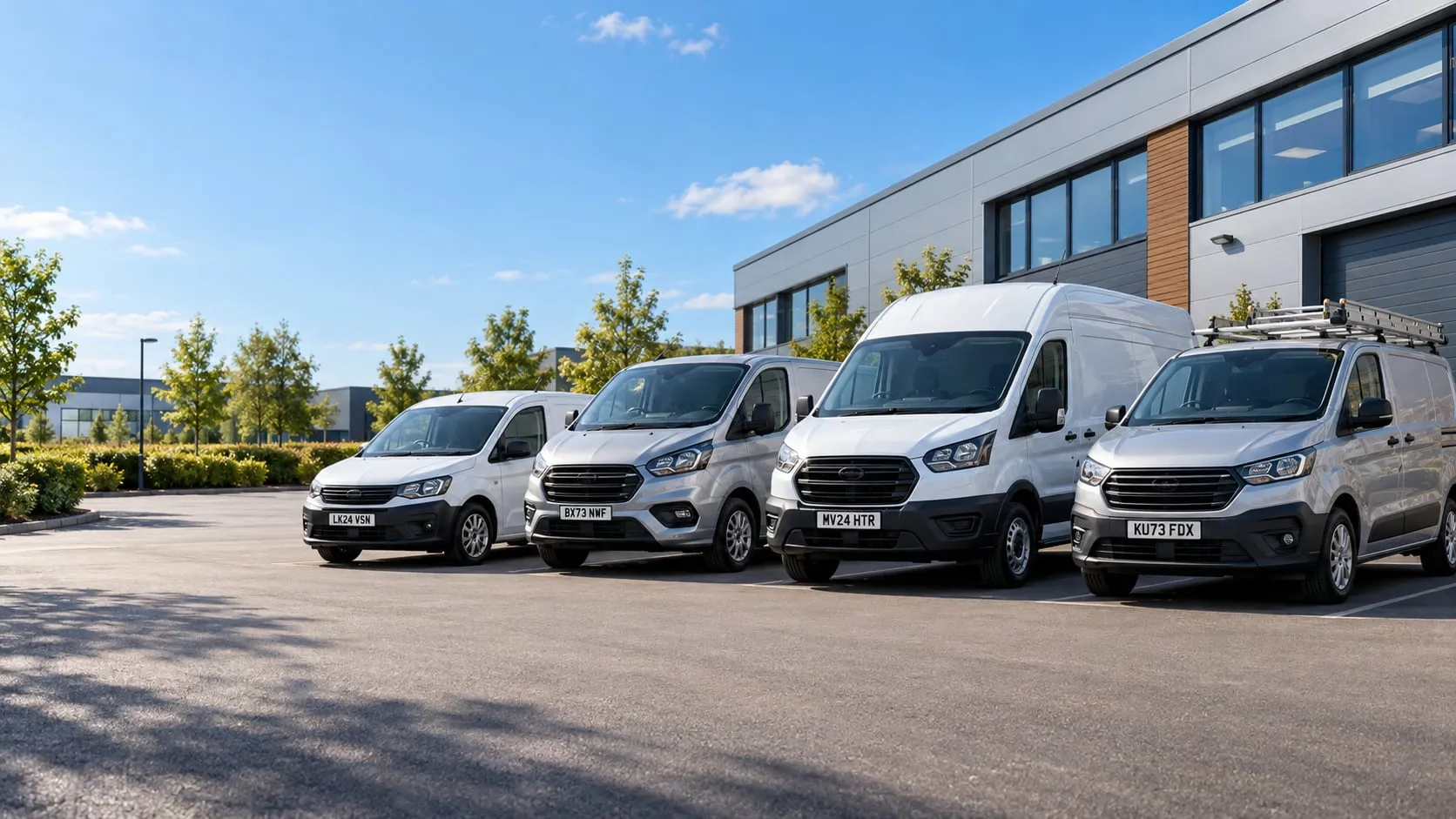
Fleet insurance quotes from the providers on our partner panel, including
















The questions that shape a multi-van policy
Answer these before you speak to a broker and the conversation moves faster.
-
Who drives which van
A fixed driver per van and a pool of staff sharing every van lead to quite different driver set-ups.
-
Whose goods are on board
Your own kit and stock sits in a different class of use from customers' goods delivered for a fee.
-
What stays in the van overnight
Tools and materials are usually outside the motor cover unless an extension or separate policy is added.
-
How heavy the vans are
Gross vehicle weight affects which licence your drivers need and whether operator licensing comes into play.
Overview
Multi-van insurance
Multi-van insurance brings two or more work vans onto one arrangement, with the flexibility for several people to drive them. It is aimed at the business that has moved past a single van but is a long way from running a depot: an electrical contractor with three vans, a kitchen fitter and two employees, or a gardening firm with a pair of crew vans.
Two things shape this cover above all others. Who is allowed behind the wheel, and what each van carries, affect the terms far more than the badge on the bonnet.
This page works through both questions for small van operations. Businesses running a larger number of vans will get more from our page on van fleet insurance, which covers fleet-rated cover in depth.
In short
Multi-van insurance covers two or more business vans together, usually with several people allowed to drive them. It can be set up with named drivers for each van or with cover for any authorised driver who meets the insurer's conditions. It suits trades and service firms with a small number of vans, while larger van operations are usually better served by a van fleet policy.
At a glance
- Starting point
- Two or more vans, subject to insurer acceptance
- Driver options
- Named drivers, or any authorised driver with age and licence conditions
- Vans in scope
- Mostly light commercial vans up to 3,500kg gross vehicle weight
- Car licence (category B)
- Up to 3,500kg MAM; up to 4,250kg for electric or hydrogen vans
- Tools in vans
- Not normally covered by the motor policy alone
- MID self-updates
- On and off-cover dates can be backdated by no more than 14 days
01
Which Businesses Does Multi-Van Cover Suit?
It fits best where vans are the working tools and at least some of them get shared. A heating firm whose engineer borrows a colleague’s van during a service, or a shopfitter whose staff rotate between jobs and vehicles, is the typical case.
Vans that get shared
Businesses where each van has one permanent driver can still use this cover, though separate van policies may remain workable for them. The deciding factor is usually how much shuffling of vans and drivers happens in a normal month.
Seasonal patterns count as well. A firm that doubles its crews between April and September is passing vans between more hands than its headcount suggests.
How many vans insurers want to see
Insurers draw their own lines. As a general pattern in the market, products that insure vans together start at two or three vehicles, and small van fleet versions often reach roughly 12 to 20 before a standard fleet policy takes over.
Where you run a mix of cars and vans in small numbers, our mini fleet insurance page may be the closer match. Our guide on how many vehicles you need for fleet insurance explains how underwriters treat very small numbers.
02
How Does Multi-Van Cover Differ From A Van Fleet Policy?
Mainly in how the terms are worked out. Multi-van cover tends to rate each van and driver on its own merits, while a van fleet policy leans more on the claims record of the operation as a whole.
Where the two diverge
The products overlap, and some providers use the two names interchangeably. Read the table as a description of typical tendencies rather than a fixed product rule.
| Question | Multi-van cover | Van fleet policy |
|---|---|---|
| Usual size | A few vans | Larger van operations |
| Driver rules | Often named, or any authorised driver with conditions | More often policy-wide rules |
| How terms are set | Heavy focus on each van and driver | More weight on the fleet’s overall claims record |
| Handling changes | Adjustments as vans come and go | Built for frequent changes, sometimes settled at renewal |
When to review the choice
There is no fixed switching point between the two. The usual signals are a rising van count, frequent additions and removals, drivers moving freely between vans, and enough years of claims history for an insurer to rate the operation as one risk.
Most businesses look at the question again at renewal. Our fleet insurance renewal checklist puts it alongside the other decisions that come up at the same time.
03
Who Can Be Allowed To Drive Your Vans?
Three set-ups are common: naming every driver on the policy, naming drivers against particular vans, or covering any authorised driver who meets the insurer’s conditions. Each one trades flexibility against price.
Naming every driver
Every driver is listed and each of them can take any van on the policy. This suits a settled team and keeps the underwriter’s view of the risk precise.
The catch is administrative. A new starter cannot drive until the policy has been updated, which is awkward when someone begins on a Monday morning.
Tying drivers to particular vans
Each van carries its own list of permitted drivers. That can suit a business where a younger driver only ever uses one smaller van, and it often prices better than opening every van to everyone.
It becomes a problem the moment someone goes off sick. Cover for a stand-in has to be arranged before the keys change hands.
Any authorised driver
Anyone the business permits to drive is covered, so long as they meet the insurer’s conditions. Those conditions typically set a minimum age, sometimes a minimum period holding a full licence, and limits on convictions.
Drivers outside the conditions may still need naming separately, often with extra premium or a larger excess. Our any-driver fleet insurance page sets out the options in detail.
What a broker needs on each person
- full name and date of birth
- licence type and the date the full licence was issued
- penalty points, convictions and any pending prosecutions
- motor claims in recent years, whether fault or non-fault
- which vans they drive, and whether they take one home
Whichever set-up you choose, check licences before people drive rather than after. Our guide to driving licence checks covers how an employer does that with the driver’s consent.
04
What Class Of Use Does Each Van Need?
The class has to match what that particular van does, not what the business does in general. Two vans off the same production line can need different classes on the same policy.
Own goods, paid delivery and personal use
A van taking your own tools and materials to jobs normally sits on carriage of own goods. A van delivering customers’ goods for a fee needs hire and reward instead.
A van that a driver takes home and uses at weekends needs social, domestic and pleasure added on top. Our guide to vehicle class of use sets out each class so you can describe every van accurately.
Where it goes wrong
The common triggers are a business taking on occasional paid delivery work, and an employee using a works van for a house move. Driving outside the class shown on the schedule can leave a claim from that journey in doubt.
If paid delivery becomes a real part of the week rather than a favour, say so at the next adjustment. Our courier fleet insurance page covers what changes when multi-drop work takes over.
05
Are Tools Left In Your Vans Covered?
Not by the motor cover on its own. The policy insures the van and your liability to others, so tools, stock and equipment normally need a tools extension or a separate policy.
Questions to put to the broker
- What is the limit per van, and does it reflect what each van really holds?
- Is theft from a parked van covered overnight, and must the van be in a locked building or compound?
- Must there be visible signs of forced entry before a claim is paid?
- Are items belonging to employees, or hired in from a supplier, included?
A fully kitted trades van can hold far more in tools than a standard limit allows. Price the limit against the worst van on the fleet, not the average one.
Other add-ons for working vans
Each van can usually be insured at third party only, third party fire and theft, or comprehensive cover level. Beyond that, the extras that come up most for working vans are breakdown and recovery, a replacement van rather than a car after an accident, windscreen cover and motor legal expenses.
A courtesy car is little help to a plumber with a van full of racking. Check the size of any replacement vehicle before you rely on it.
06
What Do Insurers Ask About Each Van?
The weight, value and fit-out of every van, what it carries, where it sleeps, and the record of everyone who drives it. With only a handful of vans, each one is still looked at closely.
The vans themselves
- Weight, value and fit-out, including racking, ply lining, tow bars and conversions
- What each van carries, and whether any paid delivery work is done
- Overnight parking for every van, including the ones kept at drivers’ homes
- Security, such as deadlocks, trackers, alarms and dashcams
A single list beats a series of emails. Our fleet schedule template gives you somewhere to keep it.
The drivers and the record
- The whole driver group, with particular attention to younger or recently qualified drivers
- Previous claims, both on the vans and by the drivers personally
Apprentices usually need declaring rather than assuming. Any-driver wording often carries a minimum age, so a younger driver may have to be named individually or kept to one van, sometimes with a higher excess.
07
How Do You Add A Van Part-Way Through The Year?
By telling the broker or insurer before the van is driven, with its registration, value, weight, modifications, class of use and driver. The insurer confirms cover and adjusts the premium for the rest of the policy year.
The order to do it in
- Speak to the broker or insurer before the van is used, with the full description to hand.
- Confirm who will drive it, especially where it brings a new person onto the policy.
- Get written confirmation of cover before it goes on the road.
- Check it appears on the Motor Insurance Database, and take off any van you have sold or returned.
Small van businesses often buy or hire at short notice. Treating each addition as a short process rather than an afterthought is what keeps the schedule honest.
Keeping the database straight
Vans should join the MID as soon as they go on the policy and come off it when they leave. Where you edit the record yourself through MIB’s policyholder portal, neither an on-cover nor an off-cover date can be pushed back further than 14 days, and your policy may allow less than that.
Our guide to the Motor Insurance Database for fleets explains who normally makes the change. A van missing from the record can be stopped by police even where cover is in force.
What uninsured use costs
Driving a van that is not insured for the way it is being used carries real consequences. Police can issue a £300 fixed penalty with 6 penalty points, and a court can impose an unlimited fine and disqualification, as GOV.UK sets out on driving without insurance.
08
How Heavy Can Your Vans Be On A Car Licence?
Category B, the ordinary car licence, reaches 3,500kg maximum authorised mass, or 4,250kg for a zero-emission van. Above those figures the licence question and the operator licensing question both change.
The thresholds that matter
| Threshold | What it means for your vans |
|---|---|
| 3,500kg MAM | The upper limit for most vans on a category B car licence |
| 4,250kg MAM | The limit for electric or hydrogen (zero-emission) vans on a category B licence |
| 7,000kg combined | The maximum for a category B vehicle and trailer together, where the trailer is up to 3,500kg |
| Over 3,500kg gross plated weight | An operator’s licence is generally needed to carry goods for business, including your own goods |
The two licence figures come from the GOV.UK driving licence categories and from its guidance on driving an electric or hydrogen-powered vehicle. Conversions add weight, so check the plate on any van bought second hand.
Pre-1997 licences
A driver who passed the car test before 1 January 1997 usually holds C1 as well, which reaches from 3,500kg up to 7,500kg. Read the licence itself rather than working backwards from the test date.
Operator licensing and European work
Vans used only within the UK do not need an operator licence, whatever the use. Some vehicles are exempt in any case, so check the goods vehicle operator guidance if a van sits close to the line.
Paid delivery work abroad is the exception that catches people out. Carrying goods for hire or reward in the EU, Iceland, Liechtenstein, Norway or Switzerland, in vans over 2,500kg and up to 3,500kg, needs a standard international operator licence under the GOV.UK guidance on transporting goods in and out of the UK.
Raise any European work with the broker separately. It changes the cover needed as well as the licensing position.
10
When Is Multi-Van Cover Not The Right Fit?
When each van has a settled single driver, when the operation has grown past the product, when the work is really courier work, or when the thing worth insuring is the contents rather than the vans.
Six pointers to somewhere else
- Each van has one permanent driver with a strong record, where individual van policies may be simpler and cheaper to run.
- The van operation is large or fast-changing, where a van fleet policy is designed for that scale.
- Vans mainly carry other people’s goods for payment, which puts hire and reward cover and goods in transit at the centre of the cover.
- Tools and equipment are the main worry, where a dedicated tools or contractors’ policy matters as much as the motor side.
- Some vehicles are over 3,500kg, where HGV cover or a mixed fleet insurance policy may be needed.
- Vans are hired out to customers, which needs self-drive hire cover rather than own-fleet cover.
Where a broker fits in
A broker can say which of those routes is realistic for your vans, your drivers and your claims record. FleetQuote passes the enquiry on to a specialist broker and does not produce prices itself.
Before you enquire
What to have to hand
What you’ll need for a quote
You can start an enquiry without all of this. The broker will ask for anything missing.
- Number and types of vehicles (rough is fine to start)
- Renewal date and current policy schedule
- Claims experience letter from your current insurer
- Driver ages and any penalty points
- Where vehicles are kept overnight
Sources
Updates
- : last reviewed
General information about UK fleet insurance, not advice. How we write and check our content
Ready to get started?
Ready to talk to a fleet insurance specialist?
Answer a few questions about your vehicles, drivers and current cover. We pass your enquiry to a specialist broker, who will discuss your options and quotes with you.
FleetQuote is an introduction service, not an insurer or broker. We pass your enquiry to Quotezone, which operates a panel of brokers and insurers. How our service works
Questions
Multi-van insurance: common questions
What is multi-driver van insurance?
It is van cover that lets more than one person drive. On a multi-van policy that can mean naming each driver, naming drivers against particular vans, or covering any authorised driver who meets the insurer's conditions on age, licence history and convictions. The right set-up depends on how often your team changes and whether people share vans or each have their own.
Can I get fleet-style cover for just two vans?
Some insurers will put two vans on one policy with shared driver rules, while others prefer three or more vehicles before offering fleet-style terms. With only two vans, individual van policies may also be competitive, particularly if each van has a single driver with a strong claims record. A broker can explain which options are open to you.
Can apprentices drive our vans on a multi-van policy?
Often, but they usually need to be declared. Any authorised driver cover tends to have a minimum age, so younger drivers may need to be named individually or restricted to certain vans, and a higher excess can apply. Give the broker each apprentice's age and how long they have held a full licence so the policy reflects who is really driving.
Are tools stolen from a van covered?
Not by the motor cover on its own. Tools and equipment usually need a tools extension or a separate policy, and there are often conditions about overnight storage and signs of forced entry. Check the limit per van against what your team carries, because a fully kitted trades van can hold far more in tools than a standard limit allows.
How do I add a van part-way through the year?
Tell the broker or insurer before the van is driven, with its registration, value, modifications, class of use and who will drive it. The insurer confirms cover and adjusts the premium for the rest of the policy year. The van must also appear on the Motor Insurance Database. If your policy lets you update that record yourself, the on-cover date can only be backdated by up to 14 days.
When should I move from multi-van cover to a van fleet policy?
There is no fixed switching point. The usual signs are a growing number of vans, frequent additions and removals, drivers moving between vans, and a steady claims record that an insurer can rate as a whole. Many businesses review the choice at renewal. A broker can say whether a van fleet policy would handle your changes more easily.
Related reading
- Cover Van fleet insurance Van fleet insurance explained for UK firms running two or more vans. Class of use, tools and goods cover, security, conversions and what insurers ask.
- Cover Fleet insurance Fleet insurance for UK businesses running vans, cars, HGVs or mixed fleets. How fleet cover works, and an easy way to reach a specialist for quotes.
- Cover Construction fleet insurance Construction fleet insurance for crew vans, pickups, tippers and site vehicles. What insurers ask about drivers, plant, tools and site security.
- Guide How many vehicles do you need for fleet insurance? There is no legal minimum fleet size. What insurers look for, how small fleets of two to four vehicles are treated, and when a fleet policy starts to make sense.
- Guide Fleet insurance renewal checklist A practical fleet insurance renewal checklist covering timing, vehicle schedules, driver licence checks, claims experience and avoiding a gap in cover.
What FleetQuote does, and doesn't do
FleetQuote is a trading name of Simply Quote Comparison Ltd (company number 15008284), registered office Sentinel House, Ancells Business Park, Harvest Crescent, Fleet, Hampshire, GU51 2UZ.
Simply Quote Comparison Ltd is an Introducer Appointed Representative of Seopa Ltd (Financial Conduct Authority reference 1011184). We are not authorised in our own right: we act under Seopa Ltd, which is authorised and regulated by the Financial Conduct Authority under reference 313860.
That permission covers introducing your enquiry and nothing more. We do not provide insurance, arrange insurance, recommend a policy or give advice.
When you send an enquiry we introduce you to Quotezone, a trading style of Seopa Ltd (FCA FRN 313860), which operates a panel of brokers and insurers. Any quote, advice or policy comes from them, not from FleetQuote.
Simply Quote Comparison Ltd is paid a commission when an enquiry leads to a policy, at no cost to you. It is free to enquire and you are under no obligation to buy.