Fleet insurance by industry
Fleet Insurance for Care Companies
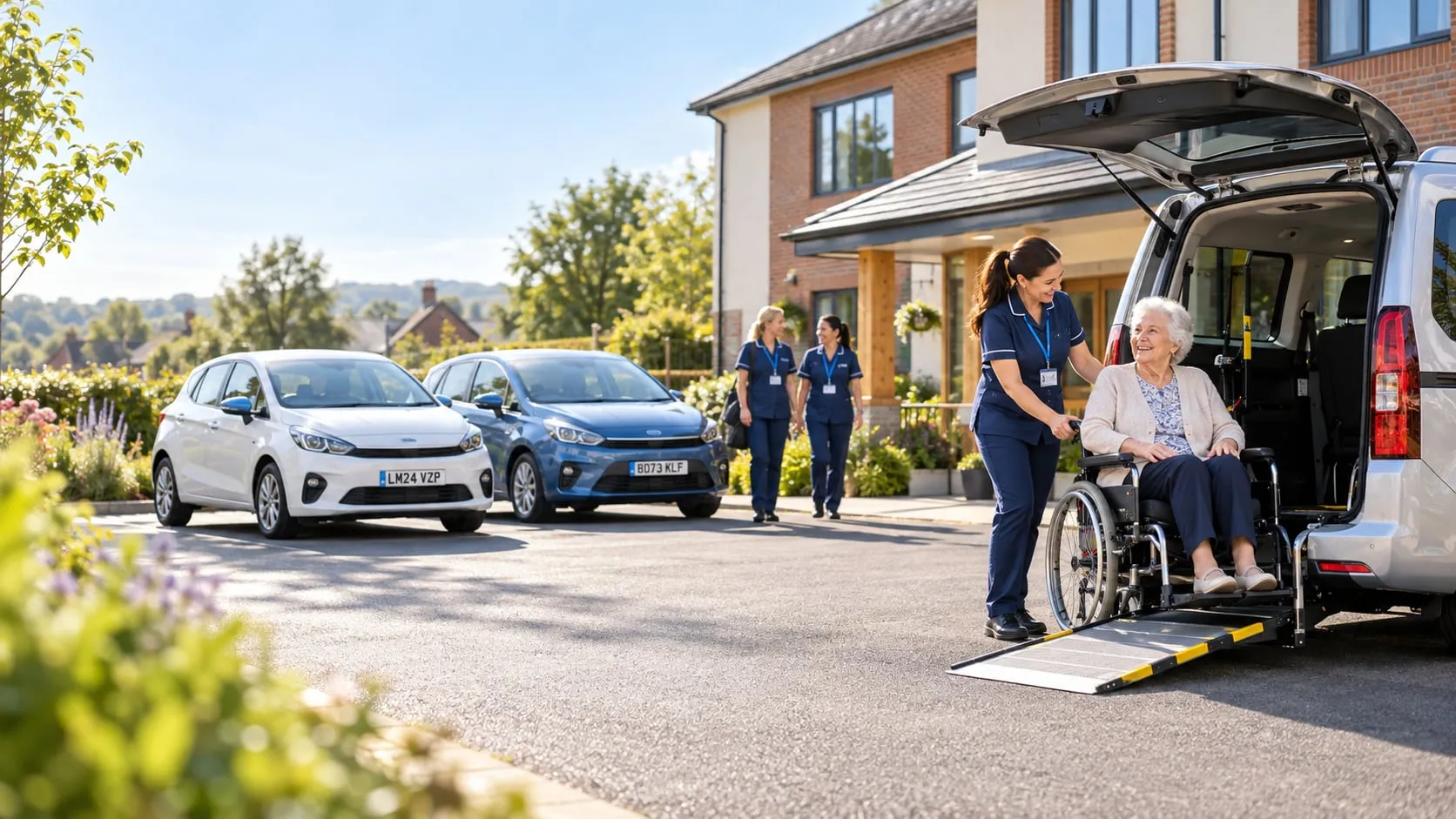
Cover for the pool cars and accessible vehicles a care provider runs, and what to do about carers who drive their own cars. One enquiry reaches brokers who quote on fleets.
- Pool cars for carers without their own vehicle
- Wheelchair-accessible vehicles for clients
- Grey fleet drivers alongside company vehicles
Partnered with Quotezone
What being partnered with Quotezone means FleetQuote is a trading name of Simply Quote Comparison Ltd. Enquiries are passed to Quotezone, a trading style of Seopa Ltd (FCA FRN: 313860), which operates the quote panel. Simply Quote Comparison Ltd is an Introducer Appointed Representative of Seopa Ltd (FCA reference: 1011184), so we may be paid a commission if your enquiry leads to a policy. We do not give advice or make recommendations. Your choice of provider is entirely your own.FleetQuote is a quotation service, not an insurer or broker.
Last reviewed 17 September 2026
Fleet insurance quotes from the providers on our partner panel, including
















What insurers weigh up for care providers
In home care, the vehicles that belong to the business are often the minority. Underwriters want to see the whole picture.
-
Own cars versus company cars
How many carers use personal vehicles, and how many drive pool or leased cars you provide.
-
Passengers
Whether clients travel in vehicles, how often, and whether any use a wheelchair while travelling.
-
Call patterns
Short, frequent visits from early morning to late evening, seven days a week.
-
Rural or urban rounds
Long country lanes between visits or dense town rounds with difficult parking.
-
Checks you already run
Licence, insurance and MOT checks for carers who drive, and how often they are repeated.
Overview
Care company fleet insurance
Care company fleet insurance covers the vehicles a care provider owns or leases. That means pool cars for carers who do not drive their own, cars for coordinators and managers, and wheelchair-accessible vehicles used to take clients to appointments or out into the community.
All of them sit on one policy with one schedule and one renewal date. Adding a leased car in winter or handing one back at the end of a contract goes through as a change to that schedule.
Domiciliary care is unusual, though. On many home care rounds, most of the driving is done by carers in their own cars.
Those cars do not normally belong on your fleet policy, but they are still part of your driving risk. The HSE expects you to manage it, and insurers often ask how you do.
In short
Care company fleet insurance covers the pool cars and wheelchair-accessible vehicles a care provider owns or leases. In domiciliary care many carers drive their own cars, which stay on personal policies that need business use. Insurers look at who drives, whether clients travel, and the checks you run on carers' licences, insurance and MOTs.
At a glance
- Typical vehicles
- Small pool cars, leased cars, wheelchair-accessible vehicles, minibuses
- Grey fleet
- Carers' own vehicles used for work; the employer duty of care still applies
- Carers' own cars
- Need business use on the personal policy; commuting alone is not enough
- Fleet sizes
- Insurer-dependent; many fleet products start from 2 or 3 vehicles
- Minibus on a car licence
- Only under strict conditions, including voluntary driving and no charge to passengers
01
Which Care Provider Vehicles Belong On A Fleet Policy?
The vehicles the business owns or leases: pool cars, coordinators’ and managers’ cars, wheelchair-accessible vehicles and minibuses. Cars belonging to individual carers stay on their own personal policies.
The vehicles and what each one does
| Vehicle | What it does on a care round | The insurance point |
|---|---|---|
| Small pool car | Driven by carers who have no vehicle of their own | Several carers share it in a week, so the driving clause has to keep up |
| Leased car | Coordinators and managers moving between clients and the office | The leasing company sets its own insurance requirements |
| Wheelchair-accessible vehicle | Taking clients to appointments, shops or day centres | Adaptations lift the value and clients travelling lift the liability |
| Minibus | Day services and care homes moving several clients at once | Passenger seats decide the licence and any permit position |
Providers most likely to need it
- home care agencies that supply pool cars to carers without a vehicle
- supported living services that run cars or accessible vehicles for residents
- day services and care homes with minibuses or wheelchair-accessible vehicles
- providers with a management and coordinator team driving leased cars
How few vehicles a care fleet can have
Insurers each set their own threshold. As a general market pattern, many fleet products begin at 2 or 3 vehicles and mini fleet products tend to go up to roughly 12 to 20, though that is practice rather than a rule.
A provider with one accessible vehicle and a manager’s car may find separate policies easier to run. Our mini fleet insurance page explains the smaller options.
02
Who Insures A Carer Who Drives Their Own Car Between Visits?
The carer’s own motor policy does, and it has to include business use. Commuting cover runs to one regular place of work, and a home care round is not that.
Why commuting cover stops short
Many personal car policies include social, domestic and pleasure use plus commuting. Driving from one client’s home to the next during a shift is business use, and insurers normally expect it to be added to the personal policy.
Carers are sometimes reluctant to raise it with their own insurer, worried about the cost. An uninsured journey leaves the carer exposed and can draw the business in too.
Where the employer stands
Under section 143 of the Road Traffic Act 1988 it is an offence to cause or permit another person to use a vehicle without insurance in force for that use. The HSE describes vehicles owned by workers and used for business as grey fleet, and its guidance on driving for work applies to them as it does to company vehicles.
Employers should make sure privately owned vehicles used for work are safe, serviced, insured and MOT’d, which the HSE covers in its guidance on maintaining vehicles. Some insurers offer cover that can protect the employer if a grey fleet driver’s own insurance fails to respond.
That is not a replacement for carers holding the right cover themselves. The grey fleet guide explains the duty of care in more detail.
The document check round
A check routine for grey fleet carers might look like this:
- Driving licence checked at recruitment and at set intervals
- Certificate or schedule of insurance showing business use
- MOT status for cars old enough to need one
- Vehicle tax in place
- Declaration that the car is roadworthy and serviced
- Renewal dates logged so expired documents are chased
How often those checks are repeated is one of the things an underwriter asks about. Keep the dates, not only the documents.
03
Who Can Drive A Care Provider’s Pool Cars?
Whoever the policy’s driving clause allows, subject to any age and licence conditions the insurer sets. Pool cars answer a recruitment problem, and they raise driver questions that grey fleet never does.
Named driver or any driver
Several carers may drive the same car in a week, so the driving clause matters. A named-driver clause needs updating each time someone new joins the rota.
An any-driver clause with age and licence conditions may be simpler to live with. The any-driver fleet insurance page sets out how those work.
Newly qualified and younger carers
Many insurers set a minimum driver age, and some apply a higher excess to younger or less experienced drivers. Restricting newer drivers to smaller cars, and keeping them off client transport until they have more experience, are pool car rules that help.
The young drivers and fleet insurance guide covers how insurers treat them.
Taking a pool car home between calls
Decide in advance whether a carer can keep a pool car overnight between a late call and an early one, and whether any personal use is allowed. Both affect the class of use the policy needs.
Leased cars bring the leasing company’s own insurance requirements with them. The broker will need to see those.
04
What Changes When Clients Travel In The Vehicle?
The vehicle stops being a way of getting a carer to the work and becomes passenger transport. Passenger numbers, wheelchairs, adaptations and the driver’s training all move the risk.
What insurers ask about client journeys
| Question | Why it matters |
|---|---|
| How many clients travel, and how often | Passenger numbers affect liability exposure |
| Whether clients travel seated in a wheelchair | Restraint systems and loading add risk |
| What adaptations are fitted | Ramps, lifts and tracking raise the vehicle’s value |
| Whether clients pay for transport | Charging can affect class of use and licensing |
| Who drives and what training they have | Loading and securing wheelchairs needs care |
Adaptations count as modifications
Ramps, lifts, floor tracking and restraint systems add to the vehicle’s value as well as to the passenger risk. Declare them, so the schedule reflects what a replacement vehicle would have to include.
Training in loading and securing wheelchairs is worth recording. It is one of the few things a provider can show an underwriter about the passenger half of the risk.
05
Can A Care Company Charge Clients For Transport?
Not without checking the licensing position first. A vehicle carrying passengers for hire or reward may need licensing, and the answer turns on the size of the vehicle and how the service is set up.
Private hire licensing
DfT guidance says whether private hire licensing applies depends on a careful assessment of all the facts, which it explains in its private hire vehicle licensing guidance note. Check with your local licensing authority before any charge is made for a journey.
Section 19 and 22 permits
For vehicles carrying 9 or more passengers, not-for-profit organisations can charge without a PSV operator licence if they hold a section 19 or section 22 permit. A commercial care company will generally not qualify for one of those.
Minibuses on a car licence
You can drive a minibus with up to 16 passenger seats on a car licence only under strict conditions, which GOV.UK lists under driving a minibus. They include being 21 or over, having held the licence for at least 2 years, driving voluntarily for a non-commercial body, and passengers not being charged.
Paid care staff at a private provider will usually fall outside that. Check each driver’s D1 entitlement, and our minibus fleet insurance page goes further.
06
Which Cover Level And Extras Suit Adapted Vehicles?
Pool and accessible vehicles can carry any of the standard cover levels. Comprehensive cover is common for leased and adapted vehicles, given what they are worth.
Choosing the level
Third party only, third party fire and theft and comprehensive cover are all available across the schedule. An adapted vehicle costs far more to put right than a small pool hatchback, which is why the higher level is usual for it.
Extras that keep calls covered
- Replacement vehicle. Losing an accessible vehicle for weeks can disrupt client care.
- Breakdown cover that can recover adapted vehicles and look after passengers.
- Windscreen cover, useful for high-mileage rural rounds.
- Legal expenses for recovering losses after a no-fault collision.
The fleet breakdown cover guide explains the different levels of breakdown service.
07
How Do Call Patterns And Rounds Shape The Risk?
Care driving is short, frequent visits from early morning to late evening, seven days a week. The journeys are brief, there are a great many of them, and a lot of them happen in the dark.
Early calls and late calls
A round that starts before dawn and finishes after dark puts much of the winter driving into darkness. The gap between a late call and an early one is short, which is why the overnight arrangement for pool cars is worth settling in writing.
Rural lanes and town parking
Some rounds are long country lanes between visits, others are dense town rounds where every call means finding somewhere to stop. Both produce claims, but not the same ones.
Low-speed damage while parking at a client’s home tends to be the town pattern. Our guide to driving for work policies covers setting expectations for both.
08
What Do Underwriters Ask A Domiciliary Care Provider?
Your driver numbers split between grey fleet and company vehicles, driver ages and experience, where pool cars are parked overnight, your claims experience, and whether you are regulated by the relevant care regulator.
The figures to have ready
Count the drivers rather than just the vehicles, and split them between carers using their own cars and carers driving company ones. Driver ages and licence experience come next, along with the overnight location for every pool and accessible vehicle.
Several years of claims experience completes the picture. The quote readiness checklist lists what to gather before you ask.
Lone driving at night and in bad weather
It helps to show how you deal with lone driving at night and in bad weather. Carers often cover rural rounds alone in winter, and an underwriter has no other way of knowing you have thought about it.
09
When Is A Care Fleet Policy The Wrong Fit?
When the business owns no vehicles at all, when there is only one of them, or when the transport is really a paid passenger service.
No vehicles of your own
If every carer drives their own car and the business owns nothing, a fleet policy has nothing to insure. The work is grey fleet checks and making sure carers hold business use on their personal cover.
A single leased car
A provider with one leased car may be better served by an individual policy. There is little to gain from a fleet schedule with one line on it.
A paid passenger service
Transport that is effectively a paid passenger service may need its own licensing and a specialist passenger policy. That is a different arrangement from a care fleet policy rather than an extension of one.
Before you enquire
What to have to hand
What you’ll need for a quote
You can start an enquiry without all of this. The broker will ask for anything missing.
- Number and types of vehicles (rough is fine to start)
- Renewal date and current policy schedule
- Claims experience letter from your current insurer
- Driver ages and any penalty points
- Where vehicles are kept overnight
Sources
Updates
- : last reviewed
- : Legal and regulatory points checked against official sources
General information about UK fleet insurance, not advice. How we write and check our content

Ready to get started?
Fleet insurance enquiries for care and healthcare businesses
One enquiry covering the vehicles, drivers and work involved. A specialist broker uses that detail to discuss cover that fits how your business actually runs.
FleetQuote is an introduction service, not an insurer or broker. We pass your enquiry to Quotezone, which operates a panel of brokers and insurers. How our service works
Questions
Care company fleet insurance: common questions
Can a fleet policy cover carers who use their own cars?
Generally not in the way it covers company vehicles. A carer's own car is normally insured on their personal policy, which must include the right business use for driving between clients. Some insurers offer an employer's policy that responds in limited circumstances if a carer's own cover fails, but it is not a substitute for the carer being properly insured. Ask the broker what is available.
Is commuting enough for carers driving between clients?
No. Commuting usually covers travel to and from one regular place of work. Driving from one client's home to the next during a shift is business use. A carer whose personal policy only includes social, domestic, pleasure and commuting use may not be insured for those journeys, so check the certificate or schedule.
Do we need special insurance to take clients out in a wheelchair-accessible vehicle?
Tell the insurer the vehicle carries passengers in wheelchairs and has been adapted. Adaptations such as ramps, lifts and restraint systems add to its value and to the passenger risk. Whether charging clients for transport triggers licensing depends on how the service is organised, so take advice before you charge.
Who is responsible if a carer's car is uninsured for business use?
The driver commits an offence, and a business that causes or permits someone to use a vehicle without insurance can also be exposed. Employers also have health and safety duties towards staff who drive for work, including those using their own vehicles. Regular document checks are the practical way to manage this.
Can newly qualified or young carers drive our pool cars?
Possibly, but many insurers set a minimum driver age and some apply a higher excess to younger or less experienced drivers. Pool car rules, such as restricting newer drivers to smaller cars and avoiding client transport until they have more experience, can help. The broker can explain what conditions apply.
How many pool cars do we need before a fleet policy makes sense?
There is no fixed number. Some insurers consider fleet or mini fleet cover from two or three vehicles, while others want more. A provider with a couple of pool cars and one accessible vehicle may still be better on separate policies. The broker can look at your vehicles and drivers and explain the options.
Related reading
- Cover Car fleet insurance Fleet car insurance for UK businesses running company, pool, sales and salary sacrifice cars. Personal use, grey fleet, leased cars and driver checks.
- Cover Minibus fleet insurance Minibus fleet insurance for schools, charities, care providers, clubs and coach operators. Driver licences, permits, PSV licensing and passenger cover.
- Cover Mini fleet insurance Mini fleet insurance for UK firms running a small number of vans and cars. How small fleet policies work, what insurers ask and when separate policies fit better.
- Guide What is a grey fleet? What a grey fleet is, who counts as a grey fleet driver, employer duties under HSE guidance, business use insurance checks and when to switch to fleet vehicles.
- Guide How to write a driving for work policy What a driving for work policy covers, a section-by-section outline based on HSE's safe driver, vehicle and journey approach, and how it helps with fleet insurers.
- Guide Young drivers and fleet insurance How fleet insurers treat young and newly qualified drivers, covering age restrictions, young driver excesses, apprentices, training and graduated vehicle access.
What FleetQuote does, and doesn't do
FleetQuote is a trading name of Simply Quote Comparison Ltd (company number 15008284), registered office Sentinel House, Ancells Business Park, Harvest Crescent, Fleet, Hampshire, GU51 2UZ.
Simply Quote Comparison Ltd is an Introducer Appointed Representative of Seopa Ltd (Financial Conduct Authority reference 1011184). We are not authorised in our own right: we act under Seopa Ltd, which is authorised and regulated by the Financial Conduct Authority under reference 313860.
That permission covers introducing your enquiry and nothing more. We do not provide insurance, arrange insurance, recommend a policy or give advice.
When you send an enquiry we introduce you to Quotezone, a trading style of Seopa Ltd (FCA FRN 313860), which operates a panel of brokers and insurers. Any quote, advice or policy comes from them, not from FleetQuote.
Simply Quote Comparison Ltd is paid a commission when an enquiry leads to a policy, at no cost to you. It is free to enquire and you are under no obligation to buy.